

A 3D mammogram, also known as digital breast tomosynthesis, is an advanced imaging technique that creates a three-dimensional picture of the breast using multiple X-ray images taken from different angles. This technology has become the gold standard for breast cancer screening because it provides clearer and more detailed images compared to traditional 2D mammograms. For many women, especially those with dense breast tissue, a first 3D mammogram can feel intimidating, but understanding the process helps reduce anxiety and makes the experience smoother.
This step-by-step guide walks you through everything you need to know before, during, and after your first 3D mammogram. Whether you are scheduling your first screening at age 40 or earlier due to family history, this article will prepare you with practical information, tips, and what to expect so you can feel confident and informed. Early detection through regular screening remains one of the most effective ways to fight breast cancer, and knowing what happens during the exam can make the process less stressful.
- Quick Facts Table
- Why Doctors Recommend 3D Mammograms
- Preparing for Your First 3D Mammogram
- What Happens When You Arrive at the Imaging Center
- Step-by-Step During the 3D Mammogram Procedure
- Does a 3D Mammogram Hurt?
- How Long Does the Entire Appointment Take
- What Happens After the 3D Mammogram
- Understanding Your 3D Mammogram Results
- Benefits of 3D Mammogram Over Traditional 2D
- Who Should Get a 3D Mammogram
- Common Myths About 3D Mammograms
- Tips for a Comfortable 3D Mammogram Experience
- Conclusion
- Frequently Asked Questions
Quick Facts Table
| Attribute | Details |
|---|---|
| Procedure Name | 3D Mammogram (Digital Breast Tomosynthesis) |
| Duration | 10–20 minutes |
| Recommended Age | Starting at 40 (or earlier if high risk) |
| Radiation | Slightly higher than 2D but still very low |
| Pain Level | Mild discomfort or pressure (similar to 2D) |
| Accuracy | 20–65% better detection than 2D mammogram |
| Best For | Dense breasts, high-risk women |
| Insurance Coverage | Usually covered under preventive care |
| Preparation | Avoid deodorant, lotion, powder on breast area |
| Results | Often available same day or within a few days |
Why Doctors Recommend 3D Mammograms
Doctors recommend 3D mammograms because they provide significantly better detection rates than traditional 2D mammograms. The technology takes multiple images from different angles and reconstructs them into a 3D view, allowing radiologists to see through overlapping breast tissue. This is especially helpful for women with dense breasts, where cancer can be harder to detect on standard mammograms. Studies show that 3D mammograms reduce false positives and detect cancers earlier.
Many major medical organizations now prefer 3D mammography as the standard of care. It has been shown to improve cancer detection by 20-65% while lowering the chance of being called back for additional testing. If you are over 40 or have risk factors such as family history, dense breasts, or previous breast issues, your doctor will likely recommend a 3D exam. Understanding these benefits can help you feel more confident about scheduling and attending your appointment.
Preparing for Your First 3D Mammogram
Preparation for a 3D mammogram is simple but important for accurate results. Avoid wearing deodorant, lotion, powder, or perfume on your breasts and underarms on the day of the exam, as these can appear as white spots on the images. Wear a two-piece outfit so you only need to remove your top. Bring your previous mammogram images if you have them for comparison.
It is best to schedule your mammogram when your breasts are least tender, usually right after your menstrual period. Inform the technologist if you are pregnant, breastfeeding, or have breast implants. These small preparations help ensure the best possible images and a smoother experience. Most women find that being well-prepared reduces anxiety significantly on the day of the exam.
What Happens When You Arrive at the Imaging Center
When you arrive for your 3D mammogram, you will check in and be asked to fill out a brief health questionnaire about your medical history and any breast concerns. A female technologist will escort you to a private changing area and explain the procedure in detail. She will answer any questions you have before starting. You will be asked to remove clothing from the waist up and put on a gown.
The technologist will position you at the mammography machine and carefully place your breast on the imaging plate. She will explain each step as it happens to help you feel comfortable. The entire process is designed to be as quick and comfortable as possible. Clear communication from the staff makes the experience much less stressful for first-time patients.
Step-by-Step During the 3D Mammogram Procedure
During the actual 3D mammogram, the technologist will gently compress your breast for a few seconds while the machine takes multiple low-dose X-ray images in an arc. You will feel pressure, but it usually lasts only a few seconds per view. The machine will move in a small arc to capture the 3D images. You will be asked to hold your breath briefly for each image to reduce motion blur.
Typically, two views of each breast are taken — top-to-bottom and side-to-side. The compression helps spread out the breast tissue for clearer images. The entire imaging process usually takes less than 10 minutes. The technologist stays in the room and guides you throughout, making sure you are as comfortable as possible. Most women report that while there is some discomfort, it is brief and tolerable.
Does a 3D Mammogram Hurt?
Many women worry about pain during a 3D mammogram, but most describe it as temporary pressure or discomfort rather than sharp pain. The compression is necessary to get clear images but only lasts a few seconds per view. Modern machines are designed to be gentler than older equipment. Taking deep breaths and staying relaxed can help reduce discomfort significantly.
If you have particularly sensitive breasts, scheduling the exam after your period or taking over-the-counter pain relief beforehand can help. Technologists are trained to work quickly and communicate clearly. Remember that any brief discomfort is worth the benefit of early cancer detection. Most patients find the experience much easier than they expected after the first view.
How Long Does the Entire Appointment Take
A typical 3D mammogram appointment lasts between 20 and 30 minutes from the time you arrive until you leave. This includes check-in, changing, the actual imaging (which takes about 10 minutes), and any post-exam instructions. If it is your first mammogram, it may take a little longer as the technologist explains everything in detail.
The imaging portion itself is very quick. You will usually receive preliminary results the same day or within a few days. The efficient process at most imaging centers makes it easy to fit into a busy schedule. Planning for about 45 minutes total is a good idea to account for any unexpected delays.
What Happens After the 3D Mammogram
After the images are taken, the technologist will ask you to wait briefly while she checks the quality of the pictures. You can then get dressed and go about your day. Most women experience no side effects and can return to normal activities immediately. The radiologist will review the images and send a report to your doctor.
You may receive results the same day or within a few business days. If anything needs further evaluation, you will be contacted promptly. It is normal to feel relieved once the exam is complete. Taking notes or asking questions before leaving ensures you understand the next steps clearly.
Understanding Your 3D Mammogram Results
Your 3D mammogram results will be given as a report explaining whether the exam was normal or if additional testing is needed. The report uses the BI-RADS system to categorize findings from 0 to 6. A BI-RADS 0 means more imaging is needed, while BI-RADS 1 or 2 usually means everything looks normal.
Most results are normal, especially for routine screening. If you receive a call for additional views, try not to panic many times it is just to get a better look at a specific area. Your doctor will explain the results clearly and discuss any next steps with you. Understanding the reporting system helps reduce anxiety while waiting for results.
Benefits of 3D Mammogram Over Traditional 2D
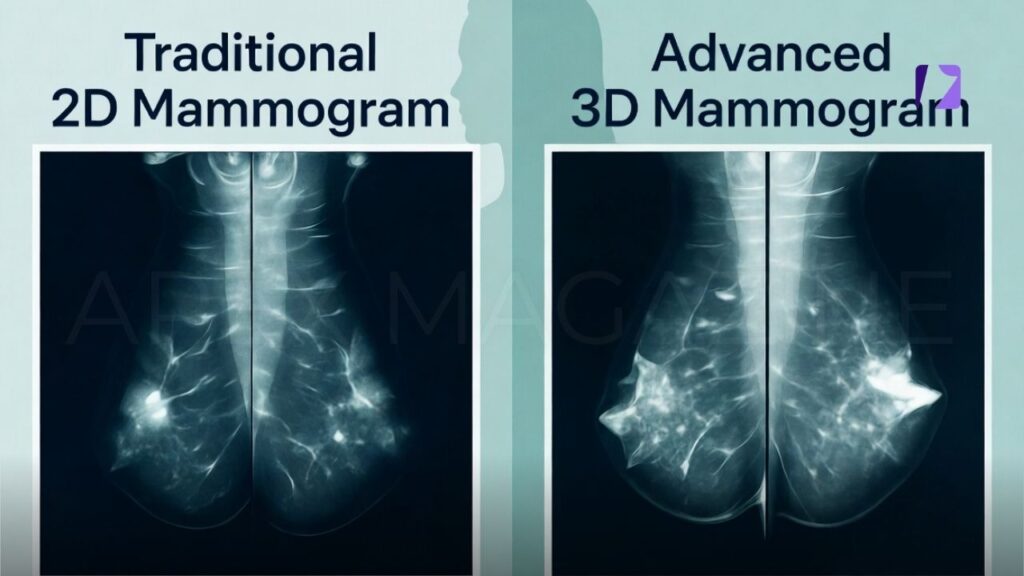
3D mammograms offer several important advantages over traditional 2D mammograms. They provide a clearer view of breast tissue by reducing the effect of overlapping structures, which leads to fewer false positives and fewer unnecessary callbacks. Studies show 3D imaging detects more invasive cancers, especially in women with dense breasts.
The technology also improves radiologists’ ability to locate the exact position of any abnormalities. This means earlier detection and better treatment outcomes when cancer is found. Many women report feeling more confident in their screening results with 3D technology. The benefits make 3D mammograms the preferred choice for most women and doctors today.
Who Should Get a 3D Mammogram
Women aged 40 and older are generally recommended to have annual 3D mammograms. Those with dense breast tissue, family history of breast cancer, or other risk factors may benefit even more from 3D screening. Some women start earlier if they have genetic risks or previous breast issues.
Discuss your personal risk factors with your doctor to determine the best screening schedule for you. 3D mammograms are particularly valuable for women with dense breasts because they provide clearer images. Regular screening remains one of the most important tools for early detection and successful treatment of breast cancer.
Common Myths About 3D Mammograms
Many women believe 3D mammograms are much more painful than 2D exams, but the difference is minimal for most patients. Another common myth is that 3D mammograms expose you to much higher radiation, but the dose is still very low and considered safe. Some also think only high-risk women need 3D screening, while in reality it benefits most women.
Clearing up these myths helps more women feel comfortable scheduling their exams. 3D technology is now widely available and recommended by major medical organizations. Understanding the facts can help you make informed decisions about your breast health without unnecessary worry.
Tips for a Comfortable 3D Mammogram Experience
To make your 3D mammogram more comfortable, schedule it when your breasts are least tender and wear comfortable clothing. Communicate openly with the technologist about any concerns or pain. Taking slow, deep breaths during compression can help you relax. Bringing a friend or listening to calming music (if allowed) can also reduce anxiety.
Remember that the technologist wants you to feel as comfortable as possible. Being prepared mentally and physically makes a big difference in your experience. Most women find that after the first time, future mammograms feel much easier. These simple tips can turn a potentially stressful appointment into a straightforward and empowering health check.
Conclusion
Your first 3D mammogram is an important step in taking charge of your breast health. The procedure is quick, relatively comfortable, and provides significantly better detection than traditional mammograms. By knowing what to expect at each stage from preparation to receiving results you can approach the appointment with confidence and less anxiety. Regular 3D screening remains one of the most effective tools for early breast cancer detection.
Taking this proactive step shows care for your long-term health. Most women find the experience much easier than expected and gain peace of mind from the thorough screening. Schedule your 3D mammogram today and encourage the women in your life to do the same. Early detection truly saves lives.
Frequently Asked Questions
How long does a 3D mammogram take? The actual imaging takes about 10 minutes, with the full appointment lasting 20-30 minutes.
Does a 3D mammogram hurt?
Most women feel temporary pressure or discomfort, but it is brief and tolerable.
How often should I get a 3D mammogram?
Most women should have one annually starting at age 40, or earlier if high risk.
Is 3D mammogram better than 2D?
Yes, it detects more cancers and reduces false positives, especially in dense breasts.
Will insurance cover a 3D mammogram?
Most insurance plans cover 3D mammograms as preventive care with little or no out-of-pocket cost.
Visit More APEX MAGAZINE