

The matchup for Super Bowl LX is officially set. In what will mark one of the most unexpected head-to-heads in league history, the New England Patriots will be squaring off against the Seattle Seahawks on Sunday, February 8, at Levi’s Stadium.
Now is about the point when the most fan-friendly NFL online sportsbooks should be foaming at the mouth. The NFL’s big game is among the most popular tent-pole events on which people place bets. Last year, in fact, the Super Bowl set a record for the most money legally wagered in the United States, closing in on a whopping $1.4 billion.
- Sports Prediction Markets are on the Rise in the United States
- How The Rise Of Prediction Markets Influences Sports Betting Returns
- Super Bowl LX Betting May Not Set A Volume Record
- Prediction Markets Are a Long-Term Problem for Sports Betting
- Prediction Markets Could Ultimately Be Worse For States Than Sportsbooks
- Nothing is Definitive, But This Is Something To Watch
- Conclusion
- Frequently Asked Questions
On its face, this year’s matchup should be even more intriguing. Sure, it lacks a recognizable superstar quarterback such as Patrick Mahomes of the Kansas City Chiefs or Jalen Hurts of the Philadelphia Eagles. But the long odds behind the rises of the participating Patriots and Seahawks adds an additional layer of curiosity. Neither squad ranked in the top 10 of odds to win the Super Bowl entering the regular season. In fact, neither of them even placed in the top 15. Relative to expectations, then, this is one of the most shocking Super Bowl matchups the NFL has ever seen. This alone should foment a ton of business for sportsbooks. Yet, the industry is currently grappling with a potentially marked shift in consumer behavior. Some are even wondering, if not claiming, that it is an existential crisis. And it can be summed up in two words: prediction markets.
Sports Prediction Markets are on the Rise in the United States
You will be forgiven if you don’t quite know the ins and outs of prediction markets, and how they diverge from traditional sports betting. They are relatively new in the mainstream. For so long, they predominantly focused on politics and entertainment. Only recently have they started veering into sporting events. Anyway, at their core, sports prediction markets involve putting money on “yes or no” outcomes. For Super Bowl LX purposes, this could be as simple as “Who will win, the Patriots or the Seahawks?” But these transactions can also encompass hyper-specific events, such as “Will Seattle’s Sam Darnold throw for over 225 yards during Super Bowl LX?”
At first glance, this is indistinguishable from conventional sports betting. Rest assured, state officials and sports gambling regulators are making that same argument. However, prediction-market operators argue that theirs is a derivative business, because customers are not wagering against “The House.” Instead, the payout on their “investments” is determined by the rest of the market.
For Example
If a sportsbook pays out $100 for every $150 bet on the Seahawks in the event they win, these odds have been formulated by their own linemakers. The amount of action on Seattle can factor into how much the odds shift, but the initial lines are internally constructed. With prediction markets, on the other hand, the return on investment is determined by customer activity. If a $150 investment on the Seahawks to win stands to pay out $100, it’s because a majority of the activity on the game skews toward Seattle beating New England.
So, generally speaking, the theory of sports betting and prediction markets are one in the same. But they are regulated differently because of how they set their payouts. Right now, states must legalize sports betting and then license specific operators to offer services in their region. Prediction markets are subject to no such state oversight. They are instead federally regulated, because again, they’re considered a derivatives business. This permits them to operate with looser restrictions. Not only are the taxes they pay better than the individualized rates states set, but they can enter markets like California and Texas that have yet to legalize sports betting.
Now, the popularity of this sports betting alternative is tough to pin down. The industry is in its infancy relative to legal sports wagering. But the business model is successful enough that heavbyweight sportsbooks such as DraftKings and FanDuel have created their own prediction markets. And in many ways, this in itself is at the crux of the sports betting industry’s concern.
How The Rise Of Prediction Markets Influences Sports Betting Returns
With prediction markets now more accessible than ever, sports betting industry members worry that they will eat into their companies’ bottom line. Granted, this is a non-issue unless prediction markets are actually resonating with the general public. But as ESPN’s Doug Greenberg and Shwetha Surendran reported in December, they are absolutely registered with the general population:
“One of the big players in the prediction market space, Kalshi, announced this month that it now sees over $1 billion traded on its platform each week, a 1,000% increase from 2024. Polymarket, the largest prediction market operator in the world, launched on a limited basis in the U.S. this month.
“Sports account for the majority of Kalshi’s trading volume, according to data collated by the user datadashboards on Dune Analytics, an open-source crypto data platform, and the company has gradually increased its sports offerings over the year. This fall,Kalshi began offering prop bets on the NBA and NFL, and on Monday, Tarek Mansour, Kalshi’s cofounder, announced the launch of ‘combos,’ or multiple-leg trades similar to parlays.”
Fledgling Industry
These numbers are staggering what’s considered a fledgling industry. Kalshi, in particular, is projected to have overseen more than $52 billion in trades for the 2025 calendar year. Not all of that comes from sports, but as the report states, the majority of it does come from sporting event predictions. This creates an obvious dilemma for sportsbooks. They may be more entrenched in certain markets, but they don’t have access to the states without legal sports betting. Kalshi and Polymarket can technically make a killing in places like Georgia, Texas, California, et al. Sports betting operators cannot say the same.
What’s more, prediction markets are attempting to gain a stronghold in states that already have legal sport betting as well. Between increased spending on marketing services as well as high-profile branding partnerships with pro leagues and teams, they seem better positioned to convert casual and religious sports bettors into users on their own platforms. They even offer sign-up and per-transaction bonuses eerily similar to what you see at most sportsbooks.
Super Bowl LX Betting May Not Set A Volume Record
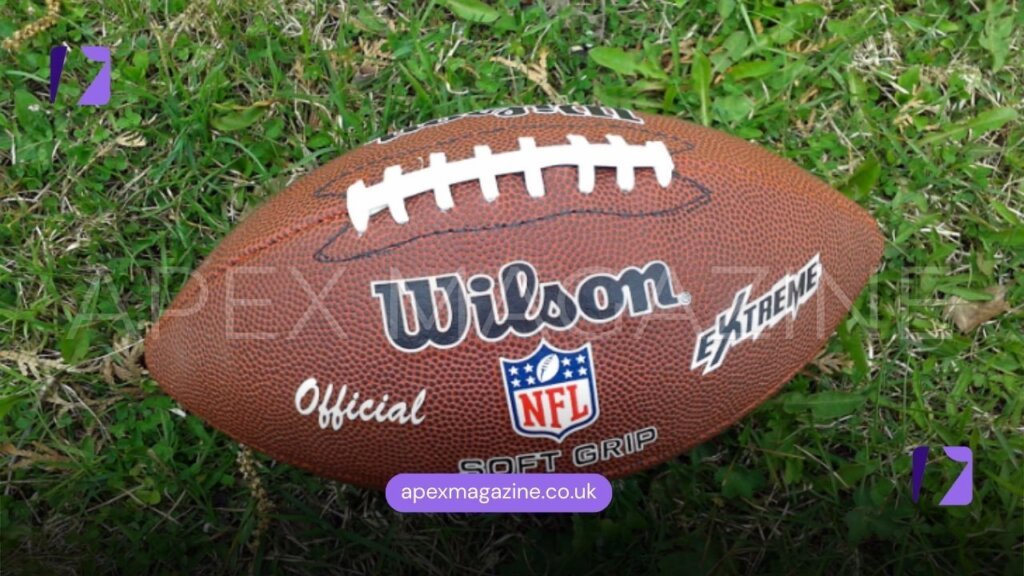
“NFL Football” Licensed Under CC BY-NC-ND 1.0
This brings us back to the impact on Super Bowl LX betting specifically. Last year’s matchup between the Chiefs and Eagles set records for both betting volume and revenue. At the time, though, sports prediction markets were not nearly as prevalent as they are now. So it stands to reason that sportsbooks could see a dip in business in the lead-up to the Patriots vs. Seahawks showdown. On the flip side, plenty of sports betting industry officials are assuming confident positions. Multiple reports show that the rise of prediction markets has not impacted the handle (i.e. betting volume) or total revenue for most states with legal sports gambling.
Cynics will be quick to point out that wholesale industry disruptions take time. Legal sports betting in the United States has been around since 2018. While prediction markets weren’t invested yesterday, their entrance into the sports scene, at their current scale, isn’t yet two years old. It could be a few more fiscal quarters before sports betting operators start to feel the squeeze.
This, in turn, can still be considered good news for sportsbooks during Super Bowl LX. Even if some of their business is being diverted to prediction markets, the share currently isn’t large enough for it to inflict real pain. Beyond that, a recent study shows that sports betting-age customers aren’t even the ones fueling the rise of prediction markets. People almost universally must be 21 or older to bet on sports. Prediction markets, on the other hand, allow users to be as young as 18 another side benefit of their federally regulated status.
CNBC Contessa Brewer Explain
This 18 to 20 demographic could be what’s propping up prediction-market returns:
“As prediction market trading volume booms, Truist analysts say there could be an unlikely source behind the surge. Analyst Barry Jonas wrote this week that 18- to 20-year-olds, who are too young to gamble legally in most states, could be contributing significantly to the growth of prediction markets.
Specifically, data from HoldCrunch, founded by a former FanDuel executive, shows prediction platform Kalshi is taking more trades on college football than on NFL and NBA. While non-college students could still wager on college results, of course, the trend could offer a clue into the demographics of prediction platform users…During the week ended Jan. 4, Kalshi’s college football handle hit its highest percentage of total at 32 percent, the prediction platform said.The NFL accounted for 24 percent of total wagers, and the NBA represented 22 percent. The tide has been shifting in that direction since October, according to Kalshi.” This can again be construed as good news for the sports betting industry. At the same time, it does not mean they are out of the woods.
Prediction Markets Are a Long-Term Problem for Sports Betting
Two things must be considered from the aforementioned CNBC report before writing off prediction markets as a non-threat to the sports betting industry.
First and foremost, it is not clear how much of the business for prediction market trading volume can be attributed to those under the age of 21. If it is a vast majority of the sports transactions, then gambling operators can breathe a little easier. But if this demographic only represents a minor share of the transactions, it is not much of a silver lining.
Forced to choose, we could guess that most prediction market transactions are dominated by people over the age of 21. We are not talking about a slight majority, either. If the 18-to-20 demo accounts for even 10 percent of sports-prediction trading, we would be shocked.
For argument’s sake, though, let us assume that most of the business is being delivered by the not-yet-gambling-age clientele. This is hardly good news for the long term future of sports betting.
Think about it: Which platforms will the 18 to 20 year old demographic be using once they turn 21 and continue aging up? Should we just expect them to start signing up, Example masse, at online sportsbooks? Absolutely not. They would be far more likely to stick with their prediction-market provider. After all, that would be their norm.
To this end, prediction markets could control all future generations of would-be sports bettors. So while the impact on sportsbooks will not be immediately felt, there would be a long-term erosion in their business model.
Prediction Markets Could Ultimately Be Worse For States Than Sportsbooks
In some way, shape or form, what is happening now will force the sports betting industry to adjust. And, well, they will adjust. Some sportsbooks already are. As we mentioned earlier, FanDuel and Draft Kings have already entered the prediction-market game. They will not be the last sportsbooks to make this transition.
Not only that, but sports betting sites in the United States could come to preferoperating as prediction markets versus traditional gambling operators. As the latter, you are subject to state-imposed taxes. These rates can be astronomical in certain markets. New York, for instance, taxes sportsbooks at a 51 percent clip raking in more than half of betting sites’ revenue. While not every market is that extreme, more than a handful have asset rates north of 40 percent.
CNBC Market Prediction
Prediction markets are not subject to the same case-by-case tax rate. They pay a different tax as a federally regulated operated industry. It still varies, landing somewhere between 10 and 40 percent, but the country average is just under 27 percent, according to CNBC.
Once you factor in licensing fees, sportsbooks could technically save a ton of money by veering away from a state-regulated gambling operator and leaning into prediction markets. And without question, this would be disastrous for state revenue.
Take New York once again. Since launching legal sports betting roughly three years ago, The Empire State has made over $2.7 billion in tax revenue off gambling operators. That total would not evaporate if they’re just taxing prediction-market companies. But it would certainly be lower, since they would not be assessing the same tax rate.
What’s more, states would not have the power to change tax rates during legislature sessions. The state of Illinois recently restructured its sports betting tax rate to account for different brackets of revenue. The new system taxes sportsbooks who cross a certain threshold of revenue at a higher clip than those who fall into lower tiers. Restructuring the tax rates like this would not have fallen within their purview for federally regulated prediction markets.
Nothing is Definitive, But This Is Something To Watch
Not yet enough time has passed since prediction markets went mainstream to declare them an existential threat to the sports betting industry. This is an issue, and a trend, that must be monitored for at least a few years before drawing any sweeping conclusions.
Of course, this presumes prediction markets survive that long. Make no bones about it, despite their widespread implementation, they are operating in a fundamentally gray area. States have already filed various court motions in an attempt to shut them down and extricate them from the market.
As of now, this strategy has not technically proven successful. But it hasn’t necessarily failed, either. Though prediction markets remain up and running in states with pending litigation, their future hinges on the official decisions of the judicial system. These cases will take time to hash out. And even if certain branches rule against prediction markets, there will be appeals. Different courts will weigh in, too. Any solution will take time.
Systems Laws
At the end of it all, sports prediction markets may no longer be standing. Or perhaps their interpretation of gambling laws and systems will be what holds up. Even if it’s the latter, there’s no guarantee they will eventually overthrow the current sports betting industry.
Make no bones about it, though, prediction markets are absolutely a capitalistic force with which to reckon. States would not be trying to shudder their operations if they were truly a non-threat. Local governments clearly feel that prediction markets infringe upon their oversight of gambling and gaming. By extension, they also obviously believe that prediction markets are growing popular enough to upend their present systems.
At the very least, then, prediction markets are a disruptor. Even if they aren’t here to stay, or even if they do not have the juice to overtake traditional sports betting, they are inciting a response. A chance in industry behavior.
Conclusion
Prediction markets have introduced real uncertainty into the future of sports betting, but they have not yet overturned the existing system. For Super Bowl LX, traditional sportsbooks are still likely to command massive attention, even if some wagering activity shifts elsewhere. The long-term concern is generational, not immediate, as younger users grow accustomed to prediction platforms before ever accessing sportsbooks. States, operators, and regulators now face a slow-moving but serious challenge that will require adaptation rather than denial. Whether prediction markets ultimately fade, coexist, or reshape sports betting entirely, their rise has already changed the conversation.
Frequently Asked Questions
What makes prediction markets different from traditional sports betting?
Prediction markets rely on user-driven pricing rather than odds set by a sportsbook. Participants trade on yes-or-no outcomes, and payouts depend on market demand instead of a house margin. This structure places them under federal regulation rather than state gambling laws.
Will prediction markets reduce Super Bowl betting volume?
They could divert some wagering activity, but there is no clear evidence of a major impact yet. Sportsbooks still dominate Super Bowl betting due to familiarity and marketing reach. Any reduction is likely incremental rather than dramatic in the short term.
Why are younger users important to the growth of prediction markets?
Prediction markets allow users as young as 18, unlike sportsbooks that typically require users to be 21. This gives prediction platforms early exposure to younger audiences. Over time, these users may remain loyal to prediction markets as they age.
Do prediction markets pose a threat to state tax revenue?
Yes, they potentially do. States collect significantly higher taxes from licensed sportsbooks than from federally regulated prediction platforms. A shift toward prediction markets could reduce gambling-related tax income over time.
VISIT MORE: APEX MAGAZINE