
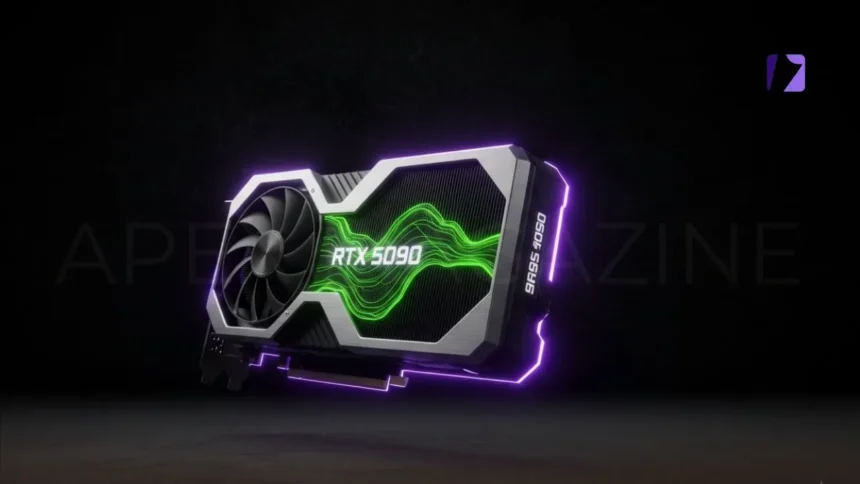
The graphics card industry evolves rapidly, and every new generation pushes the limits of gaming and computing performance. The NVIDIA GeForce RTX 5090 represents the next leap forward in graphics technology, delivering massive improvements in speed, artificial intelligence capabilities, and rendering efficiency. Developed by NVIDIA, the RTX 5090 aims to redefine what gamers, creators, and professionals can expect from a modern GPU. With advanced architecture, improved ray tracing performance, and powerful AI integration, the card targets enthusiasts who demand the absolute best performance for high-end gaming and productivity tasks.
As technology continues to evolve, GPUs no longer serve only gamers. They power artificial intelligence models, video editing workflows, 3D rendering, and scientific computing. The RTX 5090 reflects this shift by integrating powerful AI cores and faster memory technologies designed to accelerate both gaming and professional workloads. This article explores everything about NVIDIA’s newest GPU, including architecture improvements, specifications, gaming benchmarks, power efficiency, and how it compares with previous generation cards. By examining each aspect in detail, readers can understand why the RTX 5090 is expected to dominate the high-end graphics market.
- What is the NVIDIA GeForce RTX 5090?
- Key Specifications of the RTX 5090
- Blackwell Architecture Explained
- Performance Improvements Over RTX 4090
- AI and DLSS 4 Technology in RTX 5090
- Ray Tracing Capabilities and Graphics Advancements
- Memory, Bandwidth, and VRAM Details
- Gaming Performance and Benchmarks
- 4K and 8K Gaming Experience
- Power Consumption and Cooling Requirements
- RTX 5090 Design and Build Quality
- NVIDIA Software and Driver Support
- Content Creation and Professional Workloads
- RTX 5090 for AI, Machine Learning, and Rendering
- Comparison: RTX 5090 vs RTX 4090
- RTX 5090 vs AMD Next-Generation GPUs
- Price, Availability, and Market Launch
- Who Should Buy the RTX 5090?
- Future of NVIDIA GPUs After RTX 5090
- Conclusion
- Frequently Asked Questions
What is the NVIDIA GeForce RTX 5090?
The NVIDIA GeForce RTX 5090 is a flagship graphics processing unit designed for high-performance gaming, creative applications, and advanced computing tasks. As part of NVIDIA’s latest GPU lineup, it introduces major technological upgrades aimed at improving graphics rendering, artificial intelligence processing, and overall system performance. The card includes powerful CUDA cores, dedicated AI tensor cores, and enhanced ray tracing units, which allow it to deliver superior visual realism and faster frame rates in demanding games. These improvements enable users to experience smoother gameplay even when running the most graphically intensive titles available today.
Beyond gaming, the RTX 5090 serves professionals who require massive computing power. Video editors, 3D artists, and machine learning researchers rely on GPUs for complex calculations and rendering tasks. With enhanced AI acceleration and faster memory speeds, the RTX 5090 can dramatically reduce processing time in applications such as video editing, animation rendering, and neural network training. NVIDIA designed this GPU to meet the demands of both entertainment and professional industries, making it a versatile solution for anyone seeking cutting-edge graphics performance and computational capability.
Key Specifications of the RTX 5090
The RTX 5090 features impressive technical specifications that place it among the most powerful consumer GPUs ever built. It includes thousands of CUDA cores responsible for parallel processing, allowing the GPU to perform millions of calculations simultaneously. The card also integrates high-speed GDDR7 memory, which significantly improves data transfer speeds between the GPU and system memory. This advanced memory technology enables faster texture loading, smoother gameplay, and improved performance in demanding creative applications. Combined with a wider memory bus and increased bandwidth, the RTX 5090 can handle massive workloads without performance bottlenecks.
Another major specification improvement involves the GPU’s AI tensor cores and ray tracing cores. These specialized units accelerate artificial intelligence tasks and real-time lighting calculations used in modern gaming engines. The result is more realistic lighting, shadows, and reflections in games and simulations. NVIDIA also enhanced the GPU’s clock speeds and power efficiency, ensuring that the RTX 5090 delivers maximum performance while maintaining stable operating temperatures. These specifications demonstrate how NVIDIA continues to push technological boundaries, offering gamers and professionals unprecedented graphics processing capabilities.
Blackwell Architecture Explained
The RTX 5090 introduces NVIDIA’s new Blackwell architecture, which represents a significant leap in GPU design. This architecture improves efficiency, increases transistor density, and enhances the performance of both AI and graphics workloads. By redesigning the internal structure of the GPU, NVIDIA allows more processing units to operate simultaneously while consuming less energy. The Blackwell architecture also improves data flow within the GPU, reducing latency and enabling faster rendering times. These changes allow the RTX 5090 to achieve higher performance levels compared with previous architectures used in earlier graphics cards.
Another advantage of the Blackwell architecture lies in its advanced AI capabilities. Modern games and creative software increasingly rely on artificial intelligence for tasks such as image reconstruction, frame generation, and real-time effects. The architecture integrates improved tensor cores that accelerate these processes, enabling faster AI calculations and better performance in machine learning applications. Developers can also use these capabilities to create smarter, more dynamic graphics engines. As a result, the RTX 5090 becomes not just a powerful gaming GPU but also a critical tool for modern computing workloads that rely heavily on AI processing.
Performance Improvements Over RTX 4090
The NVIDIA GeForce RTX 5090 delivers a major performance leap compared with the previous generation NVIDIA GeForce RTX 4090. Built on the new architecture and manufactured with advanced semiconductor technology, the RTX 5090 provides higher clock speeds, more CUDA cores, and improved memory bandwidth. These enhancements allow the GPU to process graphics data more efficiently and deliver smoother gameplay across demanding titles. Gamers who upgrade from the RTX 4090 will notice higher frame rates in modern AAA games, improved stability in large open-world environments, and faster load times when running graphics-heavy applications.
Another important improvement involves real-time processing efficiency. The RTX 5090 handles complex graphics calculations faster due to its upgraded processing cores and optimized memory system. Tasks such as high-resolution texture rendering, physics simulations, and large particle effects benefit from the new GPU design. Content creators also experience significant gains when working with video editing, animation rendering, and visual effects software. These improvements make the RTX 5090 not just a gaming upgrade but a powerful workstation component capable of accelerating professional workloads and reducing project completion times.
AI and DLSS 4 Technology in RTX 5090
Artificial intelligence plays a major role in modern graphics technology, and the RTX 5090 introduces enhanced AI capabilities powered by upgraded tensor cores. These cores accelerate machine learning processes that improve graphics rendering efficiency. One of the most significant features is the latest version of NVIDIA DLSS, commonly referred to as DLSS 4. This technology uses AI algorithms to generate additional frames and upscale lower-resolution images to higher resolutions. As a result, gamers experience smoother gameplay and improved visual quality without sacrificing performance or increasing GPU workload.
DLSS 4 also improves latency reduction and image clarity compared with earlier versions. The AI model analyzes each frame in real time and predicts missing details to reconstruct sharp visuals. This capability allows players to run demanding games at higher resolutions such as 4K while maintaining high frame rates. Developers benefit from this technology as well because it allows them to create more complex environments without worrying about performance limitations. The RTX 5090’s AI features demonstrate how machine learning continues to transform gaming and graphics rendering in modern computing.
Ray Tracing Capabilities and Graphics Advancements
Real-time ray tracing remains one of the most impressive features in modern GPUs, and the RTX 5090 pushes this technology even further. Ray tracing simulates the way light behaves in the real world, producing realistic reflections, shadows, and global illumination. The RTX 5090 includes improved ray tracing cores that handle these calculations faster and more efficiently. As a result, games that support ray tracing display highly detailed lighting effects, realistic reflections on surfaces, and more natural shadow transitions, creating immersive visual environments that closely resemble real-world lighting conditions.
Developers can also take advantage of these improvements when designing new game engines and visual experiences. Enhanced ray tracing performance allows more light sources and reflections to be calculated simultaneously without reducing frame rates. This capability enables large open-world games to maintain realistic lighting across massive environments. Combined with AI technologies such as DLSS, ray tracing on the RTX 5090 becomes far more practical for everyday gaming. The technology transforms visual storytelling in games, allowing players to experience cinematic-quality graphics in real time.
Memory, Bandwidth, and VRAM Details
One of the most important upgrades in the RTX 5090 involves its advanced memory system. The GPU features high-speed GDDR7 memory, which significantly increases data transfer rates compared with previous generations. This improvement allows the graphics card to process textures, geometry, and visual effects more quickly. Increased memory bandwidth ensures that large amounts of graphical data move efficiently between the GPU cores and memory modules. For gamers, this means smoother gameplay and faster asset loading in visually complex titles that rely on high-resolution textures and detailed environments.
The expanded VRAM capacity also benefits professional workloads such as 3D modeling, video editing, and scientific simulations. Applications that process large datasets require significant memory resources, and the RTX 5090’s upgraded VRAM allows these tasks to run more smoothly. Creative professionals working with 8K video editing or advanced rendering software can handle complex scenes without running into memory limitations. By combining faster memory speeds with increased bandwidth, NVIDIA ensures that the RTX 5090 delivers exceptional performance across both gaming and productivity applications.
Gaming Performance and Benchmarks
Gaming performance remains the most important factor for many GPU buyers, and the RTX 5090 delivers exceptional results across modern titles. Benchmarks show significant improvements in frame rates compared with previous generation cards. High-end games featuring detailed environments, advanced physics simulations, and complex AI systems run smoothly even at maximum settings. Gamers who play competitive titles also benefit from the GPU’s ability to deliver extremely high frame rates, providing smoother animations and improved responsiveness during fast-paced gameplay.
Performance testing also demonstrates the GPU’s ability to handle modern gaming technologies such as ray tracing and AI frame generation simultaneously. In many scenarios, the RTX 5090 maintains stable frame rates while rendering realistic lighting effects and high-resolution textures. This balance between visual fidelity and performance sets the GPU apart from previous models. As new games continue to demand more processing power, the RTX 5090 provides enough headroom to support future titles, making it a long-term investment for enthusiasts who want the best possible gaming experience.
4K and 8K Gaming Experience
The NVIDIA GeForce RTX 5090 sets a new standard for ultra-high-resolution gaming. Many modern gamers now prefer playing at 4K resolution because it provides sharper textures, better lighting effects, and more detailed environments. The RTX 5090 handles 4K gaming effortlessly thanks to its improved processing power and faster memory bandwidth. With technologies such as AI-driven frame generation and enhanced ray tracing, the GPU can maintain high frame rates even in graphically demanding games. Players experience smoother gameplay and richer visual detail, which significantly improves immersion in modern AAA titles.
The GPU also opens the door for practical 8K gaming, something previous generations struggled to achieve consistently. Although 8K monitors remain relatively rare, the RTX 5090 provides enough power to support this resolution with the help of AI upscaling technologies. Games rendered at 8K display extraordinary detail, especially on large high-resolution screens. Textures appear sharper, lighting looks more realistic, and environmental depth becomes more noticeable. This capability ensures that the RTX 5090 remains future-proof as display technology continues to evolve and higher resolution gaming becomes more common.
Power Consumption and Cooling Requirements
High-performance GPUs often require substantial power, and the RTX 5090 is no exception. However, NVIDIA designed the card to improve efficiency while delivering significantly higher performance. Advanced semiconductor manufacturing processes allow the GPU to maintain powerful processing speeds while optimizing energy usage. Despite its efficiency improvements, the RTX 5090 still requires a high-quality power supply to operate reliably. Enthusiast gaming systems typically pair the card with a high-wattage PSU to ensure stable performance during intensive gaming sessions or professional workloads.
Cooling technology also plays a critical role in maintaining performance and hardware longevity. The RTX 5090 features an improved cooling design with larger heatsinks, advanced vapor chambers, and multiple high-efficiency fans. These cooling solutions dissipate heat effectively, allowing the GPU to sustain high clock speeds without overheating. Many custom versions of the card include additional cooling enhancements such as triple-fan designs and reinforced airflow systems. Proper case ventilation further improves thermal performance, ensuring the GPU remains stable even during long gaming sessions or demanding rendering tasks.
RTX 5090 Design and Build Quality
The physical design of the RTX 5090 reflects both functionality and aesthetics. Modern graphics cards often feature premium materials and refined designs, and the RTX 5090 continues this trend with a durable metal frame, reinforced structure, and sleek visual appearance. The card integrates subtle lighting elements and futuristic design cues that complement high-end gaming systems. These visual details appeal to PC enthusiasts who value both performance and aesthetics when building powerful gaming rigs or professional workstations.
Beyond appearance, the build quality ensures durability and long-term reliability. High-end GPUs often experience heavy workloads and extended operating hours, especially in professional environments. The RTX 5090 uses strong components and reinforced PCB structures to maintain stability under stress. Manufacturers also design the card to support large cooling systems and maintain structural integrity even when installed in vertical mounting configurations. This attention to build quality helps protect the GPU from physical strain while maintaining consistent performance across years of demanding usage.
NVIDIA Software and Driver Support
Hardware performance alone cannot define a great GPU; software support plays an equally important role. NVIDIA provides a comprehensive ecosystem of drivers and optimization tools that enhance the performance of the RTX 5090. Regular driver updates improve compatibility with newly released games and software applications, ensuring users receive optimal performance from their hardware. The company also provides optimization profiles that automatically adjust graphics settings for many popular titles, allowing gamers to achieve the best balance between visual quality and performance.
Another important software feature is the NVIDIA control panel and related utilities, which allow users to customize GPU settings. Gamers can adjust performance parameters, enable advanced graphics technologies, and manage multi-display setups with ease. Content creators also benefit from specialized drivers optimized for creative applications such as video editing and 3D rendering software. This strong software ecosystem ensures the RTX 5090 performs consistently across a wide range of tasks, making it a versatile GPU for both entertainment and professional workloads.
Content Creation and Professional Workloads
While many people associate GPUs primarily with gaming, modern graphics cards also power professional creative workflows. The RTX 5090 significantly accelerates tasks such as video editing, 3D animation, architectural visualization, and visual effects production. High-performance GPUs allow creators to render complex scenes faster and preview high-resolution projects in real time. This capability improves productivity for professionals working in industries such as film production, digital marketing, and game development.
The GPU also supports modern creative software that relies on parallel computing power. Applications used for video editing, photo processing, and animation benefit from the thousands of processing cores inside the RTX 5090. These cores handle multiple tasks simultaneously, allowing creators to process large files efficiently. For professionals working with 4K or 8K video, this improvement can significantly reduce export times. As creative workflows become more demanding, powerful GPUs like the RTX 5090 become essential tools for professionals seeking faster, more efficient production environments.
RTX 5090 for AI, Machine Learning, and Rendering
The NVIDIA GeForce RTX 5090 is not only designed for gaming but also for advanced computing tasks such as artificial intelligence and machine learning. Modern AI systems require massive parallel processing capabilities to train neural networks and analyze large datasets. The RTX 5090 includes improved tensor cores that accelerate AI operations, allowing developers and researchers to train models faster than previous GPU generations. This feature benefits industries including healthcare, autonomous vehicles, finance, and scientific research where large-scale data processing is essential for innovation and decision-making.
Rendering tasks also benefit greatly from the RTX 5090’s enhanced processing power. 3D artists, architects, and visual effects professionals often rely on GPUs to render complex scenes and animations. With thousands of processing cores and high-speed memory, the GPU reduces rendering time significantly compared to earlier graphics cards. Creative professionals can preview high-quality visuals in real time, improving workflow efficiency and reducing production delays. As industries increasingly rely on GPU computing, the RTX 5090 becomes an essential tool for professionals who require powerful hardware for both AI development and high-end rendering tasks.
Comparison: RTX 5090 vs RTX 4090
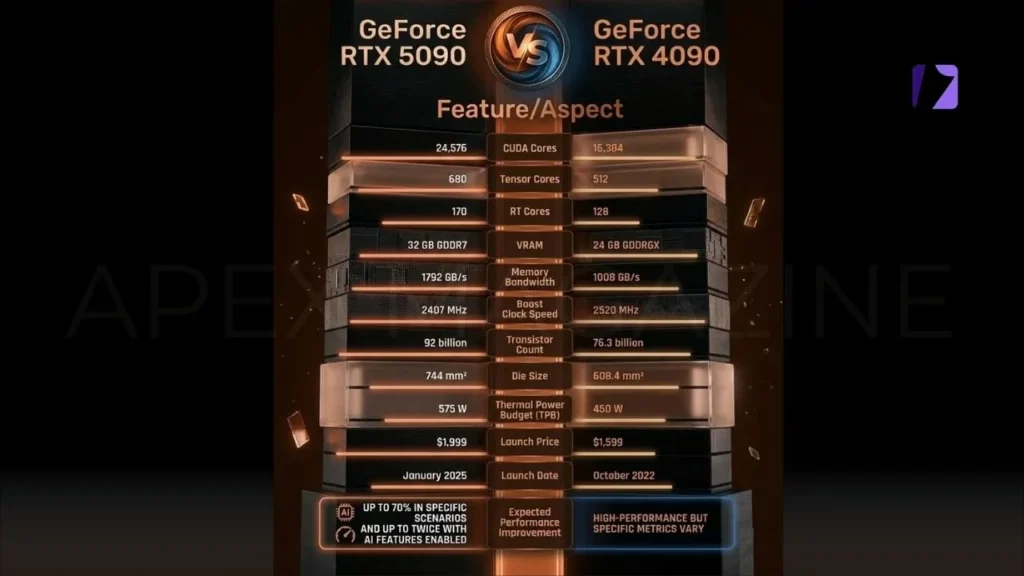
Comparing the RTX 5090 with the previous flagship, the NVIDIA GeForce RTX 4090, reveals several important improvements. The RTX 5090 introduces a more advanced architecture, faster memory technology, and increased processing cores. These upgrades allow the GPU to handle modern games and professional applications more efficiently. Gamers upgrading from the RTX 4090 will notice smoother frame rates, faster rendering speeds, and improved performance in demanding graphics workloads. The new generation also benefits from improved ray tracing performance and better AI-powered upscaling technologies.
Another major difference lies in power efficiency and future-ready features. Although the RTX 5090 offers significantly higher performance, it also improves energy management through architectural optimization. The GPU processes complex workloads with greater efficiency, reducing performance bottlenecks during intensive tasks. Additionally, new software technologies and driver optimizations allow the RTX 5090 to deliver better compatibility with upcoming game engines and applications. These improvements make the RTX 5090 an attractive upgrade for enthusiasts who want cutting-edge graphics capabilities and long-term performance benefits.
RTX 5090 vs AMD Next-Generation GPUs
The high-end GPU market often features strong competition between NVIDIA and AMD. With the release of the RTX 5090, NVIDIA aims to maintain its leadership in the premium graphics segment. AMD continues to develop powerful GPUs under its Radeon series, which often compete closely with NVIDIA’s products in gaming performance. However, the RTX 5090 differentiates itself through advanced AI technologies, strong ray tracing performance, and an extensive software ecosystem that enhances both gaming and professional workflows.
AMD GPUs may offer competitive pricing and solid performance in many scenarios, but NVIDIA’s ecosystem provides unique advantages. Features such as AI-driven upscaling, optimized drivers, and specialized computing cores make the RTX 5090 highly versatile. Developers often optimize applications specifically for NVIDIA technologies, further improving performance and compatibility. As both companies continue to innovate, competition between NVIDIA and AMD ultimately benefits consumers by driving improvements in GPU performance, efficiency, and overall graphics technology.
Price, Availability, and Market Launch
High-end graphics cards typically launch with premium pricing, and the RTX 5090 follows this trend. As the flagship GPU in NVIDIA’s latest lineup, the card targets enthusiasts, professional creators, and technology enthusiasts who demand the highest performance available. Initial availability may vary depending on global demand and production capacity. Early adopters often compete to purchase these GPUs during the launch period, especially as high-end graphics cards attract attention from gamers, creators, and technology reviewers worldwide.
Market availability usually expands over time as manufacturing increases and more partner manufacturers release custom versions of the GPU. These variations may include enhanced cooling systems, factory overclocking, and unique design elements. Retail pricing can fluctuate depending on demand, supply chain conditions, and regional markets. Despite the high cost, many enthusiasts view flagship GPUs like the RTX 5090 as long-term investments that deliver exceptional performance for gaming, creative projects, and professional computing workloads.
Who Should Buy the RTX 5090?
The RTX 5090 is designed primarily for users who demand extreme performance from their computing hardware. Enthusiast gamers who play modern AAA titles at high resolutions will benefit greatly from the GPU’s advanced capabilities. Players who use 4K displays or plan to explore 8K gaming will find the RTX 5090 especially valuable due to its ability to maintain smooth frame rates even with demanding graphics settings. Competitive gamers may also appreciate the GPU’s ability to deliver extremely high frame rates and reduced latency.
Creative professionals represent another important group of users who can benefit from the RTX 5090. Video editors, 3D artists, and software developers rely heavily on GPU acceleration for complex tasks such as rendering and simulation. The GPU’s powerful processing cores and large memory capacity allow professionals to handle large datasets and complex projects efficiently. While casual gamers may not require such powerful hardware, the RTX 5090 provides unmatched performance for users who need the absolute best graphics and computing capabilities available today.
Future of NVIDIA GPUs After RTX 5090
The release of the RTX 5090 demonstrates how rapidly GPU technology continues to evolve. NVIDIA consistently pushes the boundaries of graphics performance by introducing new architectures, improved AI capabilities, and advanced rendering technologies. The RTX 5090 sets a high standard for the current generation, but future GPUs will likely continue this trend with even greater efficiency and performance improvements. Innovations in semiconductor manufacturing, AI computing, and memory technology will shape the next wave of graphics cards.
Future GPUs may focus heavily on artificial intelligence integration and energy efficiency. As game engines become more complex and digital content creation grows increasingly demanding, GPUs will need to process massive amounts of data quickly and efficiently. NVIDIA’s continued research into AI-based rendering techniques and hardware acceleration suggests that upcoming generations will rely even more heavily on machine learning technologies. The RTX 5090 therefore represents not only the peak of current GPU performance but also a preview of the technological direction the industry is heading.
Conclusion
The RTX 5090 represents a major milestone in graphics processing technology. With its advanced architecture, improved AI capabilities, and powerful processing cores, the GPU offers exceptional performance for both gaming and professional workloads. Gamers can enjoy ultra-high resolutions, realistic lighting effects, and smoother frame rates, while content creators benefit from faster rendering and improved productivity. These advancements demonstrate NVIDIA’s continued commitment to pushing the limits of graphics innovation and delivering cutting-edge hardware solutions.
As gaming, artificial intelligence, and creative computing continue to evolve, GPUs like the RTX 5090 play an increasingly important role in modern computing environments. The card provides future-ready performance capable of handling upcoming games and demanding professional applications. For enthusiasts and professionals seeking top-tier graphics power, the RTX 5090 stands as one of the most advanced GPUs ever produced, combining performance, efficiency, and innovative technology into a single high-end graphics solution.
Frequently Asked Questions
What is the NVIDIA RTX 5090?
The RTX 5090 is NVIDIA’s flagship next-generation graphics card designed for high-end gaming, AI computing, and professional workloads.
Is RTX 5090 better than RTX 4090?
Yes, the RTX 5090 offers improved architecture, faster memory, better ray tracing, and stronger AI performance compared to the RTX 4090.
Can RTX 5090 run 8K games?
Yes, the RTX 5090 supports 8K gaming with the help of AI technologies such as DLSS.
Who should buy the RTX 5090?
Enthusiast gamers, content creators, AI developers, and professionals who need maximum GPU performance should consider the RTX 5090.
Does RTX 5090 support ray tracing?
Yes, it includes advanced ray tracing cores that improve lighting, reflections, and shadows in modern games.
VISIT MORE: APEX MAGAZINE