
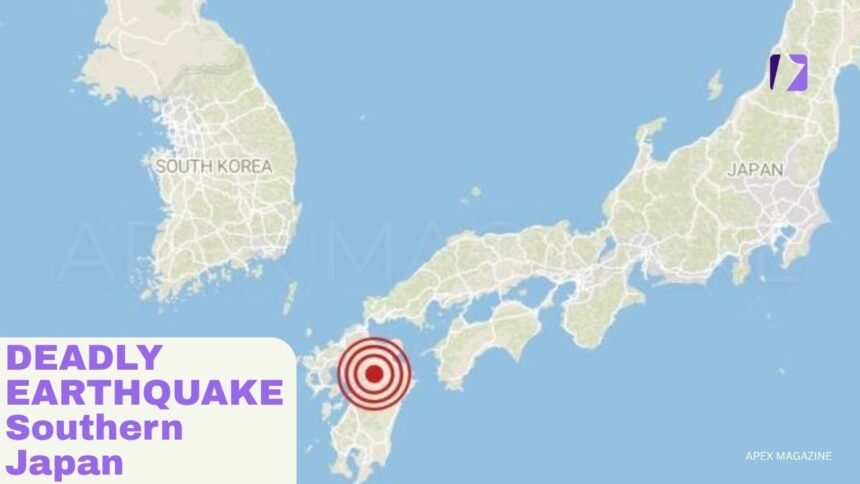
A powerful earthquake struck Japan’s Kumamoto Prefecture on Tuesday, prompting a major emergency response as authorities assessed widespread damage, treated dozens of injuries, and searched for people trapped in collapsed structures. The earthquake, which measured 7.1 in magnitude according to the Japan Meteorological Agency (JMA), was felt across much of Kyushu and temporarily triggered a tsunami advisory that was later lifted.
Strong Earthquake Hits Kumamoto
The earthquake struck in the afternoon with its epicentre in Kumamoto Prefecture on Japan’s southern island of Kyushu. Strong shaking was reported across neighbouring areas, causing damage to buildings, transport infrastructure, and public utilities.
- Strong Earthquake Hits Kumamoto
- Emergency Services Launch Large-Scale Rescue Operations
- Shopping Mall Incident Raises Casualty Concerns
- Injuries Reported Across the Region
- Transport Networks Disrupted
- Power Outages and Infrastructure Damage
- Tsunami Advisory Quickly Lifted
- Major Companies Suspend Operations
- Memories of the 2016 Kumamoto Earthquake Return
- Authorities Warn of Aftershocks
- Rescue Operations Continue
The U.S. Geological Survey later estimated the event at magnitude 6.8, while Japanese authorities continued using the JMA’s 7.1 assessment during the emergency response. Such differences are common because agencies use different measurement methods.
Emergency Services Launch Large-Scale Rescue Operations
Rescue teams, firefighters, police officers, and Japan’s Self-Defense Forces were quickly deployed to affected communities.
Authorities reported damaged roads, disrupted communications, and power outages affecting thousands of households. Emergency crews worked through the day to reach isolated areas while inspecting buildings for structural damage.
More than 3,000 military personnel were mobilised to support rescue operations and deliver emergency assistance where needed.
Shopping Mall Incident Raises Casualty Concerns
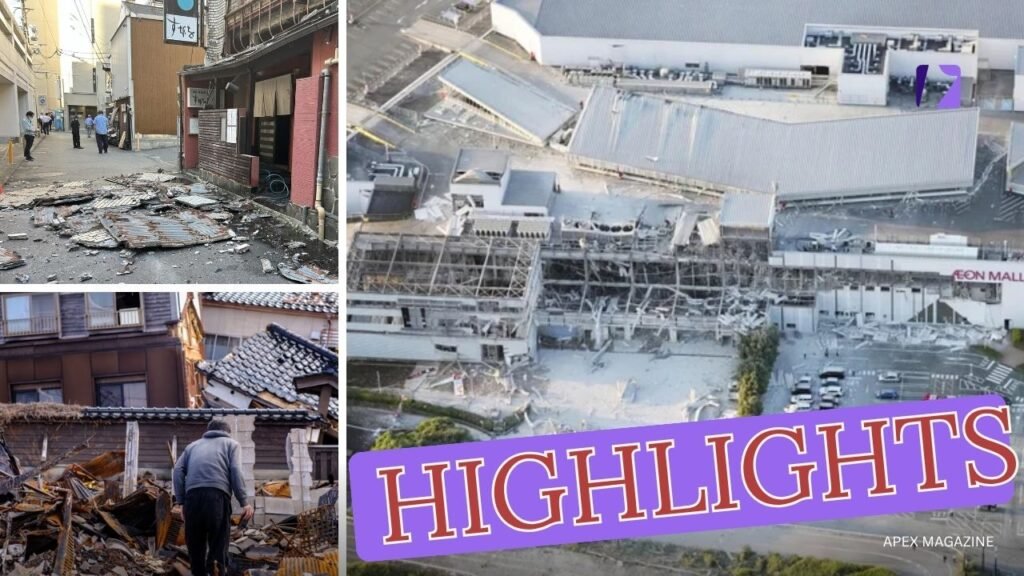
One of the most serious incidents occurred at an Aeon shopping mall in Kumamoto, where part of the building reportedly collapsed following an explosion after the earthquake.
Emergency responders searched for people believed to be trapped inside the damaged structure. Officials had not confirmed the exact cause of the explosion as investigations continued, and rescue efforts remained ongoing.
Injuries Reported Across the Region
Hospitals across Kumamoto began receiving injured residents soon after the earthquake.
Officials confirmed dozens of injuries ranging from minor cuts to more serious trauma caused by falling debris and damaged buildings. Authorities warned that casualty figures could change as search operations continued and emergency teams gained access to harder-hit locations.
Transport Networks Disrupted
The earthquake significantly affected transportation across Kyushu.
Bullet train services were suspended for safety inspections, while several conventional railway lines stopped operating. Flights at regional airports were also delayed or cancelled as authorities inspected runways and airport facilities.
Road closures caused by cracks, landslides, and damaged bridges complicated rescue operations and delayed travel throughout the region.
Power Outages and Infrastructure Damage
Thousands of homes temporarily lost electricity after the earthquake.
Utility companies began restoring power while engineers inspected water systems, bridges, and public buildings for damage. Fires were also reported in several locations, adding to the challenges facing emergency responders.
Authorities urged residents to avoid damaged buildings until inspections could be completed safely.
Tsunami Advisory Quickly Lifted
Following the earthquake, Japanese authorities briefly issued a tsunami advisory for nearby coastal areas.
The advisory was later lifted after monitoring showed no significant tsunami had developed. Even so, officials advised residents near the coast to continue following emergency instructions until all safety assessments were completed.
Major Companies Suspend Operations
Several major manufacturers temporarily halted operations in Kumamoto as a precaution.
Companies including TSMC, Sony, and Fujifilm evacuated employees while conducting safety inspections of their facilities. Businesses across the region also paused production until buildings could be evaluated for structural integrity.
Memories of the 2016 Kumamoto Earthquake Return
The latest earthquake has revived memories of the devastating 2016 Kumamoto earthquake sequence, which caused widespread destruction, damaged the historic Kumamoto Castle, and resulted in significant loss of life.
Because of that disaster, Japan has continued investing in stronger building standards, improved emergency warning systems, and disaster preparedness. Officials said those measures likely helped reduce risks during the latest event, although the full extent of the damage is still being assessed.
Authorities Warn of Aftershocks
Seismologists warned that strong aftershocks remain possible in the coming days.
Japan’s Meteorological Agency advised residents to stay alert, particularly near damaged buildings and areas vulnerable to landslides. Emergency officials also encouraged households to prepare emergency supplies and closely monitor official updates.
Rescue Operations Continue
As rescue teams continue searching damaged buildings and restoring essential services, officials say it may take time before the full impact of the Kumamoto earthquake becomes clear.
Authorities are expected to release updated information on casualties, infrastructure damage, and recovery efforts as inspections continue. For now, emergency responders remain focused on reaching affected communities, helping displaced residents, and ensuring public safety while aftershocks remain a concern.
Stay More Update APEX MAGAZINE