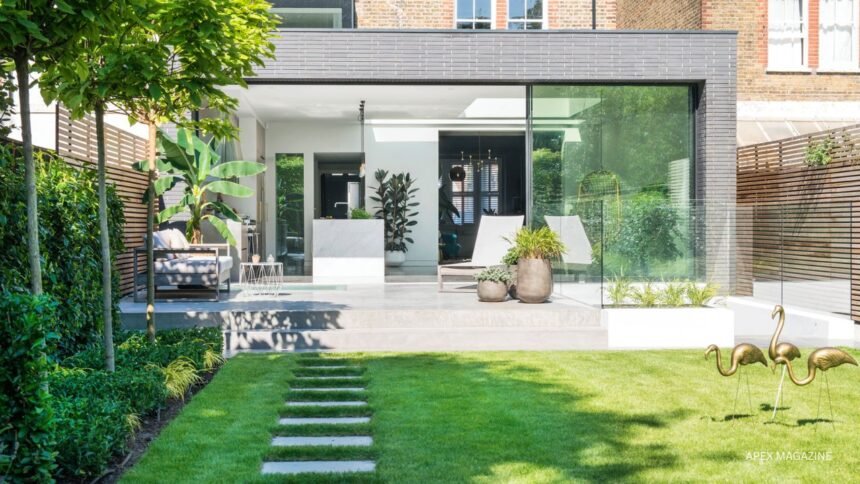
A garden does not need walls and doors to feel divided into distinct spaces. With thoughtful planting, even a relatively simple outdoor area can become a collection of places, each with its own atmosphere and purpose.
This idea of creating “outdoor rooms” can completely change how a garden is experienced. Instead of standing at the back door and seeing everything at once, planting can conceal certain areas, frame others, and encourage people to move through the space.
The result can make a garden feel larger, more established and considerably more interesting.
Begin With What Each Space Is For
Before deciding where plants should go, think about how you actually want to use the garden.
You might want a sunny area for outdoor dining, a quieter corner for reading, an open lawn for children, or a secluded seating area that feels removed from the house.
These uses do not necessarily need hard physical boundaries between them. Changes in planting can be enough to signal that you are entering a different part of the garden.
A low border might subtly separate a terrace from a lawn, for example, while taller planting could create considerably more privacy around a seating area.
The important part is giving each space a reason to exist rather than dividing the garden simply for the sake of it.
Use Hedges as Living Walls
Hedges are particularly effective when creating outdoor rooms because they can provide many of the functions of an architectural wall without introducing another hard surface.
The RHS describes hedges as versatile living screens and boundaries, and notes that they can be used to divide gardens into smaller spaces.
Choosing hedging plants from hedgeshedges.co.uk can therefore be about much more than defining the outer edge of a property. Internal hedging can separate entertaining areas from practical spaces, conceal a shed or composting area, create a secluded corner or guide movement through a larger garden.
Height makes a significant difference. A lower hedge can define a space while preserving views across the garden, whereas taller hedging can create the feeling of stepping into a genuinely separate room.
Do Not Reveal Everything at Once
One of the most effective ways to make an outdoor space feel larger is to introduce an element of discovery.
If the entire garden can be understood from a single viewpoint, there is little incentive to explore it. Screening part of the view creates curiosity about what might be beyond it.
The RHS suggests that screening plants can be used not only to hide unwanted views but also to interrupt sightlines and draw attention towards particular features.
Consider leaving a gap in a hedge that reveals a bench beyond, allowing a path to disappear behind tall planting or positioning a tree so that another section of the garden is only partially visible.
The objective is not to create a maze. A few carefully controlled views can be enough to give the garden greater depth.
Give Different Rooms Different Personalities
Indoor rooms rarely all have exactly the same character, and outdoor spaces do not need to either.
A dining area could feel structured, with clipped hedging and restrained planting. Beyond it, another section might become softer and more informal, using grasses, flowering perennials and looser shrubs.
Planting can also influence how enclosed a space feels. Dense evergreen foliage creates greater privacy throughout the year, while deciduous plants can provide seasonal screening without blocking as much winter light. The RHS recommends considering the eventual height, spread and maintenance requirements of screening plants before choosing them.
These changes in texture, height and form allow each outdoor room to develop its own identity without making the overall garden feel disconnected.
Connect the Spaces as Carefully as You Divide Them
Creating separate areas is only half of the design. They also need to work together.
Paths, repeated materials and recurring plants can provide visual continuity. A hedge used beside the dining area might appear again farther down the garden, while the same paving could lead between several spaces.
Openings between planted boundaries also deserve attention. Rather than treating them as simple gaps, they can frame views towards a tree, sculpture, seating area or particularly attractive section of planting.
Done successfully, the garden becomes a sequence rather than a single scene.
That is ultimately what makes outdoor rooms so effective. Plants can provide privacy and structure, but they can also control what you see, where you move, and how each part of the garden feels. Instead of simply filling the space with planting, the garden itself becomes something to explore.
Visit More APEX MAGAZINE