
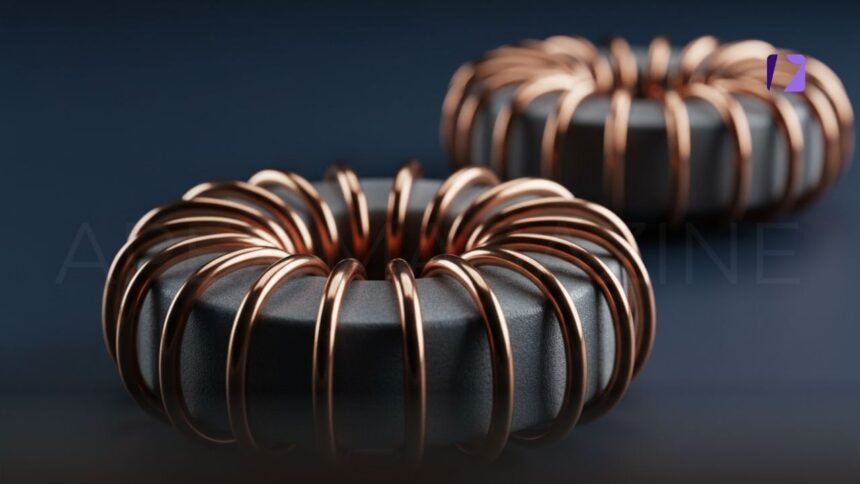
If you are searching for a custom coil manufacturer, chances are something in your system is not behaving the way the catalog promised. Voltage is drifting. Heat is building. Signal integrity is degrading. Or your mechanical constraints refuse to cooperate with off-the-shelf geometry. Standard components are convenient. Until they are not. Custom coils live in that uncomfortable space between theoretical design and operational reality. They are not glamorous.
They are not trendy. But when current must flow predictably, when magnetic fields must behave precisely, and when tolerances leave no room for improvisation, custom magnetics stop being a luxury. They become infrastructure. So let us talk about what actually matters when selecting a custom coil manufacturer and how to make a decision that will not come back to haunt your production line.
When Standard Coils Fail Quietly
Electrical systems rarely fail in dramatic ways. Instead, performance gradually degrades. Inductance may drift outside acceptable tolerance levels, resistance may increase under thermal load, and insulation can weaken under environmental stress. These gradual changes can silently affect the reliability of the entire system.
In industries where consistency is critical, such as power conversion, aerospace systems, medical devices, EV platforms, and industrial automation, even small electromagnetic inconsistencies can create major operational problems. What appears to be a minor deviation in coil performance can eventually impact energy efficiency, signal accuracy, or equipment lifespan.
Custom manufacturing allows you to define:
- Exact inductance and impedance characteristics
- Core material optimized for frequency range
- Thermal class and insulation system
- Shielding and EMI containment
- Physical footprint aligned to your enclosure
You are not simply purchasing copper wire wound around a core. You are investing in predictable electromagnetic performance that supports long-term system reliability.
Engineering Collaboration, Not Just Production
A true custom coil manufacturer does not wait for a finished drawing and blindly execute it. They ask questions.
What is the duty cycle? What ambient temperature will it endure? Is vibration a factor? What regulatory standards apply? UL? IEC? MIL spec?
The difference between a vendor and a manufacturing partner is technical dialogue and collaboration. Engineers provide DFM feedback, recommend suitable materials, run simulations, and develop prototypes before moving toward mass production. This process ensures the final coil design performs reliably in the actual system environment.
Professional manufacturers rely on:
- Finite Element Analysis for magnetic modeling
- Automated precision winding equipment
- Vacuum impregnation systems for insulation integrity
- Controlled curing and encapsulation processes
- In-house testing for inductance, resistance, and thermal behavior
If your supplier cannot explain their testing methodology in detail, you are gambling with your own reliability metrics.
Material Science Is the Hidden Variable
Performance in electromagnetic systems is heavily influenced by material selection. Copper purity directly impacts electrical conductivity, while core composition determines magnetic saturation thresholds and overall efficiency. Insulation systems also play a major role in determining how long a coil can operate under thermal and environmental stress. Even the choice between ferrite, powdered iron, laminated steel, or nanocrystalline cores can significantly affect how the system behaves under load. Each material offers different advantages depending on the operating frequency, power levels, and efficiency requirements.
A competent custom coil manufacturer understands magnetic flux density curves, core losses at different frequencies, and the tradeoffs between efficiency and thermal dissipation. Their role is not simply to match specification sheets but to create engineering margin that protects the system from unpredictable real-world variables. Material science therefore becomes a hidden but essential variable in coil design. Proper material selection ensures stable performance, improved efficiency, and longer operational lifespan.
Scaling From Prototype to Production
It is relatively easy to build five perfect prototype units in a controlled development environment. The real challenge appears when production scales to thousands or even tens of thousands of identical components. Maintaining consistency across production batches requires strict process control, detailed quality documentation, and reliable sourcing of raw materials. Without these systems in place, small variations during manufacturing can affect the electrical behavior of the final product. Manufacturers that support high-volume production maintain strong quality management systems and traceability protocols.
Ask about:
- ISO certifications
- Lot traceability systems
- Incoming material inspection protocols
- Automated winding tolerances
- Long-term sourcing agreements for core materials
If your project roadmap includes large-scale production, your manufacturer must think beyond the initial prototype stage and demonstrate the ability to maintain repeatable precision at volume.
Cost Versus Lifecycle Value
Custom components often appear more expensive at the beginning because they involve engineering work, tooling, and prototype development. Compared with catalog components, the upfront investment can seem significantly higher. However, evaluating cost only at the purchase stage can be misleading. Downtime, warranty claims, field failures, redesign cycles, and compliance delays can quickly exceed any initial savings gained from using cheaper components.
A properly engineered custom coil can reduce thermal inefficiencies, improve overall energy performance, and extend the lifespan of the entire system. These advantages often translate into lower maintenance costs and greater operational reliability over time. In regulated industries, custom components can also help avoid certification setbacks that delay product launches. When lifecycle value is considered, the cheapest component is rarely the most cost-effective decision.
Conclusion
Electromagnetic performance is often invisible when everything works correctly. Engineers rarely notice the coil when systems operate as expected. However, when electromagnetic behavior becomes unstable, the consequences quickly become visible through system failures or reduced performance. If your application depends on signal integrity, energy efficiency, thermal stability, or long-term durability.
A custom coil manufacturer becomes a critical part of your system architecture rather than just a component supplier. Choosing the right manufacturing partner ensures that every design decision supports reliability and efficiency. Precision in electromagnetic design is not simply a feature but a requirement for modern high-performance systems.
Frequently Asked Questions
How long does it take to develop a custom coil?
Development timelines vary based on complexity. Simple designs may move from concept to prototype in a few weeks, while highly specialized or regulated applications can require several months of modeling, testing, and compliance validation.
Is a custom coil always more expensive than a standard coil?
Upfront costs are typically higher due to engineering and tooling. However, when factoring in performance optimization, energy efficiency, and reduced failure rates, custom coils often deliver lower total lifecycle costs.
What information should I provide to a custom coil manufacturer?
Provide electrical specifications (inductance, current, frequency), environmental conditions (temperature, vibration), dimensional constraints, compliance requirements, and expected production volume. The more operational context you share, the more accurate and reliable the final design will be.
VISIT MORE: APEX MAGAZINE