
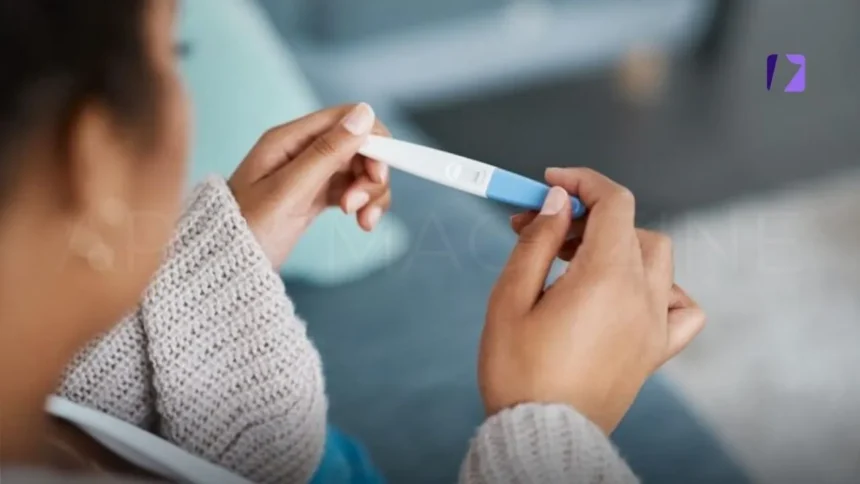
Whether you’re trying for a baby or just want to investigate your fertility and reproductive system, there’s a good chance that you’ve wondered about something. Can fertility tests be painful and hurt you in any way?
The short answer is: No. Most fertility tests are far less uncomfortable than people think. Yes, some of the procedures involved can feel a bit awkward at first, but remember: these are routine medical checks that fertility doctors perform almost every day. They are absolutely safe, and there is nothing here to make you feel intimidated. Keeping this in mind, let’s dive a little deeper into how fertility testing works and what you should expect going into one.
- What Are The Common Tests For Fertility Problems?
- Does Your Age Impact The Difficulty Of Fertility Tests?
- Are Ultrasound Scans Painful And Invasive?
- How To Best Prepare For A Fertility Test?
- What Should You Expect Emotionally During Fertility Testing?
- Book Your Fertility Test With Confidence
- Conclusion
- Frequently Asked Questions
What Are The Common Tests For Fertility Problems?
One big misconception that a lot of people seem to carry about fertility testing is that this is a single test that gives all the answers they need. The truth is that fertility testing involves a lot of moving parts, meaning that you’ll be going through several tests in a row to get the full picture of your reproductive health.
Generally speaking, the tests begin with blood hormone tests. Measuring substances like AMH, FSH, and luteinising hormone, this test helps track your ovulation timeline and overall egg development. The next test will likely be an ultrasound to examine the uterus and ovaries more closely – more on that later.
If the doctors suspect any structural problem, they may also check your fallopian tubes and uterine cavity through a procedure known as hysterosalpingography (HSG). In this test, a special dye is gently placed into the uterus and fallopian tubes, and afterwards, the doctors track its movement through the reproductive system. If the dye flows freely, it means your uterine cavity and tubes are healthy.
On the male side, the process is even simpler. A semen analysis is generally the first and only item on the list, evaluating sperm count, motility, and morphology. It is a completely non-invasive procedure, but it plays just as big a role in identifying fertility issues in a couple.
Does Your Age Impact The Difficulty Of Fertility Tests?
Yes, your age does play a big role in fertility itself. But rest assured, it rarely changes the difficulty of the testing process. A person in their late twenties will typically perform the same tests as someone in their late thirties or forties. There may be a few additional tests for someone based on their situation. But the tests discussed above will largely remain the same. In terms of physical discomfort during testing, age will not make the procedure harder to tolerate
The only difference lies in how doctors interpret the results and subsequently suggest treatment. As you grow older, the number and quality of eggs naturally take a hit. Couple that with any structural issues that are identified later than they should, and doctors may have fewer treatment options.
Are Ultrasound Scans Painful And Invasive?
Blood tests aside, ultrasounds in fertility testing are slightly misunderstood by people, with many thinking that they are something painful or invasive. There are now two types of ultrasound commonly recommended during fertility assessments. In an abdominal ultrasound, a technician moves a small handheld device across your lower stomach to take a scan of your uterus and ovaries. This is a completely painless procedure with minimal side effects.
The second type is the transvaginal ultrasound. In this scan, a slim probe is gently inserted into the vagina to give a clearer view of the uterus and ovaries. Though this may sound intimidating at first, it is only mildly uncomfortable and never painful. The scan itself only lasts a few minutes – apart from a bit of spotting. Which is an expected side effect, you’ll face no side effects and will be free to go about your day afterwards.
The same can be said for more advanced scans like the previously mentioned HSG or 3D ultrasound tests – all of them are not painful at all, minimally invasive, and are completely safe for you.
How To Best Prepare For A Fertility Test?
To prepare for a fertility test, you don’t need to do a lot – just a few small steps are enough to ensure that everything goes smoothly and you get the most accurate results.
First, gather all the information and documents you can on your medical history. Make sure this includes details about your menstrual cycle, previous pregnancies, medications, and any existing health conditions. You’ll also need to schedule your tests on certain specific days of your cycle, especially your hormone tests. This will let the doctors measure your hormone levels more accurately. Ultrasound scans may also be scheduled at different points of your cycle to track the egg development. Speaking of ultrasounds, you’ll need to go in for an abdominal ultrasound with a full bladder and an empty bladder for the transvaginal ultrasound.
Last but not least, try to approach this process with realistic expectations. A fertility test takes more than a single appointment. And you’ll be visiting the doctors several times to get the answers you need. So be patient and remember that with each piece uncovered. You’ll only get closer to completing the puzzle that is your reproductive system.
What Should You Expect Emotionally During Fertility Testing?
While the physical aspects of fertility testing are usually manageable, it is also worth mentioning what you might experience on the emotional side. Such a test obviously brings with it a lot of anxiety and uncertainty, which can make things overwhelming for anyone.
Before anything else, you need to approach this process as a diagnosis and only a diagnosis. Whatever result you get from the test will not be a concrete verdict on your ability to conceive. If you’re a couple reading this, remember that the goal of this test is not to assign blame or label one person as the true cause of infertility.
All you’re doing is gathering information to find the best treatment method for your situation, all while removing all the guesswork from the picture. There will almost certainly be a solution to your problems, too, as fertility research has come a long way in recent times. With a treatment procedure for almost every potential problem.
Book Your Fertility Test With Confidence
The biggest surprise you’ll receive during a fertility test, as mentioned before, is just how simple it really is. It’s so straightforward that the doctors will go about it like it’s their everyday routine – which it really is. The procedures may sound complex on paper, but in practice, they are quick, safe, and designed to minimise discomfort. Once you move past the initial uncertainty, you’ll find the process far less daunting than before. All that is to say, if you’ve been feeling uncertain about fertility testing, put all your worries to the side and book your appointment right away.
Conclusion
Fertility testing may sound complex at first, but in reality, it is a straightforward and safe process. Most tests involve little to no pain, and any discomfort is usually mild and temporary. What often feels overwhelming is not the procedure itself, but the uncertainty that comes with it.
By understanding what each test involves, you can approach the process with more confidence and less anxiety. These tests are not designed to intimidate you—they are simply tools to give you clear answers about your reproductive health.
Whether you are planning for a baby or just exploring your fertility, taking this step can provide clarity and direction. With the right guidance and a calm mindset, fertility testing becomes far less daunting and much more empowering.
Frequently Asked Questions
Are fertility tests painful?
Most fertility tests are not painful. Some procedures may cause mild discomfort, but they are generally quick and well-tolerated.
How long does fertility testing take?
Fertility testing is usually done over multiple appointments. The full process can take a few weeks, depending on your cycle and the tests required.
Do both partners need fertility testing?
Yes, in many cases both partners are tested. Male fertility is typically assessed through a semen analysis, while female fertility involves multiple tests.
Is a transvaginal ultrasound painful?
No, it is not painful. It may feel slightly uncomfortable, but the procedure is brief and safe.
VISIT MORE: APEX MAGAZINE