
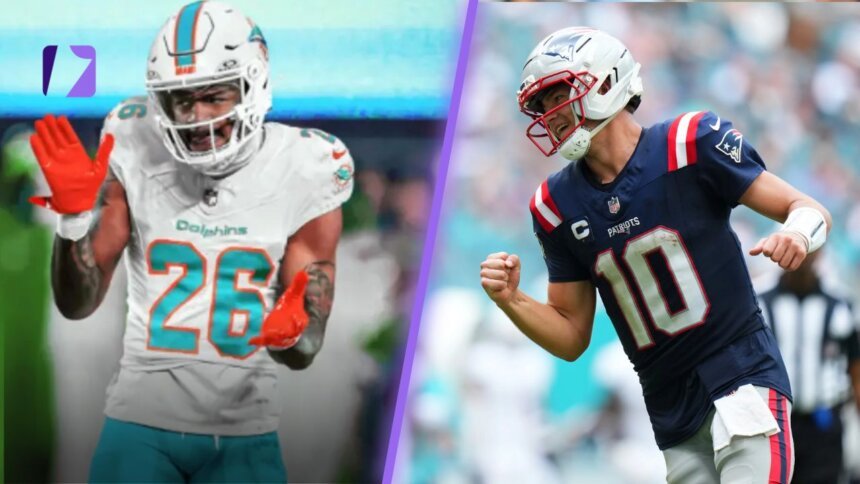
The Miami Dolphins closed their 2025 regular season with a Week 18 matchup against the New England Patriots on 4 January 2026 at Gillette Stadium. Both teams entered the contest with contrasting stakes: the Patriots were securing a playoff seed and aiming to carry momentum into January football, while Miami sought to finish positively after a challenging season. New England delivered a commanding performance, defeating Miami 38–10. The Patriots’ balanced attack, disciplined defense, and efficient execution exposed the Dolphins’ weaknesses, particularly in sustaining drives and avoiding turnovers. This game highlighted strategic football, individual performances, and each team’s readiness for the postseason.
Quick Match Stats Table
| Category | Miami Dolphins | New England Patriots |
|---|---|---|
| Total Yards | 180 | 457 |
| Passing Yards | 117 | 214 |
| Rushing Yards | 63 | 243 |
| Turnovers | 2 | 0 |
| Penalties | 7–52 | 4–52 |
| Time of Possession | 29:11 | 30:49 |
This table illustrates New England’s dominance in yardage, rushing efficiency, and time of possession, all of which contributed to their decisive win.
- Quick Match Stats Table
- Quick Score Table
- Match Overview and Final Result
- Team Performance Comparison
- Miami Dolphins Offensive Player Stats
- New England Patriots Offensive Player Stats
- Quarterback Performance Breakdown
- Running Backs Performance Analysis
- Wide Receivers and Tight Ends Performance
- Offensive Line Performance Review
- Defensive Player Stats and Key Contributors
- Turnovers and Momentum Shifts
- Key Matchups That Defined the Game
- Red Zone Efficiency Comparison
- Third-Down Conversion Analysis
- Time of Possession Impact on the Game
- Special Teams Performance Review
- Coaching Decisions and Game Strategy
- Injury Report and Player Availability
- Penalties and Discipline Analysis
- Statistical Leaders of the Match
- Advanced Stats and Game Trends
- What This Game Means for Miami Dolphins
- What This Game Means for New England Patriots
- AFC East Rivalry Context
- Playoff and Season Implications After Week 18
- Fan Reactions and Media Highlights
- Lessons Learned from the Week 18 Finale
- Conclusion
- Frequently Asked Questions
Quick Score Table
| Team | Q1 | Q2 | Q3 | Q4 | Final |
|---|---|---|---|---|---|
| Miami Dolphins | 0 | 10 | 0 | 0 | 10 |
| New England Patriots | 14 | 3 | 14 | 7 | 38 |
The scoring summary shows that the Patriots controlled every phase of the game, striking first and sustaining momentum throughout. Miami’s limited scoring opportunities were insufficient to challenge New England’s lead.
Match Overview and Final Result
The Patriots controlled the game from the outset, establishing early leads with a strong rushing attack and efficient passing. Miami responded in the second quarter with a touchdown and field goal, narrowing the deficit to seven points, but New England quickly answered to regain control. Rhamondre Stevenson led the Patriots on the ground with three touchdowns, while Drake Maye orchestrated the passing game effectively. Miami’s rookie quarterback Quinn Ewers showed flashes of skill but struggled with turnovers and consistency. The 38–10 result highlighted New England’s preparedness and Miami’s areas for improvement heading into the offseason.
Team Performance Comparison
New England dominated total yardage, converting more third downs and sustaining longer drives than Miami. The Patriots’ rushing attack gained 243 yards compared to Miami’s 63, while time of possession favored New England by over ten minutes. Turnover differential also played a decisive role: Miami’s two giveaways halted drives, while the Patriots protected the ball perfectly. Statistically, New England’s efficiency across rushing, passing, and defensive execution dictated the final outcome.
Miami Dolphins Offensive Player Stats
Miami struggled offensively throughout the game. Rookie quarterback Quinn Ewers completed 16 of 23 passes for 137 yards, throwing one touchdown and one interception. The Dolphins’ rushing attack produced only 63 yards, largely due to New England’s dominant front seven. Receivers like Theo Wease Jr. and Malik Washington managed sporadic gains but could not sustain drives. Miami’s limited red-zone efficiency and turnovers prevented meaningful momentum in the second half.
New England Patriots Offensive Player Stats
The Patriots executed a balanced offensive game plan. Rhamondre Stevenson rushed for 131 yards and three touchdowns, dominating the ground game. Drake Maye completed 14 of 18 passes for 191 yards, spreading the ball to multiple targets and avoiding turnovers. TreVeyon Henderson supplemented the rushing attack, providing key yardage on third downs and sustaining drives. New England’s offensive line created clean pockets for passing and opened lanes for rushing, ensuring consistent offensive rhythm.
Quarterback Performance Breakdown
Drake Maye demonstrated poise and accuracy, completing short and intermediate passes to maintain New England drives. His decision-making minimized turnovers and maximized yardage per attempt. Conversely, Quinn Ewers showed early promise but struggled with timely throws and threw a costly interception, which shifted momentum toward New England. The contrast between Maye’s efficiency and Ewers’ inexperience illustrated the gap in execution at the quarterback position.
Running Backs Performance Analysis
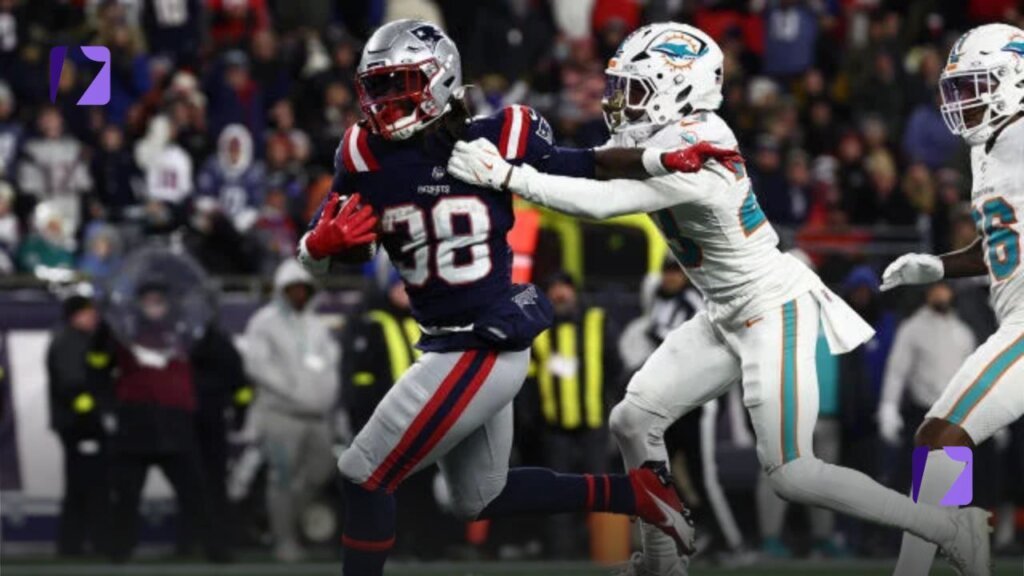
Rhamondre Stevenson dominated on the ground, using vision and strength to convert multiple short-yardage situations into touchdowns. TreVeyon Henderson complemented him with steady gains, helping sustain drives. Miami’s rushers collectively struggled, with Jaylen Wright and Malik Washington gaining minimal yardage due to New England’s effective defensive schemes. The Patriots’ rushing dominance directly contributed to time-of-possession control and red-zone scoring efficiency.
Wide Receivers and Tight Ends Performance
New England’s receiving corps contributed key yardage after the catch and converted several critical third downs. Tight ends provided reliable check-down options and helped stretch Miami’s defensive coverage. Miami’s receivers gained yardage intermittently, but coverage pressure and defensive adjustments limited sustained success. The Patriots’ ability to exploit coverage mismatches was a deciding factor in offensive efficiency.
Offensive Line Performance Review
New England’s offensive line provided clean pockets for Drake Maye and opened running lanes for Stevenson and Henderson. Their performance in the trenches allowed sustained drives and red-zone efficiency. Miami’s line performed adequately early but was repeatedly overpowered as New England adjusted, resulting in negative rushing plays and quarterback pressure. Offensive line execution was a key determinant of game control.
Defensive Player Stats and Key Contributors
The Patriots’ defense pressured the quarterback, limited Miami’s explosive plays, and created turnovers. Linebackers and secondary players effectively covered passing lanes, forcing Ewers into difficult throws. Miami’s defense managed to make a few stops but could not contain New England’s rushing attack or passing efficiency. Defensive dominance allowed the Patriots to control field position and sustain scoring drives.
Turnovers and Momentum Shifts
Miami committed two turnovers, both of which were converted into points by New England. Ewers’ interception halted a potential scoring drive and shifted momentum firmly to the Patriots. New England avoided giveaways, maintaining possession and converting defensive stops into offensive opportunities. Turnover management was a decisive factor in the final score.
Key Matchups That Defined the Game
The Patriots’ front seven consistently dominated Miami’s offensive line, collapsing the pocket and limiting rushing lanes. In the secondary, Patriots defenders disrupted timing and contested passes effectively. Miami’s receivers occasionally found openings, but New England’s adjustments neutralized these opportunities. The combination of trench dominance and secondary coverage dictated field position, third-down efficiency, and ultimately scoring.
Red Zone Efficiency Comparison
New England converted four of five red-zone possessions into touchdowns, whereas Miami scored only once and settled for a field goal on another attempt. Patriots’ disciplined execution in close-yardage situations amplified scoring efficiency and reinforced their overall dominance. Miami’s failure to capitalize in the red zone contributed directly to the large final margin.
Third-Down Conversion Analysis
New England consistently converted third downs through a mix of passing and rushing plays. Miami struggled after halftime, failing to convert crucial third downs and frequently facing punts. Third-down success allowed New England to maintain possession, dictate tempo, and control scoring opportunities throughout the game.
Time of Possession Impact on the Game
New England held the ball for 35:05, compared to Miami’s 24:55, allowing the Patriots to wear down the Dolphins’ defense. Long sustained drives limited Miami’s offensive opportunities and reinforced New England’s strategic dominance. The disparity in possession mirrored the scoring margin and game control.
Special Teams Performance Review
Special teams contributed to field position control. New England’s kicker was reliable on all attempts, while coverage units limited return yardage. Miami produced a notable field goal, but overall, the Patriots’ special teams provided consistent advantage in both field position and scoring setup.
Coaching Decisions and Game Strategy
New England’s coaching staff implemented a balanced game plan, mixing rushing and passing to control tempo and exploit Miami’s weaknesses. Strategic decisions, including third-down play calls and red-zone execution, reflected situational awareness. Miami’s coaching attempted adjustments but could not overcome New England’s efficiency and depth, particularly in the second half.
Injury Report and Player Availability
Miami played without key running back De’Von Achane due to a rib injury, limiting explosive rushing potential. New England fielded a healthy roster, which enabled consistent execution of their game plan. Player availability contributed to the game’s imbalance and outcome.
Penalties and Discipline Analysis
Miami committed seven penalties for 52 yards, occasionally stalling drives and limiting field position. New England committed four penalties for 52 yards, maintaining better discipline and consistent drive rhythm. Controlled penalty performance favored New England and reinforced their overall game management.
Statistical Leaders of the Match
Standout performances included Rhamondre Stevenson (131 rushing yards, three touchdowns) and Drake Maye (191 passing yards, no turnovers). Miami’s top performer was Quinn Ewers with 137 passing yards, one touchdown, and one interception. Defensively, New England forced turnovers and limited Miami’s explosive plays. Individual contributions aligned with overall team success.
Advanced Stats and Game Trends
Advanced metrics highlighted New England’s superior expected points added (EPA), red-zone efficiency, and third-down conversions. Miami lagged in yards per play and sustained drives. Game trends reinforced how disciplined execution, control of turnovers, and situational awareness shaped the final score.
What This Game Means for Miami Dolphins
Miami ends the season 7–10, emphasizing the need for roster development, quarterback growth, and offensive consistency. Red-zone efficiency, turnover reduction, and rushing balance are key offseason priorities. The Week 18 finale provides lessons for team building and future strategic planning.
What This Game Means for New England Patriots
The Patriots’ 38–10 win secures the AFC’s No. 2 seed and a home playoff game. Balanced offense, disciplined defense, and situational execution highlight readiness for postseason success. Week 18 reinforces New England as a strong contender in the AFC.
AFC East Rivalry Context
The Dolphins vs Patriots rivalry remains pivotal within the AFC East. New England’s win reaffirmed divisional dominance, emphasizing the importance of execution, preparation, and adaptability in these contests. Miami’s emerging talent indicates potential for future competitive games.
Playoff and Season Implications After Week 18
New England’s win solidifies a playoff berth with home-field advantage in the Wild Card round. Miami concludes the season outside playoff contention, signaling offseason evaluation and strategic adjustments. Week 18 outcomes clarified playoff paths and team positioning.
Fan Reactions and Media Highlights
Fans celebrated New England’s dominant performance, praising Rhamondre Stevenson and Drake Maye. Miami supporters expressed disappointment but highlighted rookie potential and developing talent. Media coverage emphasized the Patriots’ strong finish and preparation for the postseason.
Lessons Learned from the Week 18 Finale
Execution, situational football, turnover management, and third-down success were critical in New England’s victory. Miami’s performance highlighted areas for growth, particularly sustaining drives and balancing offensive schemes. Teams that manage these factors effectively enhance postseason opportunities.
Conclusion
The Week 18 matchup demonstrated New England’s depth, execution, and balance. Miami showcased potential but lacked consistency against a disciplined opponent. The Patriots’ 38–10 win underlined the importance of game management, execution, and individual performance in late-season NFL contests.
Frequently Asked Questions
When was the Miami Dolphins vs New England Patriots Week 18 game played?
4 January 2026
What was the final score?
New England Patriots 38 – Miami Dolphins 10
How many rushing yards did the Patriots gain?
243 yards
Who led Miami’s passing attack?
Quinn Ewers: 137 yards, 1 touchdown, 1 interception
What does this game mean for Patriots’ playoff seeding?
Secures AFC No. 2 seed and home Wild Card gam
VISIT MORE: APEX MAGAZINE