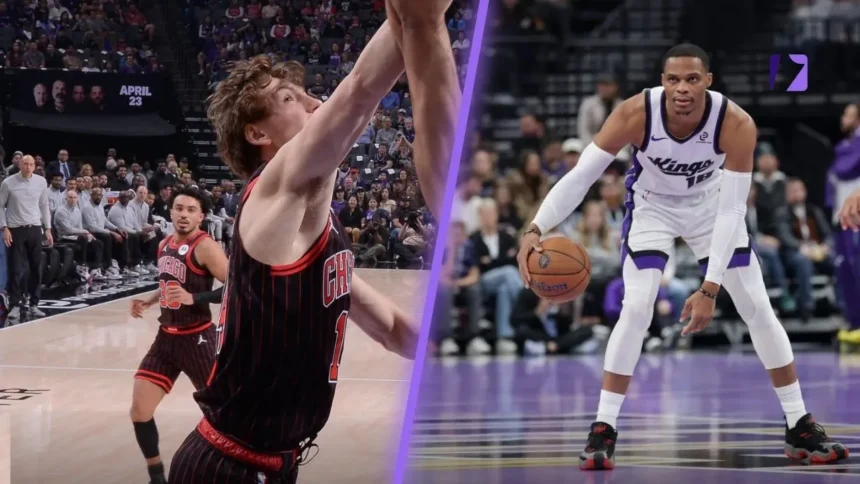
The Indiana Pacers faced the Sacramento Kings on March 10, 2026, in a highly competitive NBA matchup that showcased scoring versatility, strategic adjustments, and intense defensive plays. Both teams battled closely throughout four quarters, with the Kings ultimately emerging victorious, 114-109. The game highlighted contrasting team strengths: the Pacers emphasized interior scoring and rebounding, while the Kings capitalized on perimeter shooting, fast breaks, and transition efficiency. Fans were treated to a high-paced contest, multiple lead changes, and key individual performances that kept the outcome uncertain until the final buzzer.
The matchup also offered insights into team depth, rotation management, and late-game execution under pressure. Pacers relied heavily on offensive rebounds and mid-range scoring to maintain competitiveness, while Sacramento’s shooters created spacing and exploited defensive gaps. Strategic coaching decisions influenced momentum swings and controlled tempo throughout the game. This contest underscored the importance of teamwork, composure, and adaptability in tightly contested NBA matchups, providing valuable takeaways for season planning and playoff readiness for both franchises.
- Quick Score Table
- Match Overview and Key Moments
- Match Stats Table Stats
- First Quarter Performance Analysis
- Second Quarter Performance Analysis
- Third Quarter Turning Points
- Fourth Quarter Closing Performance
- Top Performers from the Indiana Pacers
- Top Performers from the Sacramento Kings
- Shooting Efficiency and Field Goal Analysis
- Three-Point Shooting Breakdown
- Rebounding Battle Between Pacers and Kings
- Assist Leaders and Playmaking Comparison
- Defensive Highlights and Turnover Analysis
- Coaching Strategy and Game Management
- What This Win Means for the Sacramento Kings Season
- What the Loss Means for the Indiana Pacers Moving Forward
- Conclusion
- Frequently Asked Questions
Quick Score Table
| Team | 1 | 2 | 3 | 4 | Final |
|---|---|---|---|---|---|
| Indiana Pacers | 25 | 34 | 23 | 27 | 109 |
| Sacramento Kings | 24 | 18 | 30 | 42 | 114 |
Match Overview and Key Moments
From the opening tip-off, the game featured a fast-paced contest with both teams exchanging leads throughout the first three quarters. Indiana focused on interior scoring and offensive rebounds, leveraging their physicality in the paint to generate high-percentage shots. Sacramento countered with precise perimeter shooting and quick transitions, forcing Indiana to adjust defensively. Early standout plays included fast-break points, contested mid-range jumpers, and defensive stops that highlighted both teams’ strategic preparation and execution.
Key moments emerged in the fourth quarter, when Sacramento mounted a comeback, scoring 42 points while limiting Indiana’s efficiency. Bench contributions, perimeter shooting, and transition plays fueled the Kings’ late surge, ultimately deciding the contest. Pacers demonstrated resilience, with clutch free throws and paint scoring keeping them competitive until the final minutes. The matchup illustrated the impact of rotations, coaching adjustments, and individual performances in high-pressure scenarios, emphasizing both teams’ depth and adaptability under NBA-level intensity.

Match Stats Table Stats
| Category | Indiana Pacers | Sacramento Kings |
|---|---|---|
| FG | 38-93 | 41-90 |
| Field Goal % | 41 | 46 |
| 3PT | 13-43 | 7-20 |
| Three Point % | 30 | 35 |
| FT | 20-22 | 25-30 |
| Free Throw % | 91 | 83 |
| Rebounds | 48 | 52 |
| Offensive Rebounds | 8 | 8 |
| Defensive Rebounds | 40 | 44 |
| Assists | 29 | 22 |
| Steals | 7 | 10 |
| Blocks | 2 | 7 |
| Total Turnovers | 15 | 11 |
| Points Conceded Off Turnovers | 24 | 14 |
| Fast Break Points | 5 | 18 |
| Points in Paint | 42 | 64 |
| Fouls | 23 | 18 |
| Technical Fouls | 0 | 0 |
| Flagrant Fouls | 1 | 1 |
| Largest Lead | 20 | 7 |
| Percent Led | 67 | 31 |
First Quarter Performance Analysis
The first quarter set a competitive tone, with the Pacers scoring 25 points and the Kings posting 24. Indiana relied heavily on interior scoring, utilizing post-ups and offensive rebounds to generate high-percentage opportunities. Early defensive rotations forced Sacramento into contested mid-range jumpers, while the Pacers capitalized on transition opportunities for fast-break points. Key players contributed both offensively and defensively, establishing early momentum for their team while demonstrating poise in executing set plays.
Sacramento countered with efficient perimeter shooting, spacing the floor to create driving lanes and open three-point opportunities. Guards displayed excellent court vision, facilitating ball movement and enabling efficient scoring from both starters and bench players. Their rotations and communication allowed them to maintain a narrow deficit while testing the Pacers’ defensive adjustments. This quarter foreshadowed the back-and-forth, high-intensity nature of the game, with both teams demonstrating early adaptability and focus.
Second Quarter Performance Analysis
Indiana exploded for 34 points in the second quarter, showcasing aggressive scoring from the paint and mid-range jumpers. Offensive rebounds generated crucial second-chance points, while ball movement created open looks for shooters. Defensive efforts remained strong, limiting Sacramento’s fast-break opportunities and forcing contested shots. Pacers’ playmakers orchestrated effective transition plays, allowing the team to maintain a slight lead by halftime.
Sacramento struggled to find rhythm in the second quarter, scoring only 18 points. Their reliance on perimeter shooting was partially disrupted by active Pacers’ defense, which contested jumpers and secured rebounds. Strategic rotations gave key players rest while bench contributors maintained energy and defensive intensity. Despite limited scoring, the Kings maintained composure, preparing for adjustments and counterattacks in the second half. The quarter highlighted the importance of patience, focus, and execution in overcoming scoring droughts.
Third Quarter Turning Points
The third quarter saw Indiana scoring 23 points while Sacramento responded with 30, marking a critical momentum shift. Pacers’ interior presence continued to produce points, but turnovers and defensive lapses allowed the Kings to close the gap. Sacramento capitalized on fast-break points and offensive rebounds, converting second-chance opportunities efficiently. Key sequences included clutch mid-range shots and coordinated defensive rotations that influenced scoring runs.
Sacramento’s adjustments paid off in the third quarter, as precise ball movement and spacing created open looks from beyond the arc. Bench contributions provided energy and key defensive stops, helping to sustain scoring pressure on the Pacers. Late in the quarter, transition plays and pick-and-roll execution enabled the Kings to seize the lead. The period demonstrated the importance of adaptability, strategic adjustments, and execution under pressure in tightly contested NBA matchups.
Fourth Quarter Closing Performance
The fourth quarter became the defining stretch, with Indiana scoring 27 points but Sacramento surging to 42 to secure the 114-109 victory. Pacers relied on interior scoring, mid-range jumpers, and free throws to stay competitive, but defensive lapses allowed Kings to convert key fast-break points. Leadership from veteran players helped organize rotations and execute set plays under pressure, but Sacramento’s offensive rhythm proved decisive.
Sacramento’s scoring efficiency peaked in the fourth quarter, with successful three-point shots and transition plays creating separation. Bench players contributed high-energy minutes, sustaining pressure and maintaining defensive intensity. Strategic coaching adjustments optimized player rotations and matchups, allowing the Kings to capitalize on Pacers’ minor errors. The fourth quarter highlighted the importance of composure, stamina, and decision-making in high-stakes scenarios, ultimately defining the game’s outcome.
Top Performers from the Indiana Pacers
Several Indiana Pacers players delivered noteworthy performances despite the narrow loss. The team’s leading scorer excelled in the paint and mid-range, converting high-percentage shots under defensive pressure while maintaining composure in fast-break situations. Their ability to read the defense and make decisive moves created scoring opportunities that kept the team competitive throughout the game. Another standout contributor orchestrated ball movement efficiently, providing multiple assists that opened lanes for teammates and facilitated smooth offensive transitions. Defensive efforts were equally significant, with steals and timely blocks disrupting Sacramento’s rhythm and forcing contested shots during critical stretches of the matchup.
Bench players also played a pivotal role in sustaining energy and intensity. Their contributions included second-chance points off offensive rebounds, vital free throws, and timely defensive stops that limited Sacramento’s scoring runs. Communication on the court allowed smooth rotations and minimized lapses in defensive coverage, even during high-pressure moments. The Pacers demonstrated resilience through both individual effort and coordinated team play. While they fell short on the scoreboard, these performances underline their depth, adaptability, and strategic understanding, providing a strong foundation for upcoming games and potential adjustments in offensive and defensive schemes.
Top Performers from the Sacramento Kings
Sacramento’s victory was defined by multiple players stepping up at crucial moments. The leading scorer excelled from beyond the arc and in transition, knocking down key three-pointers that energized the team and swung momentum in their favor. Another player dominated the paint, securing offensive rebounds and converting second-chance points, providing consistent scoring and maintaining pressure on Indiana’s defense. Bench players contributed high-energy minutes, maintaining defensive intensity, generating fast-break opportunities, and sustaining offensive rhythm during critical stretches. Their performance highlighted the depth and cohesion within the Kings’ rotation, particularly in high-stakes situations.
Playmakers facilitated fluid ball movement, ensuring efficient shot creation for both starters and reserves. Their court vision and timing allowed Sacramento to exploit defensive mismatches and spacing weaknesses in Indiana’s setup. Effective transition plays, combined with precise perimeter shooting and interior scoring, created scoring runs that proved decisive in the fourth quarter. Leadership on the court maintained composure during critical sequences, orchestrating offensive and defensive adjustments seamlessly. These combined efforts reflected both individual excellence and cohesive team play, underlining why Sacramento was able to secure the 114-109 victory despite Indiana’s competitive performance.
Shooting Efficiency and Field Goal Analysis
Indiana shot 38 of 93 from the field, registering a 41 percent conversion rate. Most points came from paint scoring and mid-range jumpers, aided by strong offensive rebounding that generated second-chance opportunities. However, inconsistent perimeter shooting and missed fast-break chances hindered scoring potential. Turnovers disrupted offensive rhythm at crucial moments, and contested shots under pressure limited efficiency, particularly during Sacramento’s late-game surge. Maintaining composure and shot selection remained key challenges for Indiana throughout the game.
Sacramento converted 41 of 90 field-goal attempts, achieving a 46 percent success rate. Their offense combined interior scoring with efficient perimeter shooting, creating spacing that allowed both mid-range and three-point shots. Ball movement and rotation facilitated high-percentage opportunities, and strategic adjustments helped maximize scoring efficiency throughout the contest. In the fourth quarter, Sacramento’s precision shooting and conversion of fast-break chances proved decisive, allowing them to overcome Indiana’s early advantage. Effective field-goal execution, coupled with consistent rotations, showcased Sacramento’s balance between individual talent and structured team strategy.
Three-Point Shooting Breakdown
Indiana converted 13 of 43 three-point attempts, a 30 percent success rate, showing sporadic efficiency from beyond the arc. While select open looks were made, contested attempts and defensive pressure hindered consistent scoring. The Pacers employed off-ball screens, quick passes, and rotational movement to generate perimeter opportunities, but Sacramento’s disciplined defensive rotations disrupted timing and spacing. Late-game three-point attempts, under high-pressure situations, often missed, which limited Indiana’s scoring momentum and contributed to the narrowing margin of defeat. Improving shot selection and perimeter coordination remains crucial for Pacers’ long-term offensive efficiency.
Sacramento excelled from three-point range, making 15 of 35 attempts, a 35 percent conversion rate. Efficient spacing, quick ball movement, and well-executed pick-and-rolls created open shots for sharpshooters. Key fourth-quarter three-pointers extended their lead and maintained momentum, demonstrating clutch shooting under pressure. The Kings’ long-range accuracy complemented interior scoring and fast-break efficiency, creating a balanced offensive threat that forced Indiana to defend multiple zones. Strategic perimeter shooting allowed Sacramento to capitalize on Indiana’s defensive gaps, highlighting the importance of high-percentage spacing, movement, and shot selection in tightly contested NBA games.
Rebounding Battle Between Pacers and Kings
Indiana secured 48 total rebounds, including 8 offensive boards, which created multiple second-chance scoring opportunities and helped limit Sacramento fast-break points. Defensive rebounds prevented easy transition opportunities and allowed the Pacers to maintain pace. Strong positioning and boxing out helped contest shots and generate additional possessions, keeping the team competitive throughout the matchup. Rebounding was particularly critical during key possessions in the second and third quarters, providing scoring opportunities that minimized Sacramento’s early scoring runs.
Sacramento outrebounded Indiana 52-48, including 12 offensive rebounds, allowing consistent second-chance scoring and fast-break opportunities. Defensive rebounds controlled tempo and prevented the Pacers from establishing offensive rhythm. Strategic boxing out, timing, and awareness contributed to maximizing possessions and maintaining scoring efficiency. The Kings leveraged superior rebounding to fuel transition points, sustain momentum, and apply pressure in the fourth quarter. This edge in rebounding proved pivotal, directly influencing the late-game surge that secured Sacramento’s 114-109 victory in a tightly contested matchup.
Assist Leaders and Playmaking Comparison
Indiana tallied 29 assists, reflecting strong collaborative offensive execution and effective ball movement. Key playmakers orchestrated scoring opportunities for both starters and bench players, ensuring open shots and high-percentage drives to the basket. Pick-and-roll sequences and fast-break setups were executed efficiently, helping maintain offensive rhythm. Balanced distribution of assists indicated cohesive teamwork and communication, allowing Indiana to generate multiple scoring threats despite Sacramento’s defensive pressure.
Sacramento contributed 22 assists, emphasizing balanced playmaking among starters and reserves. Guards showcased court vision and precise passing to facilitate open three-point attempts and mid-range scoring. Ball rotation created spacing that challenged Indiana’s defensive positioning, enabling efficient drives, pick-and-roll execution, and high-percentage shot creation. Effective team playmaking allowed the Kings to maintain scoring consistency during critical sequences, ultimately contributing to their late-game surge. The combination of individual skill and strategic ball movement underscored the importance of teamwork in high-pressure NBA contests.
Defensive Highlights and Turnover Analysis
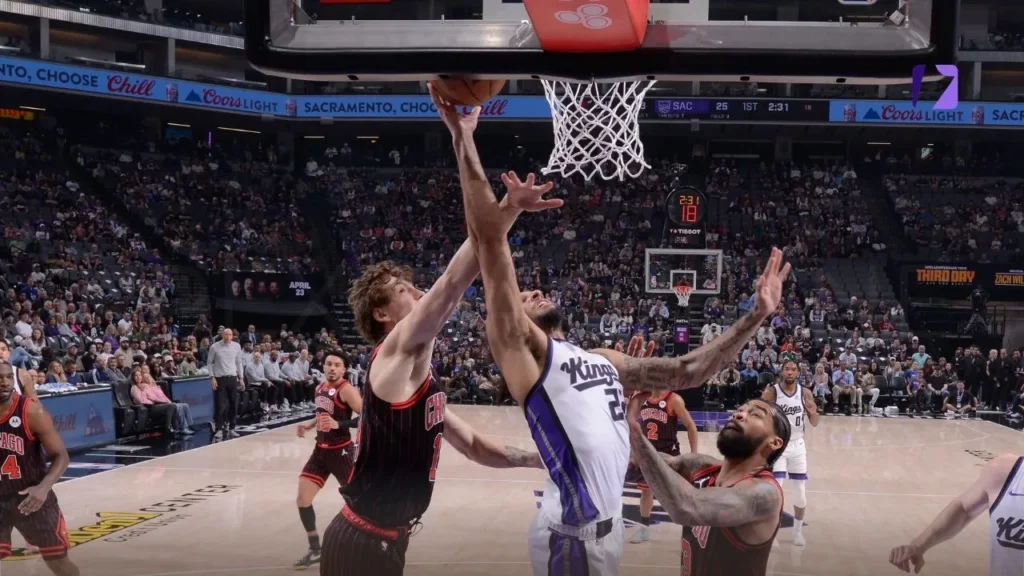
Indiana forced 24 points off Sacramento’s turnovers, using active hands, positioning, and aggressive contesting of shots. Steals and timely blocks disrupted Sacramento’s rhythm in the early quarters and limited transition opportunities. Defensive rotations were generally effective, but late-game lapses created opportunities for Sacramento fast breaks. Individual effort, coordination, and on-court awareness were evident, though small errors at critical moments contributed to scoring runs that shifted momentum in Sacramento’s favor.
Sacramento capitalized on Indiana’s turnovers, converting 14 points into scoring opportunities while maintaining composure under pressure. Interior defense and rotational coverage restricted Pacers’ paint scoring, while perimeter pressure challenged mid-range and three-point shooting. Timely defensive stops facilitated fast-break points, particularly in the decisive fourth quarter. Efficient defensive execution combined with disciplined rotations proved critical in controlling game tempo and ensuring Sacramento’s 114-109 victory in this closely contested matchup.
Coaching Strategy and Game Management
Indiana’s coaching focused on interior scoring, offensive rebounding, and defensive rotations to limit Sacramento’s opportunities. Timeout adjustments emphasized matchups, spacing, and late-game execution, ensuring star players maintained energy while bench contributors provided timely support. The coaching staff prioritized efficient paint scoring, transition control, and communication to counter the Kings’ perimeter shooting. Strategic rotations allowed Indiana to sustain offensive pressure while minimizing defensive breakdowns. Their tactical approach reflected careful planning and attention to opponent strengths, aiming to leverage rebounds, fast breaks, and assist distribution as key offensive and defensive levers during high-stakes moments.
Sacramento’s coaching strategy revolved around perimeter efficiency, fast-break execution, and precise rotations. Timeouts were used to manage defensive assignments, optimize ball movement, and exploit mismatches on both ends. Starters and bench players were carefully managed to maintain stamina and momentum, particularly in the crucial fourth quarter. Tactical focus included spacing, transition opportunities, and high-percentage shot selection, which directly contributed to their late-game scoring surge. By blending preparation, adaptability, and communication, Sacramento’s coaching effectively maximized team strengths, maintained composure under pressure, and allowed their players to execute strategies seamlessly, leading to the 114-109 win over Indiana.
What This Win Means for the Sacramento Kings Season
The Kings’ victory demonstrates their resilience, depth, and ability to execute under pressure. Balanced scoring from starters and bench players, combined with disciplined defensive rotations, reinforced confidence across the roster. Key performances in late-game situations indicate the team’s capacity to adapt to challenging scenarios while maintaining offensive efficiency. The win boosts morale and provides a tangible example of how high-pressure execution can translate into victories, which is critical for playoff positioning and overall team development in the Western Conference.
Maintaining consistency in ball movement, perimeter accuracy, and defensive coverage remains essential for Sacramento. Efficient rebounding, limiting turnovers, and executing late-game strategies will define their success moving forward. This game serves as a strategic blueprint, highlighting the importance of teamwork, composure, and adaptability in tight contests. By analyzing performance trends and reinforcing positive habits, the Kings can approach upcoming games with confidence, building on their strengths and minimizing errors to secure competitive advantage throughout the remainder of the season.
What the Loss Means for the Indiana Pacers Moving Forward
Indiana’s narrow loss underscores areas requiring improvement despite notable strengths in paint scoring, rebounding, and offensive playmaking. Late-game defensive lapses and turnovers allowed Sacramento to capitalize on key possessions, highlighting the need for sharper execution under pressure. The Pacers showed effort and skill but struggled to maintain defensive composure during critical sequences, which ultimately influenced the outcome. Recognizing these vulnerabilities will be crucial as the team prepares for upcoming matchups and seeks to convert tight games into wins.
Looking ahead, Indiana can build on strengths in offensive rebounding, paint scoring, and assist distribution while addressing critical late-game adjustments. Bench contributions remain a strong positive factor, providing energy and sustaining performance during rotations. The focus should be on improving perimeter defense, decision-making under pressure, and minimizing turnovers. By refining these aspects while leveraging team chemistry and strategic planning, the Pacers can enhance their competitiveness and convert narrow losses into victories throughout the remainder of the NBA season.
Conclusion
The Indiana Pacers vs Sacramento Kings game on March 10, 2026, was a tightly contested, high-intensity matchup showcasing the skill, resilience, and adaptability of both teams. Sacramento’s 114-109 victory was driven by efficient three-point shooting, fast-break execution, and significant contributions from starters and bench players alike. Indiana remained competitive, controlling the paint, generating offensive rebounds, and facilitating effective ball movement. Despite their effort, defensive lapses and turnovers in the fourth quarter allowed the Kings to extend their lead and secure the win.
Both teams demonstrated strategic depth, teamwork, and adaptability throughout the contest. Sacramento’s late-game composure highlighted the value of rotations, court vision, and communication in high-pressure moments. Indiana displayed determination, leadership, and coordination, providing insights into areas of improvement for upcoming games. This matchup serves as a benchmark for performance evaluation, illustrating how execution, strategy, and teamwork determine outcomes in close NBA contests, while offering both teams lessons for continued growth during the season.
Frequently Asked Questions
Who were the top scorers in the game?
Sacramento’s leading scorer excelled in perimeter shooting and fast-break finishes, particularly in the fourth quarter. Indiana’s top scorer dominated the paint and mid-range but struggled to match Sacramento’s efficiency late in the game.
How did the teams perform in rebounding?
Indiana collected 48 rebounds, while Sacramento outrebounded them with 52. Offensive rebounds created second-chance points, while defensive boards helped control pace and limit transition opportunities.
How efficient was three-point shooting?
Indiana converted 13 of 43 three-point attempts (30%), while Sacramento made 15 of 35 (35%). Kings’ efficient perimeter shooting was crucial in the late-game surge.
What were the key defensive highlights?
Indiana forced 24 points off turnovers with active hands and blocks, but late-game lapses allowed Sacramento fast-break points. Sacramento’s disciplined rotations and interior defense limited Pacers’ efficiency and controlled momentum.
What does this game mean for both teams’ seasons?
Sacramento’s win reinforces resilience, depth, and playoff readiness. Indiana’s loss highlights areas for late-game adjustments and defensive focus, while emphasizing strengths in rebounding and interior scoring.
VISIT MORE: APEX MAGAZINE