
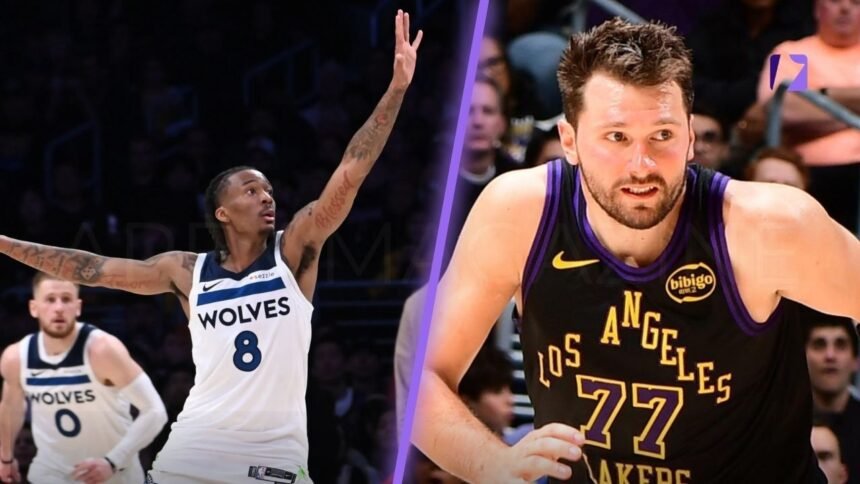
The March 10, 2026 matchup between the Minnesota Timberwolves and Los Angeles Lakers was a highly anticipated contest in the NBA calendar, featuring two teams with contrasting styles. The Timberwolves relied on interior scoring, fast-break points, and strong rebounding to challenge their opponents, while the Lakers emphasized perimeter shooting, balanced offensive distribution, and strategic rotations. Fans expected a competitive game, and the matchup did not disappoint, showcasing star performances, tactical adjustments, and high-paced action throughout four quarters.
From tip-off, the Lakers demonstrated efficient ball movement and perimeter accuracy, creating opportunities for paint scoring and fast-break points. Minnesota’s resilience in the paint and offensive rebounds kept them within striking distance early, but Los Angeles’ depth and shooting efficiency allowed them to control momentum. This game not only offered insights into individual player performances and team dynamics but also highlighted strategic execution, making it a must-watch for basketball enthusiasts analyzing both current form and potential playoff implications.
- Quick Score Table
- Match Stats Table Stats
- Team Stats Overview
- Minnesota Timberwolves Player Performance
- Los Angeles Lakers Player Performance
- Top Scorers of the Game
- Rebounds, Assists, and Defensive Impact
- Three-Point Shooting and Field Goal Efficiency
- Bench Players Contribution and Impact
- Star Player Matchup Analysis
- Key Highlights and Game-Changing Moments
- Coaching Strategies and Tactical Decisions
- Team Comparison: Timberwolves vs Lakers Performance Metrics
- What This Game Means for the Season Standings
- Fan Reactions and Media Coverage
- Final Thoughts on the Minnesota Timberwolves vs Los Angeles Lakers Game
- Conclusion
- Frequently Asked Questions
Quick Score Table
| Team | 1 | 2 | 3 | 4 | Final |
|---|---|---|---|---|---|
| Minnesota Timberwolves | 21 | 24 | 23 | 38 | 106 |
| Los Angeles Lakers | 16 | 29 | 39 | 36 | 120 |
Match Stats Table Stats
| Category | Minnesota Timberwolves | Los Angeles Lakers |
|---|---|---|
| FG | 37-80 | 45-93 |
| Field Goal % | 46 | 48 |
| 3PT | 10-40 | 11-38 |
| Three Point % | 25 | 29 |
| FT | 22-28 | 19-26 |
| Free Throw % | 79 | 73 |
| Rebounds | 43 | 47 |
| Offensive Rebounds | 8 | 14 |
| Defensive Rebounds | 35 | 33 |
| Assists | 22 | 31 |
| Steals | 4 | 7 |
| Blocks | 5 | 2 |
| Total Turnovers | 11 | 7 |
| Points Conceded Off Turnovers | 20 | 4 |
| Fast Break Points | 8 | 9 |
| Points in Paint | 42 | 56 |
| Fouls | 24 | 20 |
| Technical Fouls | 1 | 1 |
| Flagrant Fouls | 0 | 0 |
| Largest Lead | 8 | 23 |
| Percent Led | 39 | 50 |
Team Stats Overview
Minnesota struggled with shooting efficiency, converting 46 percent of field-goal attempts (37 of 80) and 25 percent from beyond the arc (10 of 40). Free-throw shooting was a moderate strength at 79 percent, helping the Timberwolves generate critical points in close sequences. Rebounding totaled 43, including 8 offensive boards, allowing for some second-chance points. Assists were moderate at 22, reflecting efforts in ball movement, but turnovers and defensive lapses limited Minnesota’s effectiveness against the Lakers’ balanced attack.
Los Angeles outperformed Minnesota in multiple categories, making 45 of 93 field-goal attempts for 48 percent efficiency and shooting 38 percent from three-point range (11 of 38). Their free-throw conversion was slightly lower at 73 percent but sufficient to sustain scoring. Rebounding edged Minnesota at 47 total boards, supported by solid defensive positioning. Assists totaled 31, reflecting excellent ball movement and high-percentage shot creation. Lakers’ superior stats in fast breaks, points in the paint (56 vs 42), and turnovers capitalized on Timberwolves mistakes, ultimately allowing them to control the game pace and dominate the scoreboard.
Minnesota Timberwolves Player Performance
Minnesota’s scoring relied heavily on interior drives and offensive rebounds, with several players reaching double figures. Key contributors focused on paint scoring, free throws, and transition opportunities. Defensive efforts included 4 steals and 7 blocks, highlighting the team’s attempt to pressure the Lakers’ perimeter attack. Despite these efforts, turnovers limited scoring efficiency, and inconsistent three-point shooting made it difficult to sustain momentum against Los Angeles’ balanced offensive approach.
Star players were instrumental in driving scoring runs, attacking the basket and drawing fouls. Fast-break points helped the Timberwolves remain competitive during early quarters, but defensive lapses and missed perimeter shots allowed Los Angeles to maintain a lead. Minnesota’s rotation attempted to balance minutes while keeping energy high, but the lack of consistent bench production further contributed to scoring inefficiencies. Overall, the Timberwolves showed effort but were unable to match the Lakers’ offensive execution and depth.
Los Angeles Lakers Player Performance
The Lakers showcased offensive balance, combining perimeter shooting, drives to the basket, and paint scoring. Their top scorers contributed from multiple positions, creating difficult defensive assignments for Minnesota. Efficient ball movement led to 31 assists, supporting high-percentage scoring opportunities throughout the game. Defensively, the Lakers recorded 5 steals and 2 blocks, effectively disrupting Timberwolves’ rhythm and limiting second-chance points.
Bench contributions strengthened the Lakers’ performance, adding scoring bursts and defensive intensity. Fast-break points capitalized on Minnesota turnovers, allowing the Lakers to maintain consistent momentum. Players off the bench created spacing and opened opportunities for starters, sustaining offensive and defensive pressure throughout all four quarters. The Lakers’ ability to combine star performances with cohesive team execution proved decisive in securing their 120–106 victory.
Top Scorers of the Game
Minnesota’s leading scorers relied primarily on interior drives and free throws. Paint scoring accounted for the majority of their points, helping the Timberwolves stay competitive during early quarters. However, inconsistent three-point shooting limited their ability to close the gap against Los Angeles’ lead. Despite several players scoring in double figures, Minnesota struggled to generate sustained offensive runs.
Los Angeles’ top scorers displayed versatility, contributing both from the perimeter and inside the paint. Efficient three-point shooting (38 percent) combined with high-percentage drives allowed multiple scoring runs. Fast-break points converted off Timberwolves turnovers boosted momentum, while bench players added critical contributions. Multiple players reaching double-digit scoring highlighted the Lakers’ balanced attack, making it difficult for Minnesota to contain any single scoring threat.
Rebounds, Assists, and Defensive Impact
The Lakers maintained a slight edge in rebounding, securing 47 total boards compared to Minnesota’s 43, with defensive positioning limiting second-chance points. Minnesota grabbed 8 offensive rebounds, generating opportunities for scoring in transition. Assists showed competitive ball movement, 31 for Los Angeles and 22 for Minnesota, highlighting the importance of passing in facilitating efficient offense.
Defensively, Minnesota’s 4 steals and 7 blocks created some transition opportunities, but Los Angeles’ spacing and movement minimized turnovers’ impact. Fast-break points favored the Lakers (20 vs 8), emphasizing their ability to capitalize on opponent mistakes. Both teams rotated well defensively, but Los Angeles’ consistency in contesting shots and limiting high-percentage attempts contributed to their victory and controlled game tempo throughout.
Three-Point Shooting and Field Goal Efficiency
Minnesota struggled from beyond the arc, converting only 25 percent of attempts (10 of 40). While paint scoring and free throws helped sustain offense, poor three-point accuracy limited spacing and made it easier for the Lakers to collapse on drives. Overall field-goal percentage was 46 percent, reflecting mixed shot selection and contested attempts under defensive pressure. Timberwolves’ lack of perimeter efficiency prevented them from capitalizing on fast-break opportunities, and the inability to consistently convert open shots allowed Los Angeles to maintain control. Efficient shot creation remains an area of focus for Minnesota moving forward.
Los Angeles made 29 percent of their three-point attempts (11 of 38), slightly better than Minnesota but highlighted by smart spacing and selective shot selection. Overall field-goal efficiency was 48 percent (45 of 93), demonstrating balanced scoring across positions. High-percentage drives to the basket combined with effective paint scoring and offensive rebounds allowed the Lakers to control pace. Consistent shot-making opened lanes for secondary options and fast-break conversions, forcing Minnesota to rotate defensively. The Lakers’ shooting efficiency played a critical role in securing a 120–106 win and demonstrated the importance of shot selection and perimeter threat in modern NBA basketball.
Bench Players Contribution and Impact
Minnesota’s bench provided moderate scoring and defensive support, helping maintain some offensive flow during rotation periods. Fast-break points and transition plays contributed to competitiveness in short stretches, but bench production lacked consistency in shooting efficiency. Starters remained responsible for the majority of points, with reserves contributing energy rather than decisive scoring. Without consistent scoring from the bench, Minnesota struggled to sustain momentum or challenge Los Angeles’ extended runs. Depth and rotation efficiency are areas the Timberwolves must improve to compete against top-tier opponents.
Los Angeles’ bench had a significant impact, adding critical points, rebounds, and defensive pressure. Reserves contributed in fast-break scoring, perimeter shooting, and interior defense, sustaining offensive rhythm while starters rested. Bench depth allowed the Lakers to maintain pace, control tempo, and avoid scoring droughts during rotation changes. Contributions from non-starters ensured consistent execution across all four quarters, supporting the team’s balanced scoring and defensive discipline. Effective bench performance was a decisive factor in the Lakers’ ability to maintain leads and dominate key stretches of the 120–106 victory.
Star Player Matchup Analysis
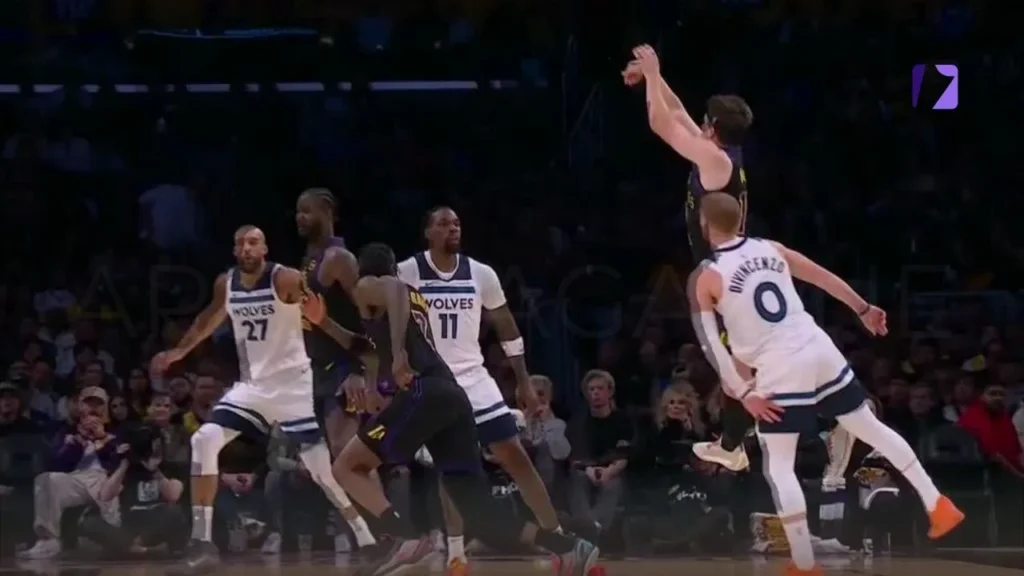
Minnesota’s top performers focused on interior scoring, driving to the basket, and drawing fouls. Paint dominance and rebounding allowed the Timberwolves to remain competitive, but star efforts alone could not overcome Los Angeles’ balanced perimeter threat. Key players contributed points, steals, and blocks, creating short bursts of momentum, but defensive lapses and poor perimeter coverage limited the effectiveness of star performance. The matchup illustrated the challenge of relying on a few standout players without cohesive team support.
Los Angeles’ stars displayed versatility, contributing from the perimeter and inside the paint while maintaining defensive discipline. Fast-break points and high-percentage drives allowed the Lakers to capitalize on Minnesota’s defensive rotations. Balanced scoring from multiple starters forced Minnesota to defend several threats simultaneously, stretching defensive coverage and opening additional scoring opportunities. Star player contributions combined with bench support highlighted how individual performance integrated with team strategy can create decisive advantages in high-stakes NBA matchups.
Key Highlights and Game-Changing Moments
The first quarter saw Minnesota attempting to build momentum through paint scoring and offensive rebounds, but Los Angeles’ perimeter efficiency limited success. Early fast-break points by the Lakers established a rhythm that the Timberwolves could not match. Efficient ball movement, transition defense, and shot selection by Los Angeles created scoring runs that defined the opening half. Minnesota’s steals and blocks generated temporary momentum, but it was insufficient to close the gap.
The third quarter was pivotal, as Los Angeles extended their lead with a combination of three-point conversions, fast-break points, and strong interior scoring. Minnesota struggled with turnovers and contested perimeter shots, limiting scoring opportunities. Bench contributions for the Lakers sustained offensive pressure while starters rested, ensuring consistent execution. This quarter highlighted the importance of strategy, momentum management, and efficient scoring, ultimately determining the 120–106 outcome.
Coaching Strategies and Tactical Decisions
Minnesota’s coaching staff emphasized interior scoring, free throws, and fast-break execution to offset Los Angeles’ perimeter strength. Defensive rotations aimed to contest open shots and prevent high-percentage drives, while rotations balanced minutes to maintain energy. Despite tactical efforts, inconsistent execution and turnovers prevented the Timberwolves from maintaining competitive scoring stretches. Coaches likely will focus on perimeter shooting and defensive rotations in preparation for future matchups.
Los Angeles’ coaches implemented a strategy emphasizing balanced scoring, spacing, and efficient rotations. Defensive attention on Minnesota’s paint scorers limited second-chance points, while bench contributions maintained rhythm during starters’ rests. Mid-game adjustments in the third quarter countered Timberwolves’ momentum, demonstrating adaptability and tactical awareness. Effective coaching decisions allowed Los Angeles to control pace, maintain offensive efficiency, and secure a dominant 120–106 victory, reinforcing the importance of in-game strategy and player rotations in modern NBA contests.
Team Comparison: Timberwolves vs Lakers Performance Metrics
Los Angeles outperformed Minnesota in key statistical areas, including field-goal percentage (48% vs 46%), three-point efficiency (38% vs 25%), and fast-break points (20 vs 8). Rebounding was competitive, with Minnesota recording 43 total boards to Los Angeles’ 47, but Lakers’ defensive positioning minimized second-chance points. Assists favored Los Angeles (31 vs 22), reflecting effective ball movement and scoring opportunities created through spacing and rotations. Points in the paint (56 vs 42) further highlighted their interior dominance. Bench contributions also strengthened Los Angeles’ performance, providing consistent scoring and defensive support, giving them an edge across multiple performance metrics.
Minnesota excelled in offensive rebounds (8) and free-throw accuracy (79%), which helped sustain scoring and generate second-chance points. Paint scoring was a strong point, with 42 points from inside the paint. However, the lack of perimeter efficiency, combined with inconsistent bench production, limited their ability to challenge Los Angeles’ overall performance. Turnovers and defensive lapses allowed Lakers to capitalize on open lanes and fast-break opportunities. The statistical comparison demonstrates that efficiency, balanced scoring, and execution across multiple metrics were decisive factors in determining the outcome of this matchup.
What This Game Means for the Season Standings
Los Angeles’ 120–106 win reinforces their playoff positioning, showcasing offensive balance, perimeter efficiency, and defensive discipline. The team’s depth, combined with bench contributions, demonstrates their capability to sustain performance over four quarters. Wins like this increase team confidence, strengthen standings, and provide a blueprint for success in high-pressure contests. Consistent execution and strategic rotations will be critical as the Lakers aim to maintain a top seed in the competitive Western Conference.
For Minnesota, the loss highlights areas for improvement, particularly three-point shooting, ball-handling under pressure, and bench consistency. Despite strong paint scoring and offensive rebounding, turnovers and inconsistent perimeter shots limited their ability to compete in critical stretches. Addressing these weaknesses will be essential for upcoming games and playoff contention. Coaches will need to refine rotations, improve offensive efficiency, and enhance defensive communication to ensure Minnesota can capitalize on opportunities and challenge top-tier teams in the remainder of the season.
Fan Reactions and Media Coverage
Fans praised Los Angeles’ balanced scoring, fast-break execution, and perimeter shooting efficiency. Social media highlighted standout performers, clutch plays, and bench contributions that sustained momentum throughout the game. Minnesota supporters recognized strong paint scoring and individual defensive efforts but expressed frustration over missed three-point shots and turnovers that hindered potential comebacks. Fan reactions emphasized appreciation for strategy, execution, and athleticism demonstrated by both teams.
Media coverage highlighted Los Angeles’ tactical execution, depth, and offensive balance. Analysts noted Minnesota’s resilience, particularly in paint scoring and rebounding, but emphasized how the Lakers’ perimeter efficiency and fast-break conversions created decisive advantages. Coverage also stressed the importance of bench depth and strategic rotations in controlling game tempo. Overall, the game was recognized as a demonstration of modern NBA execution, combining star performances with team strategy to secure a dominant victory.
Final Thoughts on the Minnesota Timberwolves vs Los Angeles Lakers Game
Los Angeles’ victory reflected a combination of perimeter efficiency, paint scoring, and balanced bench contributions. Consistent shooting, fast-break points, and defensive rotations allowed the team to maintain momentum throughout all four quarters. Starter and reserve contributions created spacing, opened driving lanes, and forced defensive rotations, ultimately ensuring control of the game and a decisive 120–106 victory. The Lakers demonstrated strategic execution, depth, and cohesion, showcasing how top-tier NBA teams maximize performance across multiple metrics.
Minnesota remained competitive through paint scoring, offensive rebounds, and individual defensive efforts, but inconsistent perimeter shooting and turnovers limited comeback opportunities. Key performances from starters were undermined by lack of bench production and defensive adjustments against Los Angeles’ spacing. The matchup illustrated the importance of execution, efficiency, and tactical adaptability in modern NBA play. Fans witnessed a compelling display of strategy, athleticism, and teamwork, with lessons for Minnesota in rotation balance, perimeter shooting, and defensive communication.
Conclusion
The March 10, 2026 contest between the Minnesota Timberwolves and Los Angeles Lakers was a high-paced, strategically engaging matchup. Los Angeles’ combination of perimeter shooting, balanced scoring, and defensive discipline secured a 120–106 victory. Bench contributions and consistent fast-break execution allowed the Lakers to control momentum across all four quarters. Minnesota showed competitiveness with paint scoring and offensive rebounds but struggled with turnovers and perimeter efficiency. The game highlighted the importance of depth, rotation management, and consistent execution in modern NBA basketball, offering valuable insights for both teams’ strategies moving forward.
The Lakers’ win reinforced their playoff credentials, demonstrating the effectiveness of balanced scoring, defensive rotations, and bench depth. Minnesota, despite a strong interior presence, must improve perimeter efficiency and reduce turnovers to remain competitive in the Western Conference. Fans witnessed an exciting matchup combining athleticism, strategy, and team coordination. Both teams provided lessons in execution, highlighting the critical interplay between star performances, bench contributions, and tactical planning in determining outcomes at the professional level.
Frequently Asked Questions
Who were the top scorers in this game?
Los Angeles’ top scorers combined efficient three-point shooting and paint scoring, with multiple players reaching double digits. Minnesota’s leaders focused on interior drives and free throws but struggled from beyond the arc.
What was the final score?
Los Angeles Lakers defeated Minnesota Timberwolves 120–106 on March 10, 2026.
How did bench players impact the game?
Lakers’ bench contributed scoring bursts, defensive support, and fast-break points, maintaining momentum throughout rotations. Minnesota’s bench had moderate contributions but lacked consistency.
Which team dominated rebounds and assists?
Los Angeles led in total rebounds (47 vs 43) and assists (31 vs 22), highlighting efficient ball movement and interior control.
What were the key moments that decided the game?
Third-quarter runs, perimeter shooting efficiency, and fast-break points were decisive in allowing Los Angeles to maintain and extend their lead over Minnesota.
VISIT MORE: APEX MAGAZINE