
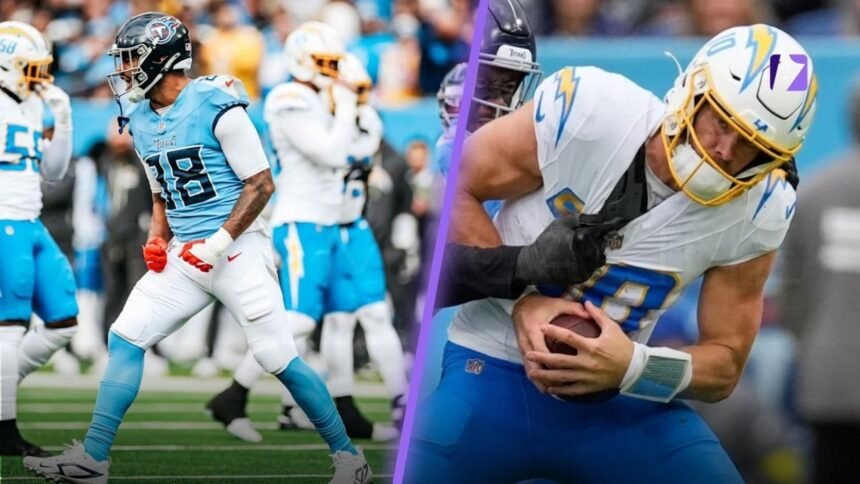
The Tennessee Titans faced off against the Los Angeles Chargers on November 2, 2025, in a high-stakes NFL matchup. The game showcased contrasting strategies, with the Chargers dominating in offense and ball control while the Titans struggled to keep pace. Final scoreline saw the Chargers win convincingly 27-20, emphasizing their efficiency in converting scoring opportunities.
This game was pivotal for both teams in shaping playoff positioning. The Chargers demonstrated balanced offensive output and solid defensive stands, while the Titans had sporadic success but lacked consistency. Fans witnessed a compelling contest that highlighted individual brilliance and team execution, setting the stage for detailed player stat analysis.
- Quick Score Summary Table
- Quick Match Stats Overview
- First Half Performance Analysis
- Second Half Game-Changing Moments
- Tennessee Titans Offensive Player Stats
- Tennessee Titans Defensive Standouts
- Los Angeles Chargers Offensive Player Stats
- Los Angeles Chargers Defensive Leaders
- Quarterback Comparison: Passing Yards, TDs, and Efficiency
- Running Game Breakdown: Rushing Leaders and Key Plays
- Receiving Leaders: Top Targets and Big Gains
- Special Teams Contributions and Field Position Battle
- Turnovers, Penalties, and Critical Mistakes
- Time of Possession and Third-Down Efficiency
- Key Performances That Decided the Game
- Conclusion
- Frequently Asked Questions
Quick Score Summary Table
| Team | Q1 | Q2 | Q3 | Q4 | Final |
|---|---|---|---|---|---|
| Los Angeles Chargers | 7 | 13 | 0 | 7 | 27 |
| Tennessee Titans | 14 | 3 | 3 | 3 | 20 |
Quick Match Stats Overview
| Category | Los Angeles Chargers | Tennessee Titans |
|---|---|---|
| 1st Downs | 21 | 10 |
| Passing 1st downs | 12 | 7 |
| Rushing 1st downs | 8 | 3 |
| 1st downs from penalties | 1 | 0 |
| 3rd down efficiency | 7-13 | 1-9 |
| 4th down efficiency | 0-0 | 0-1 |
| Total Plays | 65 | 44 |
| Total Yards | 343 | 206 |
| Total Drives | 11 | 9 |
| Yards per Play | 5.3 | 4.7 |
| Passing | 212 | 118 |
| Comp/Att | 19/29 | 12/21 |
| Yards per pass | 6.1 | 4.7 |
| Interceptions thrown | 1 | 0 |
| Sacks-Yards Lost | 6-38 | 4-27 |
| Rushing | 131 | 88 |
| Rushing Attempts | 30 | 19 |
| Yards per rush | 4.4 | 4.6 |
| Red Zone (Made-Att) | 3-4 | 0-2 |
| Penalties | 3-20 | 7-60 |
| Turnovers | 1 | 0 |
| Fumbles lost | 0 | 0 |
| Interceptions thrown | 1 | 0 |
| Defensive / Special Teams TDs | 0 | 2 |
| Possession | 34:20 | 25:40 |
First Half Performance Analysis
The Tennessee Titans started the game with aggressive momentum, scoring two quick touchdowns to establish a 14-7 lead in the first quarter. Their early success stemmed from a balanced rushing attack combined with short, precise passes that kept the Chargers’ defensive backs guessing. Running backs exploited gaps in the defensive line, while the quarterback’s quick reads minimized risk and maximized yards per play. This early strategy highlighted Tennessee’s intent to control the tempo and dictate field position from the opening whistle.
Despite the Titans’ initial dominance, the Chargers adjusted defensively in the second quarter. Their linebackers and defensive backs tightened coverage, disrupting the Titans’ passing lanes and forcing more predictable rushing attempts. Strategic blitz packages applied pressure on Tennessee’s quarterback, resulting in shorter gains and stalled drives. Meanwhile, the Chargers’ quarterback capitalized on defensive lapses, orchestrating precise drives that culminated in a touchdown to take a 20-17 halftime lead. The first half showcased how quick adjustments and disciplined execution can shift momentum in high-level NFL matchups.
Second Half Game-Changing Moments
The third quarter showcased the Chargers’ defensive prowess, completely altering the narrative of the game. Tennessee’s offense struggled to generate yardage, managing only a field goal for three points, while the Chargers consistently stopped drives near midfield. Pass rushers collapsed the pocket, forcing hurried throws and limiting the Titans’ ability to sustain scoring opportunities. Each defensive play by the Chargers increased pressure on Tennessee’s offensive line, further highlighting the importance of strategic in-game adjustments in dictating outcomes.
In the fourth quarter, the Chargers capitalized on advantageous field position and efficient execution. A well-timed touchdown widened the score gap, effectively sealing the game. Tennessee attempted to respond with late-game drives but failed to convert red zone opportunities. The **disparity in red zone efficiency 3-4 for the Chargers versus 0-2 for the Titans **underscored the difference in execution and composure under pressure. The second half demonstrated that both offensive discipline and defensive consistency are critical to maintaining control and securing a win in competitive NFL matchups.
Tennessee Titans Offensive Player Stats
The Tennessee Titans struggled to maintain consistency on offense, finishing the game with 206 total yards over 44 plays. The passing attack generated only 118 yards, completing 12 of 21 attempts, which equates to a modest 4.7 yards per pass. Short gains and conservative routes limited explosive plays, while Chargers’ defensive backs effectively covered the middle and sideline targets. The Titans failed to stretch the field vertically, making it easier for the Chargers’ front seven to anticipate runs and short passes.
The rushing game provided mixed results, totaling 88 yards on 19 carries, averaging 4.6 yards per attempt. While individual runs created temporary momentum, the Titans were unable to string together consecutive successful plays. This inefficiency translated into poor third-down conversion, preventing the team from sustaining drives or creating consistent scoring opportunities. Overall, Tennessee’s offensive performance highlighted the difficulty of balancing short passing with a mid-range rushing game against a disciplined and adaptable defense.
Tennessee Titans Defensive Standouts
Tennessee’s defense showed flashes of opportunism despite being outmatched in total yardage. They recorded two defensive touchdowns, illustrating their ability to capitalize on turnovers and momentarily swing momentum. Additionally, the defense tallied four sacks for 27 yards lost, demonstrating periods of effective pass rush that pressured the Chargers’ quarterback into hurried throws.
However, the Titans’ defense struggled to maintain consistent stops, allowing 27 points on 343 total yards. Long drives by the Chargers exposed gaps in coverage, particularly in the red zone, where the Titans failed to force field goals or turnovers. Despite strong individual performances, defensive lapses in discipline and assignment errors prevented Tennessee from significantly impacting the outcome. The combination of opportunistic highlights and systemic weaknesses defined the Titans’ defensive performance in this matchup.
Los Angeles Chargers Offensive Player Stats
The Los Angeles Chargers showcased a highly balanced offensive performance, finishing with 343 total yards over 65 plays, effectively controlling both tempo and field position. The passing game produced 212 yards on 19 completions from 29 attempts, highlighting efficiency and precision in the air. The quarterback minimized turnovers, executed quick reads, and kept drives alive with accurate short and intermediate passes. This accuracy limited the Titans’ ability to anticipate patterns or generate sacks, giving the Chargers a distinct edge in offensive rhythm.
The rushing attack contributed 131 yards on 30 attempts, averaging 4.4 yards per carry. This consistency in the ground game prevented the defense from focusing exclusively on the pass, creating balanced play-calling that sustained drives and consumed clock. By combining reliable rushing gains with effective passing execution, the Chargers controlled possession, managed high-leverage situations, and maximized red zone opportunities. Their comprehensive offensive strategy underscored the team’s preparation, discipline, and versatility.
Los Angeles Chargers Defensive Leaders
The Chargers’ defense dominated the field, recording six sacks for 38 yards lost and forcing one key interception. Their aggressive pass rush created consistent pressure on the Titans’ quarterback, disrupting passing lanes and forcing hurried decisions. Defensive backs maintained tight coverage, effectively eliminating big-play opportunities and limiting third-down conversions. This level of discipline prevented Tennessee from building offensive momentum and maintained control over critical moments in the game.
Key stops in the third quarter were pivotal, halting drives that could have shifted momentum. Chargers defenders executed strong tackling, read blocking schemes effectively, and closed gaps on running plays. Their defensive efficiency complemented the offensive performance, allowing the Chargers to maintain possession and control scoring opportunities. By neutralizing the Titans’ threats, Los Angeles ensured the game’s tempo favored their strategy and secured a decisive advantage.
Quarterback Comparison: Passing Yards, TDs, and Efficiency
The Chargers’ quarterback delivered a clinically efficient performance, completing 19 of 29 passes for 212 yards, averaging 6.1 yards per attempt. He avoided turnovers entirely, converting critical third downs, and managing clock control with poise. This balance between aggression and caution allowed the Chargers to sustain drives, create scoring opportunities, and keep the Titans’ defense on the field under constant pressure. His accuracy and timing on short and intermediate throws were instrumental in controlling the game flow.
In contrast, the Titans’ quarterback struggled to generate consistent offense, completing only 12 of 21 passes for 118 yards with an average of 4.7 yards per attempt. A single interception combined with four sacks further limited offensive efficiency. Inconsistent passing forced the Titans into predictable situations, making it easier for the Chargers’ defense to anticipate plays. The comparison underscores the difference in execution, with Los Angeles maximizing efficiency while Tennessee struggled to sustain drives through the air.
Running Game Breakdown: Rushing Leaders and Key Plays
The Chargers maintained balance with a productive rushing attack, gaining 131 yards on 30 carries for a 4.4-yard average per rush. Consistent ground gains set up manageable third-down situations and enhanced the effectiveness of play-action passes. Key runs in the second and third quarters allowed the offense to control possession and consume critical clock time, keeping Tennessee’s offense off the field. The rushing game provided stability and opened opportunities for scoring drives, contributing directly to the 27-point output.
The Titans’ rushing effort, while averaging 4.6 yards per carry on 19 attempts, lacked consistency in sustaining drives. Fewer attempts and limited explosive runs prevented Tennessee from balancing offensive threats against the Chargers’ defense. Without a reliable running game, the Titans’ passing attack faced increased pressure, further highlighting the disparity between the two teams’ offensive efficiency. Their inability to capitalize on rushing opportunities was a critical factor in the overall game outcome.
Receiving Leaders: Top Targets and Big Gains
The Chargers’ receiving corps played a pivotal role in sustaining offensive momentum. Multiple targets contributed to consistent yardage accumulation, turning short completions into effective chain-moving plays. Receivers excelled at creating separation against man and zone coverage, allowing the quarterback to convert critical third downs. Their ability to generate yards after the catch not only extended drives but also opened scoring opportunities in high-leverage situations, emphasizing their importance in the Chargers’ balanced offensive attack.
In contrast, the Titans’ receiving unit managed some key completions but struggled to generate big gains. Limited explosive plays prevented Tennessee from keeping drives alive or threatening the end zone consistently. The Chargers’ defensive containment, combined with efficient coverage schemes, minimized opportunities for long passes. This disparity in receiving success highlighted how Los Angeles’ receivers amplified offensive efficiency while Tennessee’s passing threats remained constrained throughout the game.
Special Teams Contributions and Field Position Battle
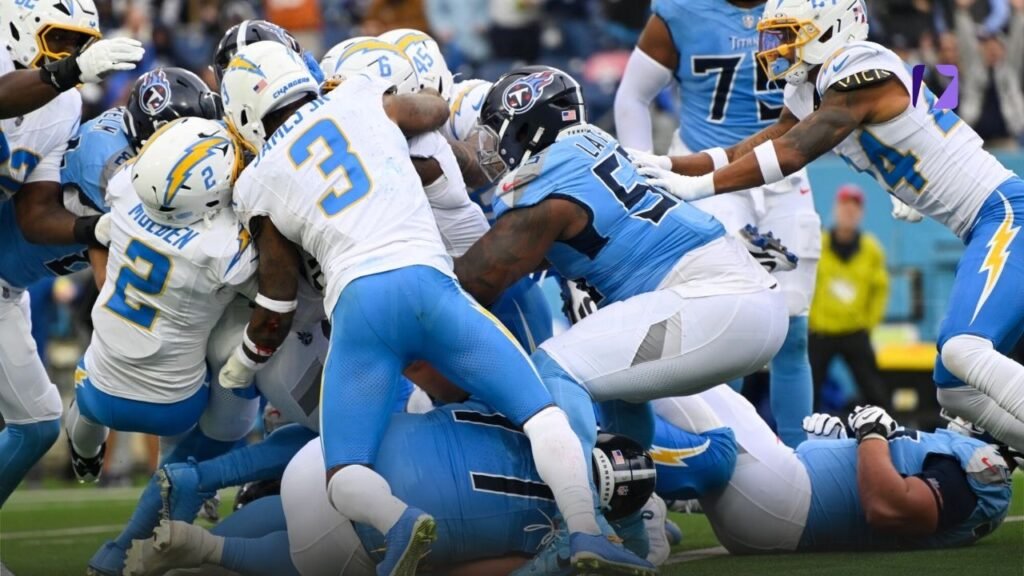
Special teams played a subtle yet critical role in the outcome, influencing field position for both squads. The Chargers consistently started drives in favorable positions, allowing their offense to capitalize without overextending. Punts, kickoffs, and returns were executed strategically, providing a positional advantage that complemented the balanced offensive and defensive performance. Effective coverage units also limited potential breakthroughs by the Titans, maintaining control over critical game phases.
The Titans struggled to flip field position, facing longer drives and starting deep in their own territory on multiple possessions. Punts and returns were less effective, reducing scoring opportunities and placing additional pressure on their offense. When combined with the possession disparity 34:20 for the Chargers versus 25:40 for Tennessee field positioning heavily favored Los Angeles. This control of the line of scrimmage and territorial advantage proved instrumental in dictating pace and ultimately influencing the final outcome.
Turnovers, Penalties, and Critical Mistakes
Turnovers had a noticeable impact on game dynamics. The Titans committed no turnovers, but inconsistent offensive execution limited the effect of their ball security. Conversely, the Chargers maintained disciplined play, committing only a single interception while minimizing errors, allowing them to sustain drives and protect leads. Turnovers were particularly important in determining momentum swings, with Los Angeles capitalizing on key stops to maintain scoreboard advantage.
Penalty totals remained close Titans recorded 7 penalties for 60 yards versus Chargers’ 3 for 20 yards but mistakes outside turnovers had less impact than inefficiency in critical areas. Missed third-down conversions, failed red zone attempts, and inconsistent execution proved far costlier for Tennessee than yardage penalties. Chargers’ ability to avoid critical mistakes amplified their control over the game, underscoring the importance of discipline and situational awareness in high-level NFL competition.
Time of Possession and Third-Down Efficiency
Control of the clock was a decisive factor in the game, with the Chargers dominating possession at 34:20. This allowed their offense to maintain rhythm, execute plays without pressure, and wear down Tennessee’s defensive front. Sustained drives not only controlled game tempo but also forced the Titans to chase momentum, creating fatigue and limiting their ability to respond effectively.
Third-down efficiency further emphasized the dominance of Los Angeles. The Chargers converted 7 of 13 third-down attempts, while Tennessee managed just 1 of 9, illustrating the gap in execution under pressure. Maintaining high conversion rates extended drives and allowed consistent scoring opportunities. In contrast, the Titans’ failure to convert key third downs disrupted offensive continuity, highlighting the significance of situational efficiency in determining both tempo and the final score.
Key Performances That Decided the Game
The Chargers’ quarterback played a central role in securing the win, managing the clock efficiently and converting critical third-down situations. His precision passing minimized turnovers while keeping the Titans’ defense off balance. In combination with a balanced rushing attack that gained 131 yards, this versatility allowed Los Angeles to sustain long drives, control possession, and strategically score in high-leverage situations. Offensive cohesion, along with the ability to adjust to defensive pressure, became the defining factor of the game.
Defensive contributions also proved crucial. The Chargers recorded six sacks and forced one interception, disrupting Tennessee’s offensive rhythm and limiting explosive plays. While the Titans’ defense made occasional stops, they were unable to translate those into scoring opportunities. The disparity in execution, particularly in red zone efficiency 3 of 4 for the Chargers versus 0 of 2 for the Titans highlighted how Los Angeles capitalized on both offensive and defensive strengths to secure the victory.
Conclusion
The Tennessee Titans vs Los Angeles Chargers matchup on November 2, 2025, ended with a 27-20 win for the Chargers, reflecting their balanced approach to offense and defense. Efficient third-down conversions, disciplined play, and effective field position control underscored the Chargers’ ability to dictate the pace of the game. Their offensive versatility, supported by strategic rushing and passing, made them difficult for Tennessee to contain.
The Titans showed resilience early in the game, opening with a 14-point lead in the first quarter, but struggled to maintain momentum. Limited explosive plays, inconsistent third-down conversions, and defensive lapses prevented sustained drives. This game highlights the critical role of offensive efficiency, ball control, and disciplined defensive execution in modern NFL contests, emphasizing that small margins in execution often decide outcomes.
Frequently Asked Questions
Who won the Tennessee Titans vs Chargers match?
The Los Angeles Chargers won the match with a final score of 27-20.
Who was the standout quarterback?
The Chargers’ quarterback led efficient drives, completing 19 of 29 passes for 212 yards without turnovers.
How did rushing impact the game?
The Chargers’ balanced rushing (131 yards on 30 attempts) opened passing lanes and helped sustain drives, while the Titans managed only 88 yards.
How did turnovers affect the result?
Turnovers were minimal, but the Chargers’ red zone efficiency and third-down conversions were decisive.
Which team controlled possession?
The Chargers dominated possession with 34:20 minutes compared to 25:40 for the Titans.
VISIT MORE: APEX MAGAZINE