
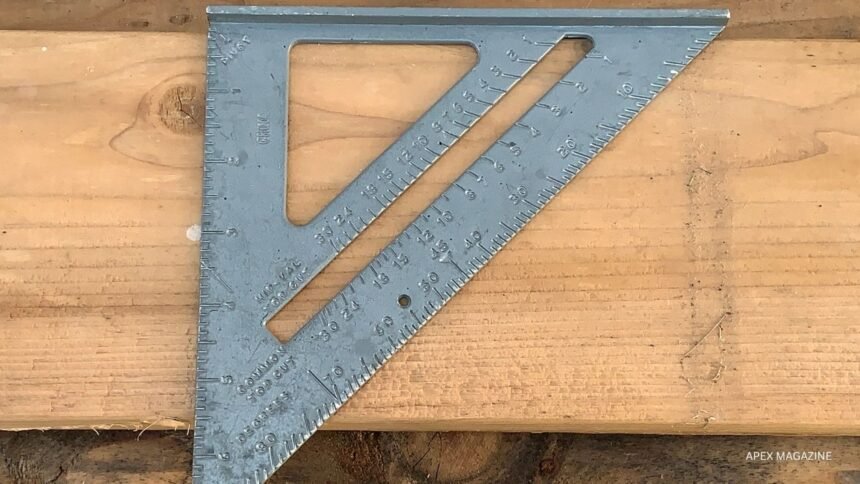
A clean cut begins long before a saw touches timber. Whether you are fitting cabinetry, framing a structure or producing detailed joinery, the accuracy of your initial measurements and markings determines how well the finished components will fit together. Careful marking helps you control dimensions, preserve material and reduce the corrective work that can turn a straightforward task into a costly one.
Accurate Marking Sets the Final Dimensions
Every cut removes material permanently, so your reference marks need to represent the required dimensions precisely. Even a small positioning error can affect the length, angle or alignment of the finished piece, especially when several components must meet closely.
Your measuring and marking equipment therefore deserves the same attention as your cutting tools. Using professional carpenter tools for precision work can help you establish clear reference points before cutting, particularly when tasks require consistent measurements across multiple workpieces. A reliable combination square, marking gauge or precision rule allows you to transfer dimensions without repeatedly estimating their position.
Precise Lines Reduce Cutting Errors
A cutting tool can only follow the guidance you give it. A thick, unclear or misplaced line creates uncertainty over exactly where the blade should travel. Fine markings provide a more definite reference and make it easier for you to position the blade on the correct side of the line.
You should also consider the kerf, which is the width of material removed by a saw blade during a cut. Cutting through the centre of your marked dimension instead of accounting for the kerf can leave the workpiece slightly undersized. Clear marking lets you identify which side is the waste side and preserve the intended measurement.
Consistent Marking Improves Component Fit
Accuracy becomes increasingly important when separate pieces must form a single assembly. Cabinet doors, frames, shelving and furniture components often depend on repeated measurements being identical rather than merely close.
Using one reference edge and transferring measurements from the same datum point helps you avoid accumulated discrepancies. If you measure each section independently, small errors can compound across the project. Consistent marking gives you a common reference system so joints, edges and fixing points are more likely to align during assembly.
Good Marking Protects Valuable Material
Incorrect cuts can quickly turn usable timber or sheet material into waste. The cost becomes particularly noticeable when you are working with hardwood, decorative panels, laminated boards or materials ordered specifically for a project.
Accurate marking gives you an opportunity to verify dimensions before making an irreversible cut. Checking your layout also helps you identify grain direction, visible faces and defects that might influence where a component should be positioned. Spending a little longer at the marking stage can therefore reduce both waste and unnecessary replacement costs.
Clear References Make Complex Cuts Easier
Not every job involves a simple straight cut. Mitres, rebates, joints and angled components often require several reference lines that must relate accurately to one another. This preparation is commonly known as marking out, where dimensions and design details are transferred onto the workpiece before cutting or machining begins.
A properly marked workpiece gives you a visual map of the finished shape. You can distinguish the section that remains from the material being removed and check angles before cutting. For detailed joinery, marking also helps you coordinate cutting with drilling, routing and other operations that depend on the same dimensions.
Accuracy Saves Time During Assembly
Minor inaccuracies that seem insignificant during cutting often become obvious when you begin assembly. Gaps may appear, edges may sit unevenly or components may require additional trimming to fit.
Precise marking reduces the need for these corrections. When your parts have been measured from consistent references and cut to the intended dimensions, you can spend more time assembling and finishing rather than adjusting work that should already fit.
Measure Clearly, Cut With Confidence
Marking accuracy matters because the first cut establishes the foundation for everything that follows. By creating precise lines, accounting for blade kerf and working from consistent reference points, you give yourself greater control over dimensions, material use and component fit. Careful preparation may take only a few extra moments, but it can make the difference between repeatedly correcting mistakes and completing the work accurately the first time.
Visit More APEX MAGAZINE