

Nipah virus disease is a rare but extremely serious viral infection that affects humans and animals. It first gained global attention because of its high fatality rate and its ability to spread rapidly in certain conditions. Health experts classify it as a zoonotic disease, meaning it spreads from animals to humans. Over the years, outbreaks have caused widespread fear due to limited treatment options and the absence of a licensed vaccine. Understanding Nipah virus disease is critical for public health awareness and early prevention.
What Is Nipah Virus?
Nipah virus is a highly infectious zoonotic pathogen, which means it primarily spreads from animals to humans. It belongs to the Henipavirus genus and is naturally hosted by fruit bats, which carry the virus without showing symptoms. Once the virus enters the human body, it can attack both the nervous system and the respiratory system, leading to serious complications such as encephalitis and breathing difficulties. In many cases, the infection progresses rapidly, making early recognition and medical intervention crucial. Its aggressive nature and potential for human-to-human transmission are the main reasons health authorities classify it as a high-risk pathogen.
- What Is Nipah Virus?
- History and Origin of Nipah Virus
- How Nipah Virus Spreads
- Common Symptoms of Nipah Virus Infection
- Severe Complications Linked to Nipah Virus
- Who Is Most at Risk of Nipah Virus?
- Early Symptoms of Nipah Virus Infection
- Severe and Advanced Symptoms of Nipah Virus
- Incubation Period of Nipah Virus
- Who Is at Higher Risk of Nipah Virus Infection?
- Diagnosis of Nipah Virus Disease
- Treatment Options for Nipah Virus
- Prevention and Safety Measures Against Nipah Virus
- Nipah Virus Outbreaks and Global Impact
- Current Research and Vaccine Development
- Why Nipah Virus Is Considered a Deadly Virus
- Conclusion
- Frequently Asked Questions
History and Origin of Nipah Virus
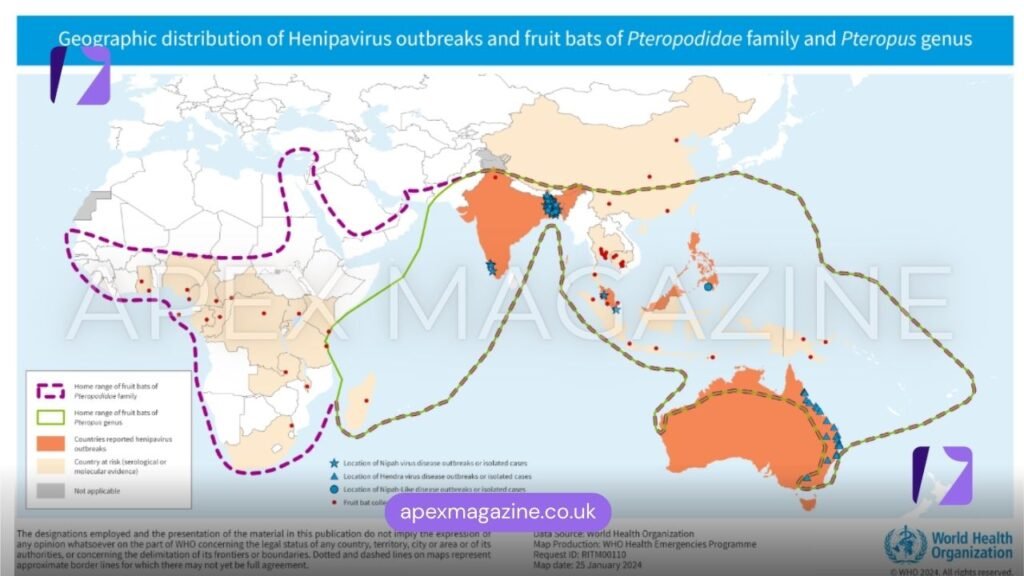
Nipah virus was first discovered in Malaysia in 1998 during a mysterious outbreak that affected pig farmers. Initially, doctors misdiagnosed the illness as Japanese encephalitis due to similar neurological symptoms. Detailed research later revealed that fruit bats were the natural reservoir of the virus. To contain the outbreak, authorities had to cull thousands of pigs, which were acting as intermediate hosts between bats and humans. Since the initial incident, sporadic outbreaks have been reported in Bangladesh, India, and other South and Southeast Asian regions, highlighting the virus’s persistent public health threat.
How Nipah Virus Spreads
The virus spreads through direct or indirect contact with infected animals, consumption of contaminated food, or close contact with infected humans. Fruit bats can contaminate fruits or raw palm sap with saliva, urine, or feces, which then serve as transmission routes to humans. Once a person is infected, the virus can spread to others via respiratory droplets, bodily fluids, or contaminated surfaces. Hospitals and healthcare settings are particularly vulnerable without proper hygiene and protective measures. Maintaining personal hygiene, avoiding unprocessed bat-contaminated products, and using protective equipment are key steps to limit the spread.
Common Symptoms of Nipah Virus Infection
Early symptoms of Nipah virus infection often resemble those of flu or other viral illnesses, which can delay diagnosis. Common signs include fever, headache, body aches, fatigue, nausea, and sore throat. As the disease progresses, patients may experience dizziness, confusion, drowsiness, or altered consciousness, indicating the involvement of the central nervous system. In severe cases, seizures and respiratory difficulties can develop within a few days. Prompt recognition of these symptoms is critical, as early medical intervention can improve the chances of recovery and reduce the risk of spreading the infection to others.
Severe Complications Linked to Nipah Virus
In advanced stages of infection, patients often develop serious complications that affect the brain and lungs. One of the most dangerous outcomes is encephalitis, which causes swelling of the brain and can lead to seizures, confusion, loss of consciousness, or coma. Respiratory problems may worsen at the same time, making breathing difficult and increasing the need for intensive care support. Even among those who survive the acute phase, long-term neurological issues such as memory loss, personality changes, or chronic weakness may persist. These severe and lasting complications explain why outbreaks are associated with high fatality rates and long recovery periods.
Who Is Most at Risk of Nipah Virus?

Certain groups face a higher risk of infection due to their environment or occupation. People living close to fruit bat habitats are more likely to encounter contaminated food or surfaces. Farmers, livestock handlers, and healthcare workers experience greater exposure through animals or infected patients. Consuming raw or unprocessed palm sap significantly increases the risk, especially in rural areas. Limited access to medical facilities further worsens outcomes, making early awareness and targeted education programs essential for protecting vulnerable communities.
Early Symptoms of Nipah Virus Infection
Early symptoms of Nipah virus infection often resemble common flu or viral illness. Patients may experience fever, headache, muscle pain, and sore throat. Fatigue and nausea appear in many cases. These symptoms usually develop within days after exposure. Because they seem mild at first, people may delay medical care. This delay allows the virus to progress and become more dangerous.
Severe and Advanced Symptoms of Nipah Virus
As the disease advances, severe symptoms begin to appear quickly. Patients may develop difficulty breathing, confusion, and drowsiness. Acute encephalitis causes swelling of the brain. Seizures and loss of consciousness often follow. Many patients fall into a coma within 24 to 48 hours. These severe complications explain the high death rate associated with Nipah virus infection.
Incubation Period of Nipah Virus
The incubation period of the Nipah virus typically ranges from 4 to 14 days. In some cases, it can extend up to 45 days. During this time, infected individuals may show no symptoms. This makes early detection difficult. People can unknowingly spread the virus during close contact. Monitoring exposed individuals remains a key public health strategy.
Who Is at Higher Risk of Nipah Virus Infection?
People living near bat habitats face a higher risk of Nipah virus infection. Farmers, animal handlers, and healthcare workers also remain vulnerable. Consuming raw or unprocessed date palm sap increases exposure risk. Family members caring for infected patients often contract the virus. Lack of awareness and limited healthcare access further raise the danger in rural areas.
Diagnosis of Nipah Virus Disease
Accurate diagnosis depends on specialized laboratory testing, as early symptoms often resemble common viral illnesses. Doctors collect blood, urine, or respiratory samples and analyze them using advanced molecular methods to confirm infection. Early diagnosis allows healthcare teams to isolate patients quickly and begin supportive treatment. Delayed detection can lead to uncontrolled spread and higher mortality. Strong surveillance systems and trained laboratories play a critical role in managing outbreaks effectively.
Treatment Options for Nipah Virus
At present, no specific antiviral drug has received approval to treat this infection. Medical care focuses on managing symptoms and preventing complications through supportive treatment. Doctors provide oxygen support, fluids, and close monitoring, especially for patients with breathing or neurological issues. Severe cases require admission to intensive care units for continuous observation. Ongoing research into experimental therapies offers hope, but early hospitalization remains the most effective way to improve survival.
Prevention and Safety Measures Against Nipah Virus
Prevention relies heavily on reducing contact with known sources of infection. Avoiding raw palm sap and thoroughly washing fruits before consumption can significantly lower risk. Healthcare workers benefit from protective equipment and strict infection control practices. Community education campaigns help people recognize early symptoms and seek medical care promptly. Until effective treatments or vaccines become widely available, preventive measures remain the strongest line of defense.
Nipah Virus Outbreaks and Global Impact
Outbreaks linked to this infection have repeatedly alarmed health authorities because they appear suddenly and spread quickly within communities. South Asian countries, especially Bangladesh and India, have reported multiple incidents over the years, often linked to close contact with infected individuals or contaminated food sources. Each outbreak places immense pressure on healthcare systems that may already be under strain, while also affecting local economies through medical costs, quarantines, and loss of productivity. Governments often issue travel advisories to reduce further spread and reassure the public. On a global level, international health organizations closely monitor these outbreaks due to the virus’s potential to cross borders and cause wider public health emergencies.
Current Research and Vaccine Development
Scientific research continues to focus on understanding the virus’s behavior and developing effective countermeasures. Researchers are studying how the virus enters human cells and causes severe neurological damage, which helps guide treatment strategies. Several experimental vaccines and antiviral therapies have shown encouraging results in laboratory and early-stage trials. Global collaboration among research institutions has accelerated progress by sharing data and resources. However, limited funding and the rarity of outbreaks make large-scale clinical trials challenging, highlighting the need for long-term international commitment.
Why Nipah Virus Is Considered a Deadly Virus
This virus is regarded as highly dangerous because it progresses rapidly and often leads to severe complications. Many patients develop inflammation of the brain within a short time, which can result in seizures, coma, or death. The absence of a specific approved treatment further increases fatality risk. Human-to-human transmission adds to the danger by allowing outbreaks to expand in healthcare and household settings. Even survivors may suffer lasting neurological problems, which underscores the long-term impact of the infection and its reputation as a serious global threat.
Conclusion
Nipah virus disease continues to pose a major public health challenge due to its severe symptoms, unpredictable outbreaks, and limited treatment options. Early detection plays a vital role in controlling spread and improving survival rates. Preventive measures, public awareness, and strong infection control systems remain the most effective defenses. Continued research brings hope for vaccines and targeted therapies in the future. Until those solutions become widely available, caution, education, and preparedness remain essential for protecting communities.
Frequently Asked Questions
What is Nipah virus disease?
Nipah disease is a viral infection transmitted from animals to humans that causes severe respiratory and neurological illness.
What causes Nipah virus disease?
The illness occurs after exposure to infected animals, contaminated food, or close contact with infected people.
Is Nipah virus fatal?
Yes, it has a high fatality rate, especially when diagnosis and care are delayed.
Can this infection spread between humans?
Person-to-person transmission is possible through close contact and bodily fluids.
Is any vaccine available?
No licensed vaccine exists yet, but research is ongoing.
How can people stay safe?
Avoiding contaminated food, maintaining hygiene, and seeking early medical care help reduce risk.
VISIT MORE: APEX MAGAZINE