
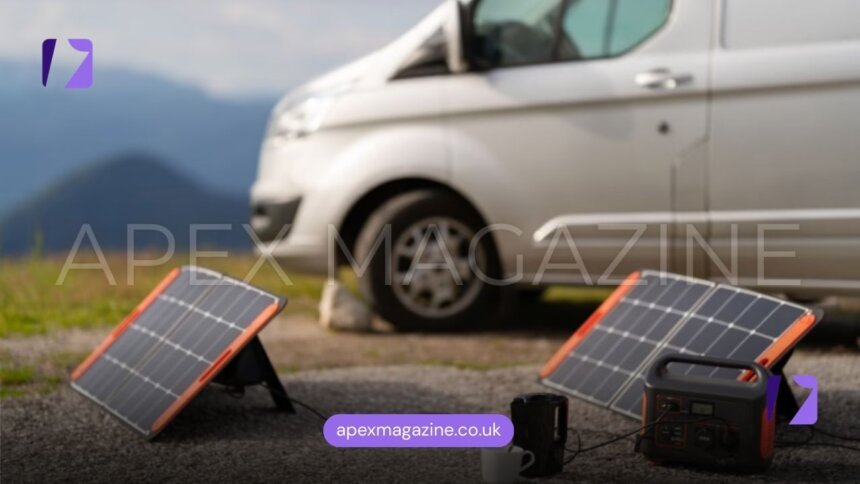
As a fleet owner, RV user, or motorhome traveler, the idea of switching to renewable energy often immediately brings solar power to mind. For years, many RV owners invested in heavy glass solar panels, modifying their roofs in hopes of achieving long-term energy savings and independence. While the promise of solar seemed appealing, the reality often proved challenging. Roofs could sustain stress from the added weight, panels were prone to cracking due to vibrations on the road, and installation often required permanent modifications that were costly and labor-intensive. Over time, these limitations made traditional solar setups less practical for moving vehicles. Fortunately, solar technology has evolved significantly, offering lightweight, flexible, and easy-to-install solutions that now allow RV and motorhome owners to enjoy clean, reliable energy without compromising safety, convenience, or vehicle integrity.
Today, there are flexible solar panels for motorhomes and RVs that are lightweight, adaptable, and much more practical. This blog explains how this new technology works, why it solves the problems of traditional glass panels, and how even RVs with limited roof space can now use solar power.
- Why Traditional Glass Solar Panels Were a Problem for RVs
- How Flexible and Lightweight Solar Panels Change Everything
- Lightweight Solar Kits Make Installation Simple
- What If Your RV Has No Roof Space?
- Traditional vs Flexible Solar Panels for Motorhomes
- A Real-World Experience from Life on the Road
- Conclusion
- Frequently Asked Questions
Why Traditional Glass Solar Panels Were a Problem for RVs
Traditional glass solar panels were originally designed for stationary homes, not for vehicles that constantly move, vibrate, and face changing road conditions. When RV owners tried installing these panels, the heavy weight often placed unnecessary stress on the roof structure, increasing the risk of long-term damage. Most glass panels also require a perfectly flat roof, which many RVs and motorhomes do not have. Constant vibration from driving made glass panels more prone to cracks and performance loss, while installation usually required drilling into the roof, causing permanent modifications and potential water leaks. On top of that, professional installation and labor costs were high, making solar energy feel like an expensive compromise rather than a practical upgrade for RV owners.
How Flexible and Lightweight Solar Panels Change Everything
Flexible and lightweight solar panels have transformed solar energy use for RVs by solving nearly every limitation of traditional glass panels. These panels are thin, bendable, and designed to adapt to curved or uneven surfaces, making them perfect for motorhome roofs. Because they weigh significantly less, they reduce strain on the roof and improve overall vehicle safety. Their flexible design allows them to withstand road vibrations, shocks, and weather extremes far better than rigid glass panels. Installation is simpler and does not require major roof modifications, making them suitable even for older RVs or vehicles with sensitive roofing materials. This innovation allows RV owners to enjoy reliable solar power without sacrificing safety or structure.
Lightweight Solar Kits Make Installation Simple
Lightweight solar panels are often sold as complete solar kits, which include panels, wiring, charge controllers, and mounting materials. These kits eliminate the need for complex planning or heavy mounting brackets, allowing for quicker and cleaner installation. Unlike traditional systems, deep roof drilling is usually unnecessary, reducing the risk of leaks and structural damage. The simplified setup results in faster installation times, lower labor costs, and minimal vehicle downtime. For fleet owners and commercial RV operators, these kits make it easy to upgrade multiple vehicles efficiently, saving both time and long-term maintenance expenses.
What If Your RV Has No Roof Space?
Limited roof space has long been a major challenge for RV owners who want solar power but cannot fit traditional panels. Many RV roofs are already crowded with vents, air conditioners, and storage units, leaving little room for solar installation. Solar awning technology provides an innovative solution by integrating solar cells directly into the awning fabric. When extended, the awning generates solar energy while also providing shade, and when not in use, it folds away neatly without occupying roof space. Solar awnings require no permanent roof installation and work especially well for RVs that were previously unsuitable for solar systems, making renewable energy accessible to more vehicle owners than ever before.
Traditional vs Flexible Solar Panels for Motorhomes
| Feature | Glass Solar Panels | Flexible Solar Panels |
| Weight | Heavy | Lightweight |
| Roof Type | Flat only | Flat or curved |
| Vibration Resistance | Low | High |
| Roof Modification | Required | None |
| Installation Cost | High | Lower |
| Shock Absorption | Poor | Excellent |
A Real-World Experience from Life on the Road
Consider an RV traveler navigating long desert routes with the sun blazing overhead. Years ago, they installed traditional glass solar panels, hopeful for reliable energy on the road. However, after months of constant vibration, heat, and movement, one of the panels cracked. Water began to seep through the roof, leading to costly repairs and frustration. Eventually, the traveler abandoned the solar setup altogether, seeing it as more trouble than benefit. Later, they discovered flexible solar panels designed for recreational vehicles. These lightweight, bendable panels required no drilling, no heavy mounting brackets, and could seamlessly conform to the RV’s curved roof. They absorbed road shocks, resisted rough weather, and provided stable energy output even on uneven terrain. For the first time, solar power worked in harmony with the RV rather than against it, proving that modern solar solutions could truly meet the demands of life on the road.
Conclusion
Flexible and lightweight solar panels have transformed how RV owners access renewable energy, eliminating the limitations that once made solar impractical for motorhomes. Whether using bendable panels or innovative solar awning systems, these modern solutions are vehicle-friendly, easy to install, and highly adaptable, making solar energy accessible for almost any RV or motorhome. Today, you no longer need to alter your vehicle to accommodate solar power; instead, solar systems now adapt to your vehicle, providing reliable energy, reducing roof stress, and enhancing the overall RV experience. For fleet owners, casual travelers, or long-term adventurers, modern solar technology ensures that renewable energy is practical, safe, and perfectly suited to the mobile lifestyle.
Frequently Asked Questions
Can I install flexible solar panels on an RV roof myself?
Yes, you can. Flexible solar panels also come in kits that you can install easily by following the instructions. It is far easier than glass panels, which need proper stands to fit, adjust, and mount the panels securely. Flexible panels remove all that extra work.
Are flexible solar panels durable enough for long trips and rough roads?
Compared to glass panels that can break or crack, flexible solar panels work much better under these conditions. They can bend and absorb shocks from roads. Of course, performance also depends on the manufacturer or brand you choose for your panels.
What if my RV doesn’t have enough roof space for solar panels?
Now there are solar awnings that can be installed as an awning on your RV. You can use them as solar when opened, and they also provide shade. This is a great solution when your RV roof has no space for traditional solar panels.
VISIT MORE: APEX MAGAZINE