

“Hakuna Matata” is a phrase that people around the world recognize, thanks to Disney’s The Lion King, though it has existed for centuries before the movie. People often translate it as “no worries” or “no problem,” which shows a carefree and positive approach to life. Many first learned it from Simba, Timon, and Pumbaa’s song in the animated film. However, the phrase also carries deeper cultural and language meaning from East Africa. Today, people use “Hakuna Matata” to show optimism, simplicity, and stress-free living, allowing it to cross languages and countries.
The Swahili Origins of Hakuna Matata
“Hakuna Matata” comes from Swahili, a Bantu language spoken widely in East Africa, especially in Kenya, Tanzania, Uganda, and parts of the Democratic Republic of Congo. In Swahili, the phrase combines “hakuna,” meaning “there is not” or “there are no,” and “matata,” meaning “problems” or “troubles.” People traditionally use it in daily conversations to reassure someone who feels worried. Furthermore, it reflects a communal approach to life, highlighting optimism, patience, and resilience in facing challenges.
- The Swahili Origins of Hakuna Matata
- Literal Translation and Meaning
- How Hakuna Matata Became Popular Worldwide
- Hakuna Matata in The Lion King: Disney’s Iconic Dialogue
- Cultural Significance and Interpretation
- Life Lessons Behind the Phrase
- Fun Facts About Hakuna Matata
- How the Phrase Is Used in Everyday Life
- Conclusion
- Frequently Asked Questions
Literal Translation and Meaning
Literally, “Hakuna Matata” means “there are no problems” or “no troubles.” Beyond the literal sense, it teaches people to let go of stress and adopt a positive mindset. In Swahili-speaking communities, speakers often say it to comfort someone who feels anxious, similar to “don’t worry” in English. Over time, its simple message and cheerful tone have made it a popular expression, which people use in casual chats, motivational messages, and daily encouragement.
How Hakuna Matata Became Popular Worldwide
While the phrase existed in East Africa for centuries, Disney’s 1994 film The Lion King made it globally famous. The characters Timon and Pumbaa introduced it as a philosophy of worry-free living through a catchy song. As a result, audiences all over the world learned and repeated it. Additionally, social media, merchandise, and pop culture references later strengthened its worldwide recognition. Today, “Hakuna Matata” remains a symbol of positivity and lightheartedness.
Hakuna Matata in The Lion King: Disney’s Iconic Dialogue
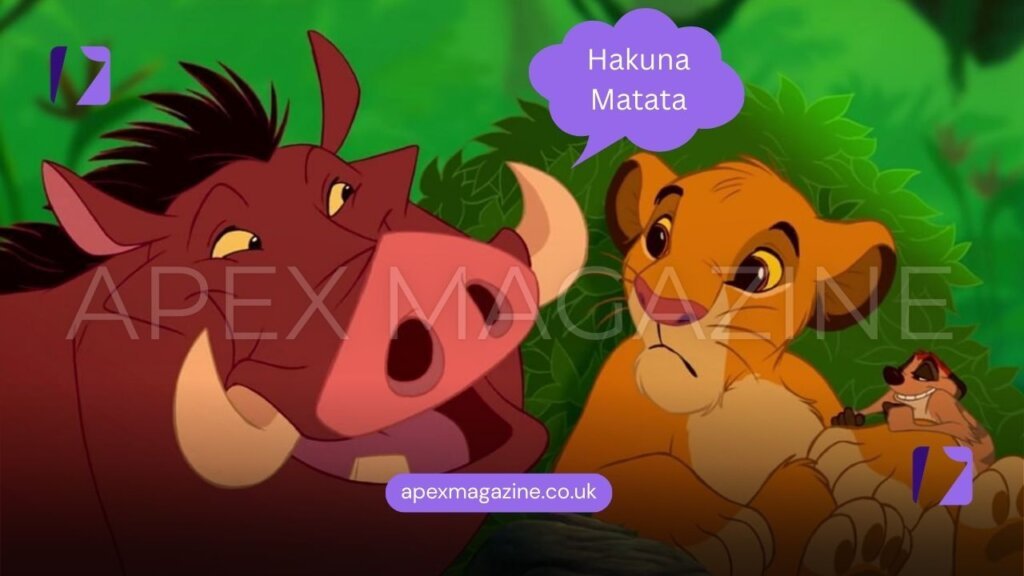
In The Lion King, “Hakuna Matata” becomes more than words it is a way of life. Timon and Pumbaa teach Simba to forget his past mistakes and enjoy the present. Through humor, music, and storytelling, the phrase encourages living without unnecessary worry. Importantly, Disney maintained the phrase’s original meaning while adding fun and personality, making it one of the most memorable lines in animated film history.
Cultural Significance and Interpretation
“Hakuna Matata” reflects more than entertainment value. In East Africa, it conveys patience, hope, and community harmony. It shows people how to face life calmly, accept challenges, and remain optimistic. Moreover, in modern contexts, it inspires mindfulness and stress-free living. People worldwide have embraced it as a motivational and cheerful message that transcends age and culture.
Life Lessons Behind the Phrase
“Hakuna Matata” teaches important lessons. First, it encourages living in the present instead of dwelling on the past. Second, it promotes resilience, helping people face problems with calmness. Third, it strengthens social support, since offering reassurance with this phrase builds trust and positivity. Disney’s portrayal of these lessons through humor and music makes them easy to understand and enjoy.
Fun Facts About Hakuna Matata
- The song “Hakuna Matata” earned a Grammy nomination for Best Song Written for Visual Media.
- Timon and Pumbaa helped Simba regain confidence through their carefree philosophy.
- The phrase inspired merchandise, theme park attractions, and motivational quotes worldwide.
- People use “Hakuna Matata” in songs, social media posts, and lifestyle content to promote positivity.
How the Phrase Is Used in Everyday Life
People now use “Hakuna Matata” in casual conversations, social media, and advertising. Travelers to East Africa often hear locals include it in greetings or informal chats. Online, creators use it to promote mindfulness, humor, and relaxed living. In everyday English, speakers use it to reassure others and encourage a positive attitude toward minor problems. Its versatility keeps it popular across generations, cultures, and countries.
Conclusion
“Hakuna Matata” grew from a Swahili phrase into a global symbol of optimism. Thanks to Disney’s The Lion King, millions of people associate it with positivity and stress-free living. Beyond the film, it reflects cultural wisdom, patience, and resilience. Today, “Hakuna Matata” continues to inspire people worldwide to embrace life without unnecessary worry, proving that simple words can carry a powerful and lasting message.
Frequently Asked Questions
What does Hakuna Matata mean?
Hakuna Matata literally means “no problems” or “there are no troubles” in Swahili. It conveys a philosophy of living without worry.
Where did the phrase Hakuna Matata originate?
People first used the phrase in East Africa, primarily in countries where Swahili is spoken, including Kenya, Tanzania, and Uganda.
How did Hakuna Matata become famous?
Disney’s 1994 animated film The Lion King made the phrase globally famous. Timon and Pumbaa taught it as a song and philosophy, spreading its message of carefree living worldwide.
What life lessons does Hakuna Matata teach?
The phrase encourages people to live in the present, let go of worries, stay optimistic, and embrace resilience in everyday life.
Can Hakuna Matata be used in everyday conversation?
Yes, people commonly use it to reassure others, promote positivity, and suggest not worrying about minor problems in casual or social contexts.
VISIT MORE: APEX MAGAZINE