
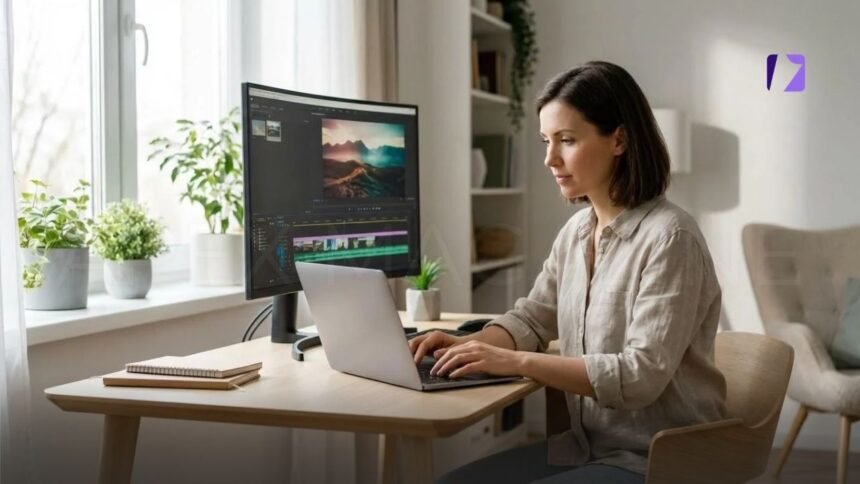
Cinematic advertising once belonged to big brands with large budgets to hire agencies, rent equipment, and spend weeks perfecting a single campaign. For small businesses, creating polished video content often felt impossible. While video was essential for marketing, the process was complex, technical, and expensive, putting cinematic ads out of reach for many startups.
That is changing rapidly. AI-powered tools are transforming how cinematic ads are created, making high-quality storytelling accessible to founders, marketers, and small teams. Small brands can now produce visually impressive campaigns without studios, large crews, or heavy budgets. With clear workflows, intuitive platforms, and AI automation, creating cinematic ads has become faster, simpler, and more affordable than ever before.
- Starting With an Idea and Letting an AI Video Generator Build the Structure
- Creating Cinematic Visuals Without a Film Crew
- Studio-Quality Voiceovers Without Recording Equipment
- Music That Elevates Emotion and Pacing
- Producing UGC-Style Ads at Scale
- Turning Written Content Into Visual Assets
- Faster Experimentation and Better Performance
- Building a Recognizable Brand Identity
- Lower Costs Without Sacrificing Creative Ambition
- Conclusion
- Frequently Asked Questions
Starting With an Idea and Letting an AI Video Generator Build the Structure
The biggest transformation in modern video advertising is not in flashy effects or transitions it’s in how the process works. Small brands no longer need to open complicated editing software or spend hours arranging footage manually. Instead, they start with a concept, whether it’s a product launch, a founder story, a customer success story, or a bold statement about their mission. AI video generators can take that written idea and turn it into a structured video draft within minutes, creating a coherent narrative that would have previously required a full production team.
Platforms like Invideo make this process seamless. Users simply describe what they want to communicate, and the AI handles visuals, voiceovers, music, and scene pacing automatically. The technical heavy lifting disappears, leaving only the story at the forefront. This approach allows small brands to focus on messaging, storytelling, and audience engagement rather than editing mechanics. As a result, companies can produce high-quality, structured videos quickly, bringing cinematic storytelling within reach of even the smallest marketing teams.
Creating Cinematic Visuals Without a Film Crew
High production value has traditionally depended on professional cameras, lighting setups, and careful location planning. For small brands, replicating that level of polish often required expensive equipment and specialized crews. Achieving intentional, cinematic visuals was out of reach for most startups or solo founders. The focus on technical execution often distracted from storytelling, making the production process slow and costly.
AI video tools have completely changed this dynamic. These platforms can automatically match visuals to the script, interpreting mood cues such as ambition, calm confidence, urgency, or innovation. Small e-commerce brands now use this technology to create sleek product promotions, coaches craft emotional brand narratives, and service providers turn abstract ideas into visually engaging stories. The result is not only faster production but also access to cinematic storytelling without technical expertise, leveling the playing field for small businesses.
Studio-Quality Voiceovers Without Recording Equipment
Sound design is one of the most overlooked yet critical elements of a successful ad. A compelling voiceover can elevate even simple visuals, making the content memorable and emotionally engaging. Traditionally, creating professional-quality audio required expensive recording equipment, soundproof studios, and technical expertise barriers that small brands often cannot overcome. This made high-quality voiceovers a luxury reserved for large companies with bigger budgets.
AI voice generation changes everything. Brands can now select tone, pace, and style to match their identity instantly. Whether the message calls for boldness, calm reassurance, drama, or casual conversation, the system produces professional audio without any recording studio. Some platforms also offer voice cloning, allowing founders to maintain a consistent brand voice across multiple campaigns without re-recording scripts each time. This technology gives small teams the polish of a professional production while minimizing complexity and operational costs.
Music That Elevates Emotion and Pacing
Music plays a pivotal role in shaping audience perception and engagement. A slow build can create suspense or anticipation, while a strong beat adds energy and momentum. Traditionally, syncing music to video required careful timing and technical editing, a process that was time-consuming and often required specialized skills.
AI-powered video tools can now analyze the tone of a script and automatically select background music that complements the emotional arc. Transitions, scene shifts, and pacing are aligned with the rhythm of the music, producing a cohesive audiovisual experience. For small brands, this removes another technical barrier, allowing them to create cinematic, professional-sounding content without manual audio editing. The result is videos that feel intentional, polished, and emotionally engaging from start to finish.
Producing UGC-Style Ads at Scale
Cinematic advertising doesn’t always have to look polished or overly produced. Many of today’s highest-performing ads combine structured storytelling with a sense of authenticity. This approach engages audiences by making content feel relatable while still delivering a clear message. Small brands can now harness AI to create UGC-style (user-generated content) ads that capture this balance.
AI tools allow marketers to generate realistic human presenters or AI avatars from text prompts, producing testimonials, product explainers, or promotional clips quickly. Platforms like Invideo make it easy to produce multiple formats from a single concept. A brand can create a dramatic promo, a short testimonial, and a concise product demo without starting from scratch each time. This flexibility helps small businesses experiment with different styles, test audience reactions, and identify what content resonates best.
Turning Written Content Into Visual Assets
Many small businesses already produce written content such as blogs, newsletters, and product descriptions. Historically, transforming this material into video required manual scripting, editing, and production, often duplicating effort and consuming significant time. This challenge limited the ability of small teams to maintain cohesive video strategies alongside written content.
AI platforms now streamline this process by converting text into structured video scripts automatically. Long-form articles can become short explainer videos, product pages can be turned into engaging demos, and brand manifestos can evolve into cinematic introduction clips. Compared to traditional video apps, AI tools drastically reduce production workload, enabling small teams to manage written and video content simultaneously. This integration ensures brands maintain consistency and storytelling quality across multiple platforms.
Faster Experimentation and Better Performance
Large companies have long relied on testing multiple ad variations, analyzing performance metrics, and continuously refining messaging. Small brands, however, historically lacked the resources to adopt this approach. Even producing a single polished video required significant time, effort, and specialized skills, making iteration slow and expensive.
AI tools now make experimentation practical for small teams. Founders can test different hooks, change voiceovers, adjust pacing, or shorten videos for specific platforms in minutes. New versions can be generated quickly without rebuilding the project from scratch. This speed allows small brands to make smarter marketing decisions based on real audience feedback rather than guesswork, improving both engagement and ROI while maintaining professional-quality video content.
Building a Recognizable Brand Identity
Consistency is essential for building a professional and memorable brand. Repeated visual patterns, consistent pacing, and a stable tone help audiences recognize a brand over time, creating trust and familiarity. For small teams, maintaining this level of cohesion across multiple videos has traditionally been challenging.
AI platforms help enforce brand consistency by allowing teams to reuse prompts, apply similar structures, and replicate stylistic choices across campaigns. Platforms like Invideo streamline this workflow, making it easier for non-technical users to create cohesive content repeatedly. When creating videos becomes simple, brands are more likely to produce content consistently, strengthening their presence across social media, websites, and other platforms.
Lower Costs Without Sacrificing Creative Ambition
Traditional video production often requires multiple specialists scriptwriters, editors, videographers, sound designers, and project managers adding both complexity and cost. For small brands, this creates a barrier between creative ideas and execution.
AI-powered platforms consolidate many of these functions into a single, streamlined system. This reduces coordination effort, operational costs, and technical complexity. Small brands can now experiment with storytelling angles, visual styles, and messaging without financial constraints. By lowering production barriers, AI tools allow even lean teams to produce cinematic-quality content while maintaining creative freedom and ambition.
Conclusion
Cinematic advertising is no longer limited by budget size. Today, success depends on clarity of message, storytelling, and the ability to execute efficiently. Small brands can now compete with larger companies by producing visually compelling, emotionally engaging videos without expensive equipment or large production teams. The focus has shifted from technical complexity to creativity and narrative impact, making professional-quality advertising more accessible than ever.
AI video tools provide small businesses with the resources to create professional-level storytelling with minimal effort. By automating tasks such as scene creation, voiceovers, music selection, and pacing, these platforms allow teams to focus on refining their message and exploring creative ideas. For emerging brands, this democratization of cinematic advertising opens new opportunities to connect meaningfully with audiences, build strong brand identities, and deliver high-quality video content at scale.
Frequently Asked Questions
What is AI video advertising?
AI video advertising uses artificial intelligence to create videos automatically from scripts, text, or ideas.
How can small businesses use AI videos?
They can make professional videos quickly, test different versions, and save on production costs.
Can AI create voiceovers and music?
Yes, AI can generate studio-quality voiceovers and choose music to match the video’s mood.
What content can AI turn into videos?
Blogs, product pages, newsletters, or brand stories can all be converted into short videos.
Are AI videos effective?
Yes, they are fast, cost-efficient, and can engage audiences like traditional ads.