
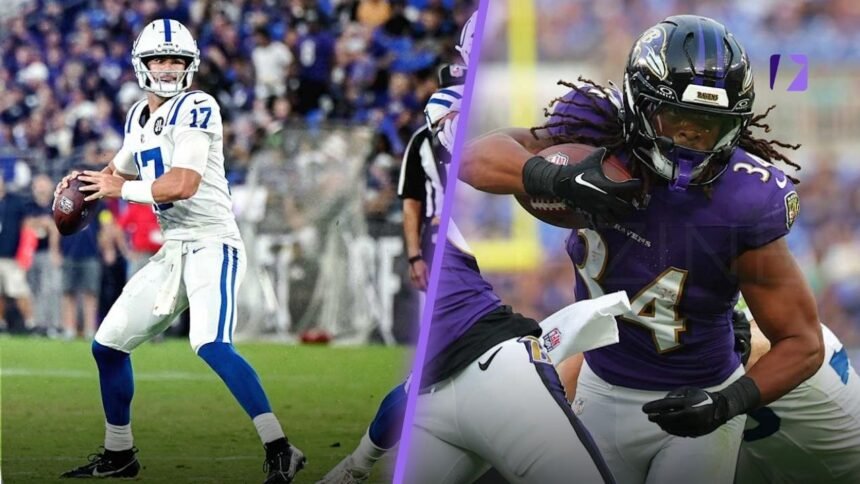
The Indianapolis Colts vs Baltimore Ravens Match Player Stats preseason matchup on August 7, 2025 showcased a competitive battle between two storied franchises ahead of the NFL regular season. While this was a preseason game, both teams treated the contest as an opportunity to assess depth, develop younger talent, and fine‑tune strategies before Week 1 play. The contest ended with a 24‑16 victory for the Baltimore Ravens in front of a robust crowd at M&T Bank Stadium in Baltimore, Maryland.
From explosive scoring drives to strategic defensive plays, this matchup offered early insight into how each roster could contribute throughout the season. Fans were eager to see how both teams’ player rotations would perform, especially with injury narratives and positional battles still underway. Despite its preseason status, each snap mattered for players vying for roster spots and valuable reps.
Quick Score Summary Table
| Team | Q1 | Q2 | Q3 | Q4 | Final |
|---|---|---|---|---|---|
| Indianapolis Colts | 6 | 3 | 7 | 0 | 16 |
| Baltimore Ravens | 14 | 7 | 0 | 3 | 24 |

Quick Match Stats Overview
| Category | Indianapolis Colts | Baltimore Ravens |
|---|---|---|
| Total Yards | 366 | 226 |
| Passing Yards | 240 | 49 |
| Rushing Yards | 126 | 177 |
| Time of Possession | 32:29 | 27:21 |
| Turnovers | 1 | 0 |
| Red Zone Efficiency | 1-3 | 1‑2 |
Quarter-by-Quarter Performance
In the first quarter, Baltimore established early control by outscoring the Colts 14-6. The Ravens combined a dominant rushing attack with an electrifying punt return touchdown to shift momentum quickly. Indianapolis tried to stay competitive through Spencer Shrader’s reliable field goal, but Baltimore’s ability to score on multiple fronts highlighted the strategic versatility of their offense. Every explosive play forced Indianapolis to adjust playcalling and defensive schemes, setting the tone for a game of constant tactical adaptations.
By the second quarter, Baltimore extended their lead to 21-9 with a short-yardage rushing touchdown that showcased their effectiveness in red-zone situations. Indianapolis managed only one additional field goal before halftime, revealing challenges in converting sustained drives into points. The third quarter provided a glimmer of hope for the Colts as they finally reached the end zone with a rushing score, narrowing the deficit and demonstrating their determination. Despite this, the Ravens maintained composure, using efficient time management and disciplined defense to keep the game under control heading into the final quarter.
Indianapolis Colts Player Stats
Offensive Player Stats
Daniel Jones and Riley Leonard shared quarterback duties, each contributing meaningfully to Indianapolis’ passing attack. Jones completed key passes totaling 144 yards, executing both short and medium-range throws that kept the offense balanced. Leonard added 92 yards through the air, showing promise under live-game pressure while adjusting to defensive schemes. Together, their performance highlighted the Colts’ reliance on a flexible passing game capable of adapting to various in-game scenarios.
The Colts’ running backs were equally crucial, contributing 126 total rushing yards. Short-yardage and third-down conversions were executed with precision, allowing sustained drives despite strong defensive resistance. The offensive line provided consistent protection, enabling quarterbacks to deliver accurate passes and maintain offensive rhythm. This balance between the passing and rushing game demonstrated the Colts’ strategic versatility and depth heading into the regular season.
Defensive Player Stats
Defensively, Indianapolis registered 2 sacks and forced turnovers, effectively disrupting Baltimore’s passing options. Linebackers and defensive backs executed disciplined coverage, maintaining containment while pressuring the quarterback at key moments. Their coordinated effort not only minimized long passing plays but also highlighted the Colts’ ability to adapt to dynamic offensive strategies.
Although the Colts allowed significant rushing yardage, they maintained tactical positioning to prevent explosive gains. By controlling the line of scrimmage and filling gaps quickly, they limited Baltimore’s efficiency on the ground. These adjustments showcased strategic preparation and underscored the importance of adaptability in maintaining competitive performance against multi-faceted offenses.
Special Teams Stats
Spencer Shrader stood out as a reliable kicker, converting three field goals from varying distances. His accuracy provided crucial points, keeping Indianapolis within striking distance during key phases of the game. Special teams’ execution reinforced the Colts’ ability to capitalize on scoring opportunities even when the offense faced red-zone challenges.
The Colts’ punt and kickoff coverage also played a vital role in minimizing Baltimore’s return opportunities. By preventing additional momentum shifts, the special teams contributed to the overall balance of the game. These efforts, often overlooked in casual analysis, reflected the coaching staff’s emphasis on all phases of play and the strategic value of special teams in maintaining a competitive edge.
Baltimore Ravens Player Stats
Offensive Player Stats
Baltimore’s offensive strategy relied heavily on the rushing game, producing 177 total yards on the ground. Keaton Mitchell emerged as the standout rusher, amassing 68 yards and scoring a touchdown with impressive agility and vision. His ability to read gaps in the Colts’ defense allowed Baltimore to maintain control over critical drives. Rasheen Ali contributed 37 yards and a touchdown as well, demonstrating depth in the backfield and the team’s versatility in executing diverse running plays. This effective ground attack forced Indianapolis to adjust their defensive positioning constantly.
Passing was limited but efficient for the Ravens, totaling just 49 yards. Quarterback adjustments focused on short, high-percentage throws that set up scoring opportunities and controlled field position. Baltimore’s offensive approach prioritized efficiency over volume, emphasizing calculated play-calling that maximized results from fewer passing attempts. This balance between running dominance and selective passing enabled the Ravens to maintain pressure and manage the clock throughout the game.
Defensive Player Stats
Baltimore’s defense delivered a highly disciplined performance, limiting Indianapolis’ passing attack to just 49 yards. Interceptions and consistent quarterback pressure disrupted timing and prevented the Colts from establishing a rhythm. Defensive backs and linebackers maintained tight coverage, showcasing excellent communication and preparedness. Their ability to read plays quickly and respond to shifting formations highlighted the Ravens’ strategic execution and in-game adaptability.
The defensive unit also excelled against the rushing game when required, containing critical short-yardage plays. Coordination between linebackers and secondary players enforced tackling discipline and minimized explosive opportunities. Baltimore’s defense consistently maintained momentum control, particularly in moments when the Colts threatened to narrow the scoring gap. This cohesion reinforced the importance of collective execution in maintaining a winning advantage.
Special Teams Stats
Special teams played a decisive role for Baltimore, shifting momentum at key moments. LaJohntay Wester’s 87-yard punt return touchdown electrified the stadium and provided an instant boost for the Ravens. Kicker Tyler Loop added a late 52-yard field goal, further solidifying the team’s lead and demonstrating the strategic importance of reliable special teams execution.
Return coverage and kickoff management also limited potential Colts’ advantages in field position. The Ravens’ disciplined coverage team consistently prevented big returns, ensuring that the opposition faced longer drives to score. This emphasis on every phase of the game underscores the coaching staff’s strategic focus and highlights the critical role special teams play in controlling outcomes in high-stakes matchups.
Top Performers of the Match
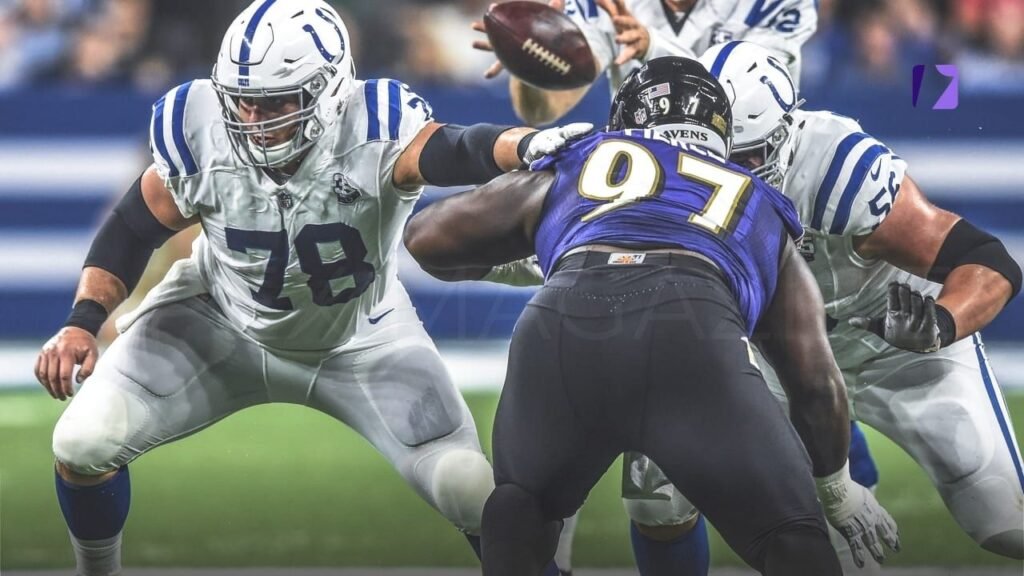
Keaton Mitchell stood out as Baltimore’s primary offensive weapon. His speed, agility, and field awareness enabled him to exploit gaps in the Colts’ defensive line repeatedly. Mitchell’s contribution directly impacted time-of-possession control and scoring efficiency, giving Baltimore an edge in both momentum and tactical execution. His performance illustrated how individual excellence, combined with team coordination, can define key moments in a game.
For Indianapolis, Spencer Shrader’s consistency in field goals was vital. Successfully converting three attempts, Shrader kept the Colts competitive and maintained scoreboard tension. His reliable kicking highlighted the importance of special teams in preseason matches, demonstrating that even in games with limited scoring opportunities, execution in key phases can significantly influence outcomes. Both players’ performances underscore the value of preparation, discipline, and consistency in professional football.
Turning Points and Game-Changing Plays
The most decisive moment of the game came with LaJohntay Wester’s electrifying 87-yard punt return. This single play immediately shifted momentum in Baltimore’s favor, energizing the crowd and the Ravens’ sideline while forcing the Colts to reconsider their defensive strategy. In preseason games, where depth and special teams often carry as much weight as starting players, such explosive plays can dictate not only scoring but also the confidence and tempo of the game. This moment became a defining highlight, demonstrating how preparation and opportunity intersect in professional football.
Injuries also shaped the narrative significantly. Colts’ starting quarterback Anthony Richardson exited early with a dislocated pinkie, prompting backup quarterbacks to rotate into live action. These substitutions provided insight into developing talent, revealing strengths and areas needing refinement. The incident also highlighted the importance of contingency planning for key positions, reinforcing the notion that preseason games serve as vital opportunities for coaches to assess resilience, adaptability, and team depth.
Team Comparisons and Analysis
Despite Indianapolis accumulating 366 total yards compared to Baltimore’s 226, the game’s outcome emphasized that efficiency and execution often outweigh sheer volume. Baltimore capitalized on key opportunities, particularly in rushing and special teams, translating fewer total yards into a winning score. Their ability to manage high-leverage situations, execute critical plays, and maintain composure under pressure demonstrated a tactical advantage that overshadowed numerical statistics.
Time of possession favored Indianapolis, reflecting their ability to sustain drives and move the ball effectively. However, Baltimore’s capacity to convert pivotal moments into points showcased a more strategic approach. This contrast underlines a key lesson: in football, effective decision-making, situational awareness, and precision often determine success more than the accumulation of yardage or possession alone. Coaches and analysts can extract valuable insights from such performances for evaluating game strategies and roster decisions.
Impact on Season Standings
Preseason outcomes carry minimal direct impact on standings, yet they offer crucial insights into player performance, team cohesion, and tactical effectiveness. Baltimore’s victory provides confidence for both starters and reserve players, indicating readiness and depth as the regular season approaches. It also validates coaching strategies and highlights areas where the team can fine-tune execution in high-pressure scenarios.
For Indianapolis, the game served as a valuable diagnostic opportunity. Offensive rotations, defensive schemes, and special teams effectiveness were all tested, exposing areas needing improvement before the season begins. Preseason contests like this one allow coaching staffs to evaluate talent, finalize roster decisions, and refine tactical approaches, underscoring the long-term value of exhibition games beyond the immediate scoreboard.
Conclusion
The Indianapolis Colts vs Baltimore Ravens preseason matchup offered a compelling glimpse into emerging talent, strategic planning, and the critical influence of special teams. Baltimore’s 24-16 victory reflected precise rushing execution, disciplined defense, and game-changing moments such as Wester’s punt return. Meanwhile, the Colts displayed offensive resilience, highlighting both potential and areas for improvement in efficiency and red-zone performance.
Ultimately, the game underscored how preseason contests provide meaningful insights for teams, players, and fans alike. Beyond the final score, coaches gathered data, assessed depth, and identified future strategies, while standout players demonstrated readiness and skill under pressure. Even in exhibition play, the matchup delivered drama, strategy, and a preview of the competitive intensity expected in the 2025 NFL season.
Frequently Asked Questions
Who won the Colts vs Ravens preseason game on August 8, 2025?
The Baltimore Ravens won the game with a 24-16 scoreline.
Who were the standout performers?
Keaton Mitchell (Ravens) and Spencer Shrader (Colts) led their teams in scoring and impact plays.
What was the final score by quarter?
Colts: 6-3-7-0 | Ravens: 14-7-0-3.
Did any injuries occur during the game?
Yes, Colts’ QB Anthony Richardson suffered a dislocated pinkie, impacting offensive continuity.
How did special teams affect the game?
LaJohntay Wester’s 87-yard punt return for a touchdown shifted momentum, and both kickers added key field goals to influence the final score.
VISIT MORE: APEX MAGAZINE