

The rivalry matchup between the Ohio State Buckeyes and the Michigan Wolverines delivered several important highlights that shaped the outcome. Ohio State controlled the tempo early and maintained momentum through disciplined offense and strong defensive execution. The Buckeyes scored 14 points in the second quarter, which became the defining stretch of the game. That scoring run shifted momentum and placed significant pressure on Michigan’s offense. The Buckeyes also demonstrated strong third-down efficiency, converting crucial opportunities and extending drives that exhausted Michigan’s defensive unit.
Another key highlight involved Ohio State’s balanced offensive performance. The team generated 419 total yards while maintaining possession for more than forty minutes. This advantage allowed Ohio State to control field position and limit Michigan’s opportunities to respond. Michigan began the game with an early lead in the first quarter, but the offense struggled to maintain consistency afterward. As the game progressed, Ohio State’s disciplined play and strategic execution gradually widened the gap. These highlights demonstrated the Buckeyes’ ability to perform under pressure during one of college football’s most historic rivalries.
- Quick Score Table
- Match Stats Table Stats
- History of the Ohio State vs Michigan Rivalry
- Team Overview: Ohio State Buckeyes
- Team Overview: Michigan Wolverines
- Current Season Performance and Form
- Head-to-Head Record and Historical Stats
- Key Players to Watch in the Match
- Offensive Strengths of Both Teams
- Defensive Strategies and Key Matchups
- Quarter-by-Quarter Match Breakdown
- Third-Down Efficiency and Its Impact on the Game
- Time of Possession and Game Control
- Special Teams Performance
- Impact of the Game on Big Ten Standings
- Passing Performance Comparison
- Fan Reactions and Media Coverage
- Conclusion
- Frequently Asked Questions
Quick Score Table
| Team | 1 | 2 | 3 | 4 | Final |
|---|---|---|---|---|---|
| Ohio State Buckeyes | 3 | 14 | 7 | 3 | 27 |
| Michigan Wolverines | 6 | 3 | 0 | 0 | 9 |

Match Stats Table Stats
| Category | Ohio State Buckeyes | Michigan Wolverines |
|---|---|---|
| 1st Downs | 23 | 9 |
| 3rd down efficiency | 11-17 | 1-9 |
| 4th down efficiency | 2-2 | 0-1 |
| Total Yards | 419 | 163 |
| Passing | 233 | 63 |
| Comp/Att | 19/26 | 8/18 |
| Yards per pass | 9.0 | 3.5 |
| Interceptions thrown | 1 | 1 |
| Rushing | 186 | 100 |
| Rushing Attempts | 47 | 24 |
| Yards per rush | 4.0 | 4.2 |
| Penalties | 6-72 | 1-3 |
| Turnovers | 1 | 1 |
| Fumbles lost | 0 | 0 |
| Interceptions thrown | 1 | 1 |
| Possession | 40:01 | 19:59 |
History of the Ohio State vs Michigan Rivalry
The rivalry between the Ohio State Buckeyes and the Michigan Wolverines stands as one of the most famous traditions in college football. Their first meeting took place in 1897, and since then the matchup has grown into a defining event for both programs. Fans from both universities treat the game as the most important contest of the season. The rivalry represents more than athletic competition because it carries deep historical pride and regional identity. Each year the game attracts national attention as supporters, alumni, and analysts anticipate another chapter in this historic college football showdown.
Over the decades, the rivalry has produced dramatic finishes, legendary players, and memorable coaching battles. Many of these games have determined the champion of the Big Ten Conference or influenced national championship races. The intensity of the matchup also affects recruiting, media coverage, and fan traditions. Stadiums fill with passionate supporters, and television audiences across the country follow every moment closely. Because the game usually takes place at the end of the regular season, it often carries enormous stakes. This long history ensures that every new meeting between the Buckeyes and Wolverines adds another meaningful chapter to the rivalry.
Team Overview: Ohio State Buckeyes
The Ohio State Buckeyes entered the November 2025 rivalry game with strong momentum and a reputation for high-level performance. Ohio State consistently ranks among the top college football programs due to its balanced offensive strategy and disciplined defensive structure. The roster features skilled quarterbacks, dynamic receivers, and powerful running backs who can execute multiple offensive schemes. This depth allows the team to adapt to different opponents and maintain consistent productivity throughout the season. Coaches emphasize preparation, teamwork, and strategic decision-making, which helps the Buckeyes remain competitive against elite programs across the country.
During the November 2025 matchup, Ohio State demonstrated its strengths through effective execution and consistent scoring drives. The offense produced 419 total yards by combining efficient passing with a reliable rushing attack. This balanced approach forced Michigan’s defense to defend the entire field. The Buckeyes also converted key third-down opportunities, which allowed them to extend drives and control the pace of the game. By maintaining possession and applying constant pressure, Ohio State gradually built a comfortable lead. This performance highlighted the team’s depth, discipline, and ability to perform under pressure in one of college football’s most intense rivalries.
Team Overview: Michigan Wolverines
The Michigan Wolverines entered the rivalry matchup with high expectations and a long tradition of competitive football. Michigan is known for its physical playing style, disciplined defense, and commitment to a strong running game. Over many decades, the program has developed a reputation for toughness and resilience against elite opponents. Coaches emphasize structured gameplay, teamwork, and defensive consistency. These qualities have helped Michigan remain one of the most respected programs in college football and a regular contender within the Big Ten Conference.
Despite entering the game with confidence, Michigan struggled to match Ohio State’s offensive efficiency during the November 2025 contest. The Wolverines recorded only 163 total yards, which limited their scoring opportunities throughout the game. Offensive drives often ended quickly due to limited third-down conversions and difficulties in the passing game. Although the team showed determination early in the matchup, Ohio State’s defense gradually restricted Michigan’s ability to gain momentum. As the game progressed, the Wolverines found it difficult to sustain offensive rhythm, which allowed Ohio State to maintain control and extend the lead.
Current Season Performance and Form
The Ohio State Buckeyes entered the November 29, 2025 matchup with a strong record in the Big Ten Conference. Throughout the season, they demonstrated balanced offensive production, combining explosive passing plays with a reliable rushing game. Defensively, Ohio State maintained consistency, limiting opponents’ scoring and controlling critical situations. Their ability to execute in both red-zone and third-down scenarios allowed them to convert games into wins, earning momentum that carried into the rivalry matchup against Michigan. Preparation and discipline were evident in each contest.
Conversely, the Michigan Wolverines experienced a season marked by resilience but occasional inconsistency. While they delivered strong performances against key conference opponents, their offense sometimes failed to sustain drives or capitalize on scoring opportunities. Heading into the Ohio State game, analysts predicted a competitive contest, yet Ohio State’s consistency ultimately provided a noticeable advantage. Michigan’s defensive play remained strong in parts, but offensive inefficiencies limited their ability to apply pressure, highlighting the difference in season-long form between the two programs.
Head-to-Head Record and Historical Stats
The head-to-head history of the Ohio State Buckeyes and Michigan Wolverines is one of the most storied in college football. Over more than a century, each program has had periods of dominance that shaped the rivalry. Ohio State and Michigan have consistently competed for conference titles, and many games have had implications for national championship contention. The matchup has produced memorable moments, record-breaking performances, and iconic plays that contribute to the rivalry’s legendary status in college football history.
Statistical records highlight how small differences often determine the outcome of these high-stakes games. Categories such as third-down efficiency, time of possession, turnovers, and total yardage have frequently decided contests. In the November 2025 matchup, Ohio State excelled in multiple areas, including 419 total yards, higher first downs, and superior control of possession time. These statistical advantages allowed the Buckeyes to dictate game flow, minimize Michigan’s scoring opportunities, and maintain control from start to finish, continuing historical patterns in this competitive rivalry.
Key Players to Watch in the Match
Several athletes stood out as pivotal contributors during the November 29 matchup. For the Ohio State Buckeyes, the quarterback consistently demonstrated accuracy and the ability to read defensive coverage. Wide receivers and running backs executed plays that kept Michigan’s defense off balance, contributing to sustained drives and scoring opportunities. This combination of talent and teamwork underscored the Buckeyes’ offensive strength and ability to perform under pressure in a rivalry setting.
Defensively, Ohio State’s players applied disciplined tackling and effective coverage schemes to limit Michigan’s offensive progress. Meanwhile, the Michigan Wolverines relied on defensive leaders to slow down Ohio State’s attack, attempting to disrupt both passing and rushing plays. Despite these efforts, Michigan struggled to contain Ohio State’s balanced offense. Individual performances on both sides highlighted skill and effort, but Ohio State’s collective execution across offense, defense, and special teams ultimately secured their dominance throughout the contest.
Offensive Strengths of Both Teams
The offense of the Ohio State Buckeyes played a major role in the team’s 27–9 victory on November 29, 2025. Ohio State produced 419 total yards, including 233 passing yards and 186 rushing yards. This balanced offensive performance made it difficult for Michigan’s defense to predict play calls. The quarterback completed 19 of 26 passes, showing strong accuracy and decision-making. Wide receivers created separation and secured key catches during important moments of the game. At the same time, the rushing attack maintained steady gains. This combination allowed Ohio State to control the pace of the game and consistently move the ball down the field.
In contrast, the offense of the Michigan Wolverines struggled to generate consistent production. Michigan recorded only 163 total yards during the game, including 63 passing yards and 100 rushing yards. The passing game faced difficulties, as the quarterback completed 8 of 18 attempts. Without a strong aerial attack, Ohio State’s defense focused heavily on limiting rushing plays. Michigan also converted only one of nine third-down attempts, which prevented sustained drives. These offensive limitations reduced time of possession and scoring opportunities. As a result, Michigan could not maintain offensive momentum against Ohio State’s disciplined defensive strategy.
Defensive Strategies and Key Matchups
The defense of the Ohio State Buckeyes executed an effective game plan that focused on controlling Michigan’s offensive rhythm. Defensive linemen applied pressure on the quarterback, which forced hurried throws and limited passing accuracy. Linebackers supported both pass coverage and run defense, closing gaps quickly and preventing large gains. This disciplined approach restricted Michigan’s ability to create explosive plays. By maintaining strong coverage and physical tackling, Ohio State limited the Wolverines to only 163 total yards. The defensive effort played a major role in maintaining control of the game from the early stages.
The defense of the Michigan Wolverines initially attempted to contain Ohio State’s offensive attack. Early in the game, defensive players focused on limiting the running game and forcing passing situations. This strategy helped prevent explosive plays during the first quarter. However, Ohio State’s balanced offense gradually created challenges for the Wolverines. The Buckeyes converted 11 of 17 third-down attempts, which allowed them to extend drives and maintain possession. As the game progressed, Michigan’s defense spent more time on the field, which made it harder to sustain consistent pressure against Ohio State’s offense.
Quarter-by-Quarter Match Breakdown
The first quarter of the game showed competitive intensity from both teams. The Michigan Wolverines managed to score six points early, taking a brief lead that energized their supporters. Meanwhile, the Ohio State Buckeyes responded with a field goal, closing the quarter with a 6–3 score. Both teams tested defensive strategies during this stage while attempting to establish offensive rhythm. Michigan’s early scoring opportunities created initial momentum, but Ohio State’s defense quickly adjusted to limit further offensive success.
The second quarter marked a turning point in the game. Ohio State scored fourteen points during this period, demonstrating efficient passing and a productive rushing attack. Michigan managed only three points, which allowed the Buckeyes to build a clear lead by halftime. During the third quarter, Ohio State added another touchdown while Michigan struggled to move the ball effectively. The fourth quarter featured a field goal that secured Ohio State’s 27–9 victory. This quarter-by-quarter progression shows how Ohio State gradually gained control and maintained dominance throughout the remainder of the matchup.
Third-Down Efficiency and Its Impact on the Game
Third-down efficiency played a decisive role in the outcome of the matchup. The Ohio State Buckeyes converted 11 of 17 third-down attempts, which reflects outstanding offensive execution. Successful third-down conversions allowed Ohio State to maintain possession and extend drives. Each extended drive increased pressure on Michigan’s defense and prevented the Wolverines from gaining offensive momentum. This consistent efficiency created multiple scoring opportunities and helped the Buckeyes dominate time of possession.
In contrast, the Michigan Wolverines converted only one of nine third-down attempts. This lack of efficiency prevented the Wolverines from sustaining offensive drives. Short possessions forced Michigan’s defense to return to the field quickly, which increased fatigue as the game progressed. The inability to convert third downs also reduced Michigan’s scoring opportunities and limited their ability to adjust strategically. This statistical difference clearly demonstrates how situational execution can influence the outcome of high-level football games.
Time of Possession and Game Control
Time of possession strongly favored the Ohio State Buckeyes during the November 29 matchup. Ohio State controlled the ball for 40 minutes and 1 second, which allowed the offense to dictate the pace of the game. Long drives reduced Michigan’s opportunities to respond and gradually shifted momentum in Ohio State’s favor. The Buckeyes used a balanced offensive strategy that included both rushing plays and efficient passing. This combination enabled them to maintain consistent progress while controlling the clock.
Meanwhile, the Michigan Wolverines possessed the ball for only 19 minutes and 59 seconds. Limited possession time made it difficult for Michigan to establish offensive rhythm or develop strategic adjustments. The Wolverines often faced quick defensive stops, which returned possession to Ohio State. This imbalance placed additional pressure on Michigan’s defense and reduced the team’s ability to create scoring opportunities. Time of possession therefore became one of the most important factors influencing the overall outcome of the game.
Special Teams Performance
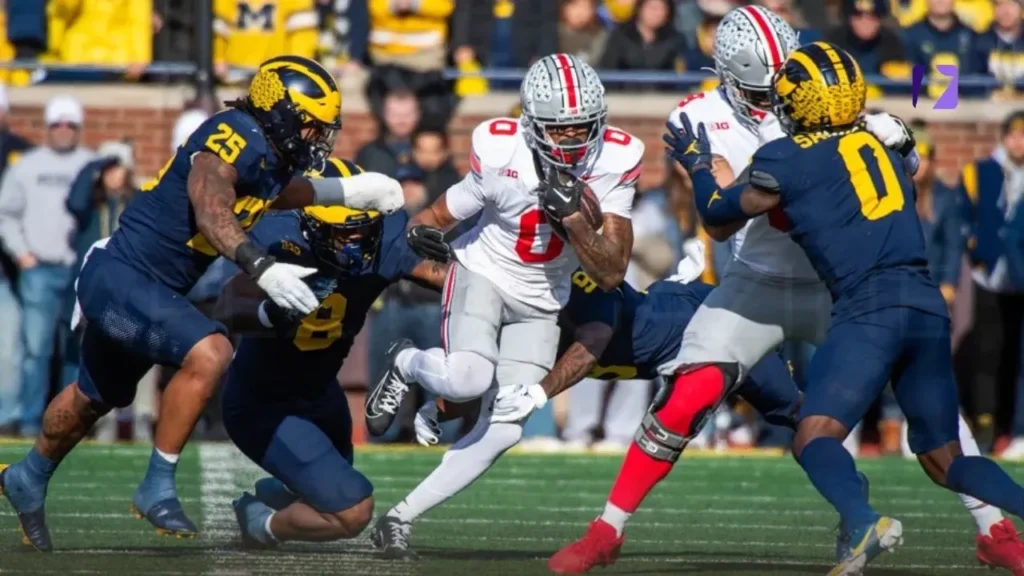
Special teams played an important supporting role in the November 29, 2025 matchup between the Ohio State Buckeyes and the Michigan Wolverines. Ohio State’s special teams unit delivered reliable field goal execution and effective punting that helped control field position throughout the game. The Buckeyes added two crucial field goals that contributed to the final 27–9 score. Consistent kicking accuracy ensured that offensive drives ended with points whenever possible. In addition, solid punt coverage prevented Michigan from gaining significant return yardage, which kept the Wolverines starting most drives deep in their own territory.
Michigan’s special teams unit attempted to provide momentum through disciplined coverage and field positioning. Early in the game, the Wolverines managed to limit big returns and kept Ohio State’s return game under control. However, the offense struggled to capitalize on those opportunities, which reduced the overall impact of special teams efforts. Michigan also relied on field goals to add points in the first half, but the lack of sustained offensive drives prevented additional scoring chances. Overall, Ohio State’s special teams consistency supported its broader game strategy and helped maintain control of field position.
Impact of the Game on Big Ten Standings
The outcome of the November 29 matchup had meaningful implications for the Big Ten Conference standings. The victory strengthened the position of the Ohio State Buckeyes and reinforced their reputation as one of the most competitive programs in the conference. Winning this rivalry game not only boosted team morale but also improved their standing within the conference rankings. Such victories often influence postseason opportunities and national recognition.
For the Michigan Wolverines, the loss created challenges in maintaining momentum within the conference race. Rivalry games often carry additional weight because they can affect both standings and team confidence. Michigan’s coaching staff and players will likely analyze the performance closely to identify areas for improvement before future seasons. Despite the setback, the Wolverines remain a historically strong program capable of competing at a high level within the Big Ten Conference.
Passing Performance Comparison
The passing game of the Ohio State Buckeyes delivered strong results during the rivalry matchup. The quarterback completed 19 of 26 passes for 233 yards, averaging nine yards per pass attempt. This efficiency created consistent first-down opportunities and helped maintain offensive rhythm. Accurate passing also forced Michigan’s defense to expand coverage across the field, which opened additional rushing lanes. Ohio State’s receivers played an important role by creating separation and securing reliable catches in crucial moments.
The passing offense of the Michigan Wolverines experienced significant challenges throughout the game. Michigan recorded only 63 passing yards and completed eight of eighteen attempts. This limited production reduced the offense’s ability to stretch the field or create explosive plays. Without a consistent passing attack, Ohio State’s defense focused on stopping the rushing game. The Wolverines’ passing struggles therefore became a major factor that limited their overall offensive performance.
Fan Reactions and Media Coverage
The rivalry between the Ohio State Buckeyes and the Michigan Wolverines always generates intense fan reactions, and the 2025 matchup was no exception. Ohio State supporters celebrated the team’s disciplined performance and strong offensive execution. Many fans highlighted the impressive third-down efficiency and balanced offensive production as key factors behind the victory. Social media platforms quickly filled with discussions, highlights, and reactions as supporters praised the team’s preparation and determination during one of the most anticipated games of the season.
Media coverage also focused heavily on Ohio State’s ability to control the tempo and dominate possession. Sports analysts emphasized the statistical gap between the two teams, particularly the difference in total yards and time of possession. Commentators noted that Michigan showed early promise but struggled to maintain offensive rhythm against Ohio State’s defensive pressure. The game quickly became a major topic across sports networks, online platforms, and college football discussions, reinforcing the significance of this historic rivalry within the national sports landscape.
Conclusion
The November 29, 2025 rivalry matchup between the Ohio State Buckeyes and the Michigan Wolverines demonstrated the importance of balanced offense, defensive discipline, and strategic execution. Ohio State controlled the game through strong passing, effective rushing, and consistent third-down conversions. Their ability to dominate possession and generate 419 total yards allowed them to maintain momentum and gradually secure a comfortable lead.
Michigan displayed determination early in the game but struggled to maintain offensive rhythm. Limited passing production and poor third-down efficiency prevented sustained drives and reduced scoring opportunities. This matchup once again highlighted the intensity and historical significance of this legendary rivalry. As both teams move forward in future seasons, the lessons learned from this contest will influence strategy, preparation, and performance in upcoming college football competitions.
Frequently Asked Questions
Why is Ohio State vs Michigan considered one of the biggest rivalries in college football?
The rivalry between the Ohio State Buckeyes and the Michigan Wolverines dates back more than a century. Both programs have long traditions of success in college football, and their annual matchup often influences conference championships and national rankings.
Who won the Ohio State vs Michigan game on November 29, 2025?
Ohio State won the game with a final score of 27–9. The Buckeyes dominated total yardage, time of possession, and third-down efficiency, which allowed them to control the overall flow of the game.
What were the key statistics from the game?
Ohio State recorded 419 total yards, while Michigan managed 163 yards. Ohio State also converted 11 of 17 third-down attempts and controlled possession for more than forty minutes.
What factors contributed to Ohio State’s victory?
Balanced offense, efficient passing, strong defensive pressure, and excellent third-down conversions played major roles in Ohio State’s success during the rivalry matchup.
VISIT MORE: APEX MAGAZINE