
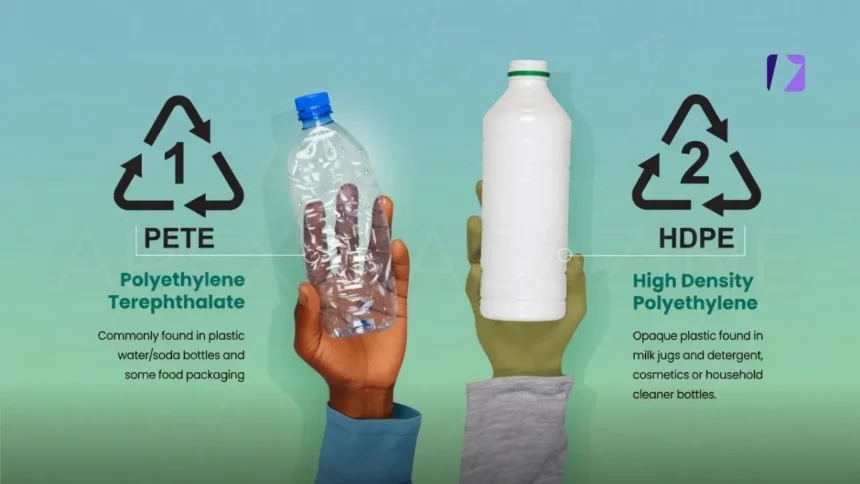
Choosing the right cosmetic packaging is not just about how attractive a bottle or jar looks on the shelf. For procurement managers, material decisions affect product compatibility, transport resilience. Consumer perception, recyclability messaging and, ultimately, cost efficiency across the full packaging run.
Two of the most common materials in cosmetic packaging are PET and HDPE. Both are widely used, are suitable for a range of formulations and have a place in modern beauty packaging. While HDPE has the edge for most high-street shelf beauty products, PET takes the lead in other areas – read on to find out why.
Why PET is often chosen for cosmetics
PET is a popular choice as it offers better visual presentation and a more premium feel. At packaging supplier CJK, for example, the cosmetic range includes clear, frosted, amber, black and white PET bottles, as well as PET jars. These containers are widely used by small businesses and multinationals alike for lotions, serums, shampoos and other liquid personal care products.
For buyers, the appeal of PET is usually clear:
- Strong shelf presentation.
- A more premium or polished visual finish.
- Works well where product visibility is part of the selling point.
- Available in multiple shapes and colours for retail consistency
That makes PET especially useful for products where clarity and appearance help communicate quality. Such as shampoos, conditioners, body care, serums and salon-led lines.
Where HDPE has the advantage
If PET tends to win on appearance, HDPE is the material of choice when performance and resilience matter more than presentation. In cosmetics, that usually means packaging that needs to cope with handling, storage and shipping without becoming a liability.
HDPE has a reputation as the practical option, and that is exactly where its value lies. It is durable, resistant to impact and well-suited to formats that need to travel well. Whether that is through e-commerce fulfilment, sample distribution or day-to-day use in salons and treatment settings. Where a container is likely to be posted, packed tightly or handled repeatedly. HDPE can offer a level of reassurance that more display-led materials do not always prioritise.
That is also why it is so often associated with functional formats such as tamper-evident bottles and postal-friendly packs. In those cases, the goal is not to show off the product on shelf, but to protect it, deliver it securely and make sure it arrives in good condition. For buyers, that reliability can matter just as much as branding.
Visually, HDPE is less about polish and more about purpose. It does not have the same crystal-clear finish buyers might expect from PET, instead tending towards a more translucent, understated look. But that is not necessarily a drawback. For many products, especially where the formulation itself does not need to be seen, HDPE’s tougher, workhorse feel is part of the appeal.
In practical terms, HDPE often makes the most sense when products are being posted. Sampled or used in more demanding channels. Where breakage, scuffing or transit damage would create unnecessary cost. It can also be a strong fit for refill formats, travel sizes and larger-volume containers, where resilience and ease of handling are valued more than shelf impact alone.
PET vs HDPE: the real buying criteria
In practice, the right material depends on four main questions.
- Does the customer need to see the product? If the answer is yes, PET is often the
more attractive option. Clear and frosted PET can help communicate colour, texture and
finish, which matters in beauty and skincare. - Is this packaging mainly for retail display or for shipping performance? For retail-
first presentation, PET often wins. For rougher handling, mail order, samples or tamper-
evident delivery, HDPE becomes the safer choice. - How sensitive is the formulation? Material selection should always be checked against
the formulation itself. Compatibility should be tested rather than assumed, especially where
ingredients, viscosity or storage conditions could affect how the product performs in its
container. A trusted supplier like CJK will always offer free samples to allow you to fully test
material choice against the formulation. - What sustainability story are you trying to tell? Sustainability claims now influence
packaging decisions just as much as performance and appearance. For buyers, that means
looking beyond the base material alone and considering recycled content, recyclability and
how credibly those choices align with the wider brand message.
A simple rule of thumb for buyers
If your priority is clarity, retail presentation and a more premium visual effect, PET is often the stronger choice. If your priority is durability, shipping resilience and practical everyday handling, HDPE often makes more sense.
That does not mean buyers should treat the decision as purely aesthetic versus functional. The best packaging choices usually balance both. A brand might use PET for frontline retail SKUs and HDPE for samples, postal packs or refill formats. The right answer can change across the same product range.
Why supplier range is key
In practice, most cosmetic buyers are not sourcing for a single product in isolation, but for a wider range that may include retail bottles, jars, travel sizes, postal formats and refill options. That is why supplier range matters. The more flexible the offering, the easier it is to match packaging to the needs of each product rather than forcing an entire line into one material or format. A serum may benefit from the look of PET, while a posted sample or refill pack may call for something more hard-wearing. The right solution is often a mix.
For cosmetic brands balancing appearance, cost, logistics and sustainability, packaging works best when it is chosen with a specific job in mind. PET and HDPE both have clear strengths. The important thing is understanding what the pack needs to do before deciding what it should be made from.
For brands reviewing options across bottles, jars and postal formats, browsing cosmetic containers wholesale uk can be a practical way to compare what is available across PET, HDPE and other cosmetic packaging materials.
Conclusion
Choosing between PET and HDPE in cosmetic packaging is not about selecting a universally better material, but about aligning the packaging choice with the product’s purpose. PET stands out where visual appeal, clarity, and premium presentation are essential, making it ideal for retail-focused products that rely on shelf impact. On the other hand, HDPE delivers strength, durability, and reliability, which are critical for shipping, handling, and functional use cases.
For most brands, the smartest approach is not choosing one over the other, but using both strategically across different product lines. By balancing aesthetics, performance, cost, and sustainability goals, businesses can create packaging solutions that support both brand identity and operational efficiency. Ultimately, the best results come from understanding what each product needs and selecting materials that serve that purpose effectively.
VISIT MORE: APEX MAGAZINE