
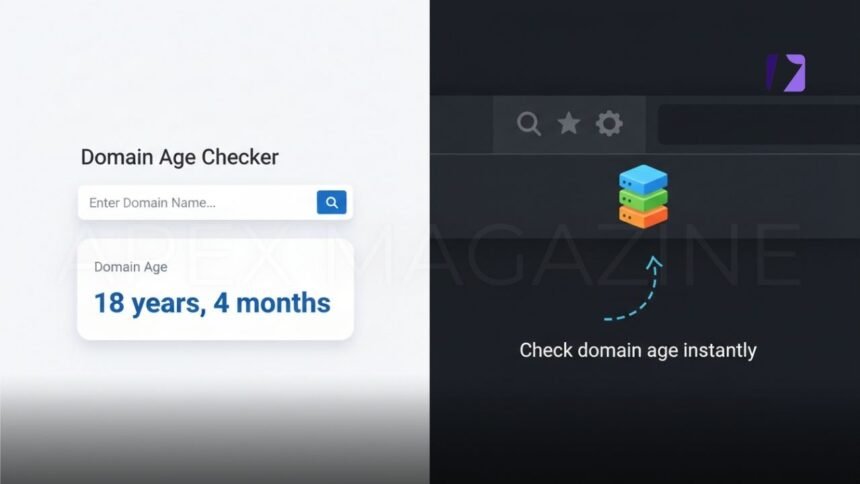
A domain age checker helps you instantly discover when a website’s domain was first registered. This simple detail can reveal a lot about a website’s credibility, stability, and long-term presence online. In SEO, data drives decisions. When you know a domain’s age and registration history, you understand how established it may be in search engines. That insight helps marketers, bloggers, and business owners build smarter strategies.
Checking domain age also supports competitor research and domain investment decisions. Older domains often carry stronger authority due to years of content, backlinks, and consistent activity. However, age alone does not guarantee rankings. You must combine domain history with quality content and technical SEO. A reliable domain age checker gives you the clarity needed to move forward with confidence.
- What Is a Domain Age Checker?
- Why Domain Age Matters for SEO and Website Authority
- How Our Domain Age Checker Works
- Old and New Domain Benefits
- Key Features of Our Domain Age Checker Tool
- How to Check a Website’s Domain Registration Date
- Understanding Domain Creation, Expiry, and Updated Dates
- How Domain Age Impacts Google Rankings
- Benefits of Using a Free Domain Age Checker
- Domain Age vs. Website Age: What’s the Difference?
- How to Analyze Competitors Using a Domain Age Checker
- Common Mistakes When Checking Domain Age
- Is Domain Age a Direct Ranking Factor?
- Best Practices After Checking a Domain’s Age
- Who Should Use a Domain Age Checker Tool?
- Conclusion
- Frequently Asked Questions
What Is a Domain Age Checker?
A domain age checker is an online tool that reveals how old a domain name is. It shows the exact date when someone first registered the domain. The tool pulls this data from public WHOIS records and domain registries. Many SEO professionals use it to evaluate website credibility and authority. A domain that has existed for years often signals stability. Search engines may view such domains as more trustworthy compared to newly registered ones.
A reliable domain age checker does more than show a creation date. It also displays domain update history, expiration date, and registrar details. This information helps website owners and marketers make informed decisions. When you buy an expired domain, checking its age becomes essential. It protects you from investing in a domain with a suspicious past. With accurate data, you can plan your SEO strategy with confidence.
Why Domain Age Matters for SEO and Website Authority
Domain age plays a strong psychological and strategic role in SEO. Older domains often gain trust from users and search engines over time. They usually have backlinks, content history, and consistent indexing. These elements strengthen their online presence. While domain age alone does not guarantee high rankings, it supports overall authority. A mature domain often performs better in competitive niches.
Search engines value consistency and stability. If a domain remains active for many years, it signals reliability. New domains, on the other hand, must build credibility from scratch. They need quality content and backlinks to compete. When you check domain age, you understand your starting position. This knowledge helps you set realistic SEO goals and timelines.
How Our Domain Age Checker Works
Our domain age checker retrieves information from official domain databases. It scans WHOIS records and extracts the creation date instantly. The system processes your request within seconds. You simply enter the domain name and click search. The tool then displays accurate and updated results. It eliminates guesswork and manual research.
The tool also checks additional registration details. It highlights the registrar name, expiration date, and last update record. This complete overview helps users analyze domain stability. If a domain has changed ownership frequently, it may indicate risk. By presenting all data in one place, the tool simplifies domain evaluation. You get clear insights without technical complications.
Old and New Domain Benefits
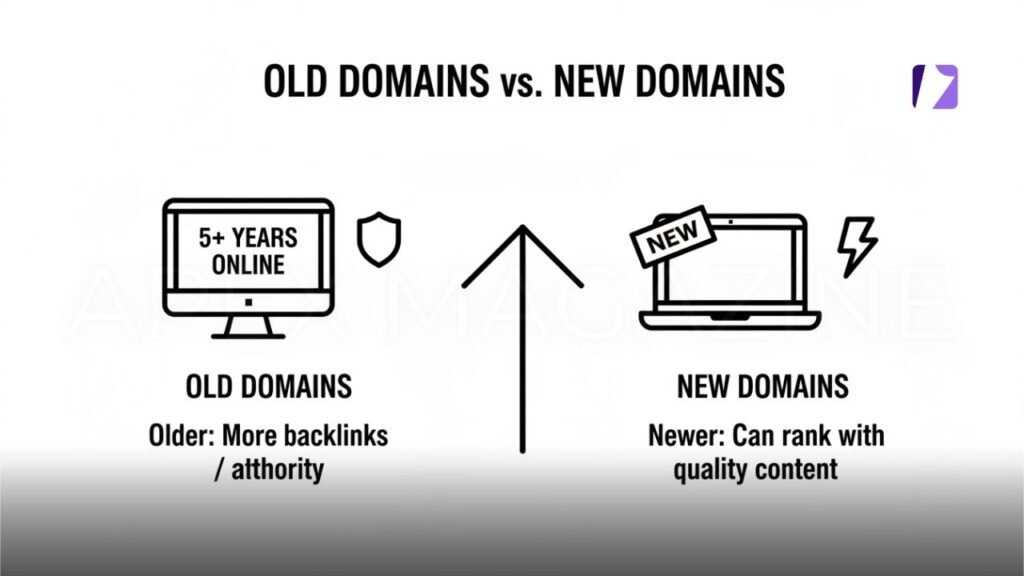
Old domains offer several advantages, primarily due to their established history. They often have accumulated backlinks, consistent indexing, and brand recognition, which can boost credibility with both users and search engines. An older domain may also have an existing audience or traffic, providing a head start for new content or products. For SEO, this accumulated authority can make ranking for competitive keywords easier compared to a brand-new domain, giving marketers a strategic advantage.
On the other hand, new domains have unique benefits that older domains cannot offer. They provide a clean slate, free from past penalties, spammy backlinks, or outdated content that could negatively affect rankings. A new domain allows full control over brand identity, structure, and content strategy without the constraints of previous ownership. While they require more effort to build authority, new domains offer flexibility, innovation, and the opportunity to grow organically with modern SEO practices.
Key Features of Our Domain Age Checker Tool
Our domain age checker offers fast and precise results. It supports multiple domain extensions such as .com, .net, and .org. The interface remains simple and user-friendly. Even beginners can use it without confusion. You do not need technical skills to understand the output. The tool presents data in a clean format.
Another key feature is real-time data access. The tool fetches updated records directly from domain registries. It also works on mobile devices and tablets. You can check domain age anytime and anywhere. The system maintains privacy and does not store your searches. This ensures a secure and smooth experience for every user.
How to Check a Website’s Domain Registration Date
Checking a website’s domain registration date is easier than many realize, thanks to domain age checker tools. To start, simply enter the URL of the website you want to analyze into the tool. After clicking the search button, the tool will instantly access official domain records and display the domain’s creation date. This shows the exact day the domain was first registered, allowing you to calculate its age in years and months. Unlike manual WHOIS searches, these tools save time and eliminate the need for technical expertise, making the process accessible to anyone.
It’s crucial to double-check the spelling of the domain before running the search. A minor typo can lead to incorrect results or even display data for a completely different website. Once the domain age appears, also review additional information such as the domain’s expiration date and last update. Domains approaching their renewal dates could indicate potential risk, especially for investors or businesses planning a purchase. By verifying these details, marketers and website owners gain actionable insights that help with strategy planning, competitive research, and SEO forecasting.
Understanding Domain Creation, Expiry, and Updated Dates
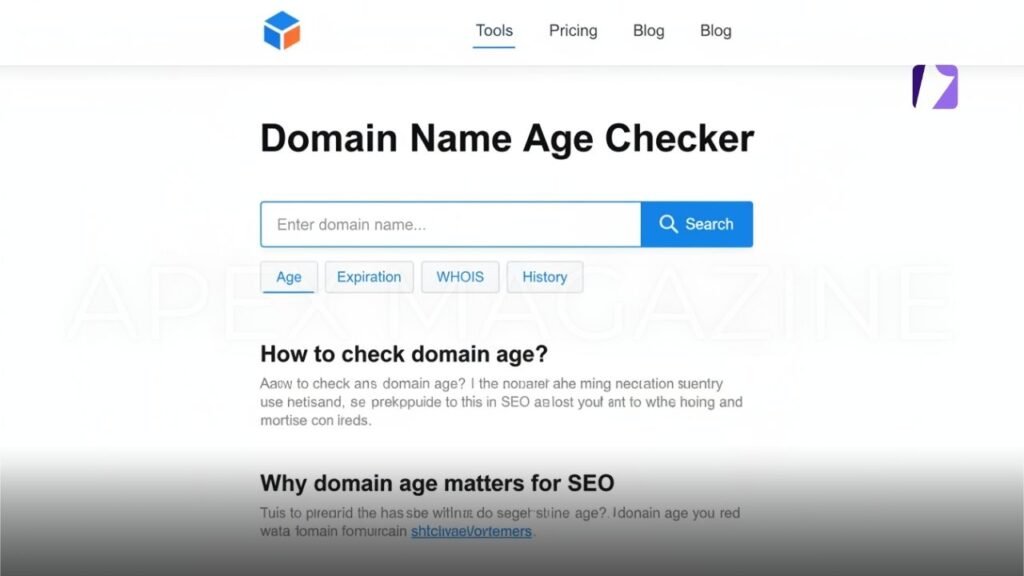
The domain creation date is the official record of when a domain name was first registered, marking the beginning of its online presence. This date is critical because it establishes the domain’s actual age, which often reflects stability and credibility. Older domains tend to have a stronger reputation because they have survived over the years, accumulated backlinks, and maintained activity, which can indirectly influence search engine trust. However, looking at the creation date alone doesn’t provide the full story. Domains may go through periods of inactivity or ownership transfers, making it necessary to evaluate other date-related details.
The expiration date of a domain indicates when the current registration term will end. Domains that are not renewed on time may become available for purchase, which can impact a business using or investing in that domain. The “last updated” date shows the most recent modification in registration records, which could signal ownership changes, contact updates, or administrative adjustments. Frequent updates may suggest instability or domain flipping, whereas long periods without changes often indicate steady ownership. By analyzing creation, expiry, and updated dates together, users gain a complete understanding of a domain’s history, reliability, and potential risks.
How Domain Age Impacts Google Rankings
While domain age itself is not a direct ranking factor in Google’s algorithm, it plays a significant role in shaping a website’s overall SEO performance. Older domains often have a long history of content publication, accumulated backlinks, and consistent indexing in search engines. These elements contribute to authority, trustworthiness, and user engagement, all of which are critical signals for search engine rankings. Consequently, while a brand-new domain can rank, older domains often benefit from years of established credibility, making them easier to optimize for competitive keywords.
Newly registered domains face several challenges in competitive niches. They start with no backlinks, minimal content history, and limited recognition by search engines, which can slow down their ability to rank for high-volume keywords. To compensate, new domains must focus on consistent content creation, high-quality backlinks, and robust technical SEO practices. User behavior signals, such as click-through rates and engagement, also help boost rankings over time. In contrast, older domains benefit from existing traffic and recognition, giving them a head start in building online authority. This is why understanding domain age is an essential part of planning a successful SEO strategy.
Benefits of Using a Free Domain Age Checker
Using a free domain age checker saves both time and money while providing essential insights into a website’s history. Instead of subscribing to expensive software, users can access domain creation dates, expiration details, and update history instantly. This accessibility is especially valuable for bloggers, small business owners, digital marketers, and entrepreneurs who need quick, reliable information to make informed decisions. Free tools simplify the process of analyzing multiple domains in just a few clicks, eliminating the need for complex WHOIS searches or technical expertise.
Another major benefit is the ability to perform competitor research efficiently. By checking the domain age of top-performing websites in your niche, you can gauge how long competitors have been establishing authority online. Older domains often reflect long-term trustworthiness and credibility, which can influence your SEO planning. Armed with this data, you can design a stronger content strategy, plan backlinks more effectively, and allocate resources wisely. Free domain age checkers give users strategic insights without any financial investment, making them an essential tool for both beginners and seasoned professionals.
Domain Age vs. Website Age: What’s the Difference?
Domain age measures the time since the domain name was first registered, while website age refers to the period since content was first published on that domain. These timelines do not always match. A domain could have existed for years without any active website, meaning its registration date suggests longevity, but the website itself may have a shorter history. Understanding the distinction is important for evaluating credibility, SEO potential, and domain investment decisions.
Search engines tend to prioritize content activity and history over the domain’s registration date alone. Even an old domain that remained inactive for years may not carry strong authority, while a newer domain with consistent, high-quality content can perform well in search rankings. Analyzing both domain age and website age provides a clearer picture of the web property’s credibility and online strength. By evaluating both metrics, marketers and site owners can better strategize content creation, SEO campaigns, and competitor benchmarking.
How to Analyze Competitors Using a Domain Age Checker
Competitor analysis starts by identifying high-ranking websites in your target niche. A domain age checker helps you examine these competitors’ registration dates, providing insight into how long they have been building authority and trust online. Older domains often indicate established brands that have had time to accumulate backlinks and audience engagement, offering context for the level of competition you are entering. This data allows you to set realistic expectations for your SEO and marketing timelines.
However, domain age alone does not provide a complete analysis. To fully understand competitors, you should combine age data with backlink profiles, content quality, and overall site performance. A newer domain with strong backlinks and active engagement can outperform an older domain with minimal activity. By integrating multiple data points, you can design a smarter, evidence-based SEO strategy, anticipate challenges, and position your site more effectively in competitive markets.
Common Mistakes When Checking Domain Age
A common mistake involves confusing domain renewal dates with domain creation dates. Renewal only extends ownership and does not reset the domain’s age; the original registration date remains the same. Misinterpreting updated records as new registration can lead to inaccurate conclusions, which may impact investment or SEO decisions. Understanding the correct meaning of each date is crucial for proper evaluation.
Another mistake is ignoring a domain’s past history and backlink profile. A domain may be old but have been penalized in the past, abandoned, or associated with low-quality content. Relying solely on domain age as a measure of authority can be misleading. It is essential to combine age analysis with other SEO metrics, including backlinks, content quality, and site performance. A thorough, multi-dimensional approach prevents costly errors and ensures more reliable decision-making when purchasing domains or planning marketing strategies.
Is Domain Age a Direct Ranking Factor?
Search engines, including Google, have never officially confirmed that domain age alone affects rankings. Their algorithms prioritize content quality, relevance, user experience, and backlink profiles over how long a domain has existed. However, older domains often perform better indirectly because they have accumulated authority, backlinks, and consistent indexing over time. This long-term presence can create the perception that age itself is a ranking factor, even though it is just one of many supporting elements in SEO.
In practical terms, domain age helps establish trust and credibility over time, but it is not a guarantee of higher rankings. A newly registered domain can still achieve top search positions if it provides valuable content, strong backlinks, and an optimized user experience. SEO success depends more on strategy, consistency, and relevance than on longevity alone. Website owners should focus on creating real value and improving authority rather than relying solely on domain age.
Best Practices After Checking a Domain’s Age
Once you have determined a domain’s age, it is important to tailor your SEO strategy accordingly. For newer domains, focus on consistent content publishing, gradual backlink building, and establishing credibility with your audience. Transparency, user engagement, and active promotion are essential to build trust. Patience is key, as it may take months or even years to compete with older, more established domains.
For older domains, the strategy shifts to maintenance and optimization. Review the site’s historical performance, assess backlinks, and remove or disavow any low-quality links that may harm authority. Updating outdated content improves relevance and helps maintain search engine visibility. Older domains present valuable opportunities due to their existing authority, but they require active management to maximize potential and sustain growth. Strategic improvements can amplify SEO results and long-term success.
Who Should Use a Domain Age Checker Tool?
Domain age checkers are useful for a wide range of professionals. Digital marketers use them to research competitors and plan campaigns. SEO specialists rely on domain age to evaluate website authority and identify opportunities for link building. Domain investors also use the tool to assess expired or available domains before making purchasing decisions, ensuring they select credible, high-potential domains.
Bloggers, entrepreneurs, and small business owners benefit from domain age checkers when planning partnerships, guest posts, or content collaborations. Agencies often use the tool for client audits, evaluating domain credibility and potential SEO gains. Essentially, anyone involved in website development, online marketing, or strategic domain investments can gain valuable insights from accurate domain age data, helping them make informed, data-driven decisions.
Conclusion
A domain age checker provides quick, valuable insights into a website’s history, credibility, and registration details. By revealing creation dates, update histories, and expiration information, it allows users to understand a domain’s online presence in seconds. While domain age alone does not guarantee search engine rankings, it supports long-term SEO growth by reflecting accumulated authority, backlinks, and trust.
However, relying on age without strategy is insufficient. Combining domain age data with content quality, backlink analysis, and technical optimization ensures more effective SEO outcomes. Using a domain age checker as part of a broader approach enables informed decision-making, stronger rankings, and sustainable online growth. When used wisely, it is a powerful tool for marketers, entrepreneurs, and website owners alike.
Frequently Asked Questions
What is the ideal domain age for SEO?
There is no specific ideal age. Older domains often have stronger authority, but new domains can rank well with quality content and backlinks. Focus on building value rather than worrying about numbers alone.
Can a new domain rank quickly on Google?
Yes, a new domain can rank quickly if it targets low-competition keywords and publishes high-quality content. Strong on-page SEO and relevant backlinks also speed up growth.
Does domain renewal increase domain age?
No, renewal does not reset or increase domain age. The original creation date remains the same in official records.
Is domain age more important than backlinks?
Backlinks and content quality matter more than age alone. Domain age supports credibility, but backlinks drive authority and rankings.
Are free domain age checkers accurate?
Most reputable tools provide accurate data by accessing official WHOIS records. Always use trusted platforms for reliable results.
VISIT MORE: APEX MAGAZINE