
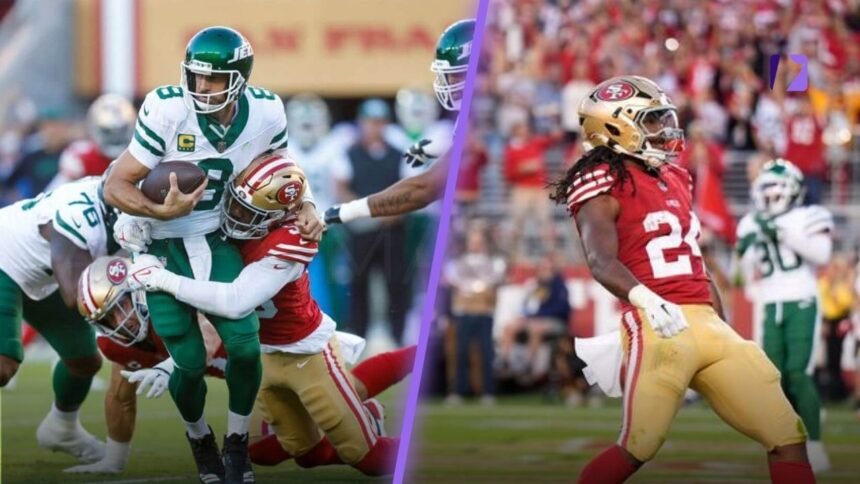
The Jets vs 49ers Week 1 clash on September 9, 2024 kicked off the NFL season with a primetime matchup that had fans across the country buzzing. Held at Levi’s Stadium in Santa Clara, California, this game pitted a resurgent Jets team led by veteran quarterback Aaron Rodgers against a 49ers squad widely expected to contend for a championship. The anticipation was high, with Rodgers returning from injury and San Francisco looking to make an early statement.
What followed was a dynamic offensive showcase by the 49ers and a tough, competitive performance from the Jets that revealed both potential and areas for improvement. The final score of 32–19 in favor of the 49ers reflected not only scoring execution but also strategic team performance in key moments. This full match breakdown highlights individual and team stats, efficiency ratings, and narrative insights from one of the most intriguing early NFL games of the 2024 season.
- Quick Score Table
- Quick Match Stats Table
- Match Overview and Final Score Summary
- Quarter‑by‑Quarter Score Analysis
- New York Jets Offensive Player Stats Breakdown
- San Francisco 49ers Offensive Player Stats Breakdown
- Quarterback Performance Comparison
- Running Game Leaders and Rushing Stats
- Receiving Leaders and Key Passing Targets
- Turnovers, Penalties, and Game‑Changing Moments
- Red Zone Efficiency and Third‑Down Conversions
- Time of Possession and Game Control Metrics
- Special Teams Performance Highlights
- Coaching Strategy and Tac
- Top Individual Performances of the Game
- Statistical Comparison: Jets vs 49ers Team Metrics
- What This Game Means for Both Teams Going Forward
- Conclusion
- Frequently Asked Questions
Quick Score Table
| Team | Q1 | Q2 | Q3 | Q4 | Final |
|---|---|---|---|---|---|
| Jets | 7 | 0 | 6 | 6 | 19 |
| 49ers | 3 | 13 | 10 | 6 | 32 |
Quick Match Stats Table
| Category | Jets | 49ers |
|---|---|---|
| Total Yards | 266 | 401 |
| Passing Yards | 198 | 221 |
| Rushing Yards | 68 | 180 |
| Time of Possession | 21:20 | 38:40 |
| Turnovers | 2 | 0 |
| First Downs | 14 | 24 |
| Penalties (Yards) | 3 (10) | 4 (40) |
San Francisco outpaced New York in nearly every statistical category, particularly in rushing and total yardage. The Jets’ offense was competitive at times, but turnovers and short possessions limited their ability to keep pace.
Match Overview and Final Score Summary
From the opening drive, it was clear that both teams sought to establish identity. The Jets began strong with a touchdown run by Breece Hall, showing balance between pass and run early. Aaron Rodgers threw a touchdown pass to Allen Lazard, signaling his return from injury was both impactful and meaningful.
San Francisco responded with methodical offensive pacing. They took control in the second quarter, scoring consistently and capitalizing on Jets miscues. A balanced attack featuring both passing and rushing success allowed the 49ers to build a lead they never surrendered. The final score 32–19 reflected both San Francisco’s offensive efficiency and New York’s occasional defensive struggles.
Quarter‑by‑Quarter Score Analysis
In the first quarter, the Jets leapt out to an early lead thanks to a Breece Hall 3‑yard rushing touchdown, which put them up 7–3. This strong start showcased New York’s balanced offensive plan and set the tone for early competition.
By the second quarter, San Francisco responded with a field goal and an efficient touchdown drive capped by a Deebo Samuel rushing score, earning a halftime lead. In the second half, the 49ers continued to apply pressure with field goals and another touchdown drive. The Jets made adjustments and added two scores, but could never quite close the gap as the 49ers sustained offensive productivity.
New York Jets Offensive Player Stats Breakdown
The Jets’ offense generated 266 total yards, with 198 passing and 68 rushing yards. Aaron Rodgers completed 13 of 21 passes for 167 yards, 1 touchdown, and 1 interception, displaying flashes of precision and leadership amidst occasional inconsistency.
Running back Breece Hall led New York on the ground with 54 rushing yards and 1 touchdown, helping sustain drives and diversify play calling. Wide receivers like Allen Lazard were highly productive, combining for significant yardage and multiple touchdowns. Despite showing offensive balance, turnovers and limited red zone opportunities curtailed New York’s scoring potential.
San Francisco 49ers Offensive Player Stats Breakdown
San Francisco’s offense piled up 401 total yards, with a balanced script of 221 passing and 180 rushing yards. Quarterback Brock Purdy completed 29 of 37 passes for 231 yards, facilitating consistent momentum throughout the contest.
Running back Jordan Mason delivered a standout performance with 147 rushing yards and 1 touchdown on 28 carries, making history with one of the most productive games by a player in his first career start for the franchise. His ground work kept drives alive and wore down the Jets defense. Tight end George Kittle and receivers like Deebo Samuel and Jauan Jennings added key plays, combining for essential yardage and first downs.
Quarterback Performance Comparison
Aaron Rodgers’ return from injury was a major storyline entering this matchup, and he delivered when it mattered early. His 1 touchdown pass to Allen Lazard showcased his veteran precision and ability to connect deep. However, his interception also reminded fans of the razor‑thin margin for error at the highest level.
Brock Purdy offered a contrasting approach with steady efficiency. He avoided turnovers and managed drives methodically, producing a solid 231 passing yards and helping convert critical third downs. Purdy’s ability to spread the field while remaining composed under pressure distinguished his performance from a Jets offense that occasionally stalled.
Running Game Leaders and Rushing Stats
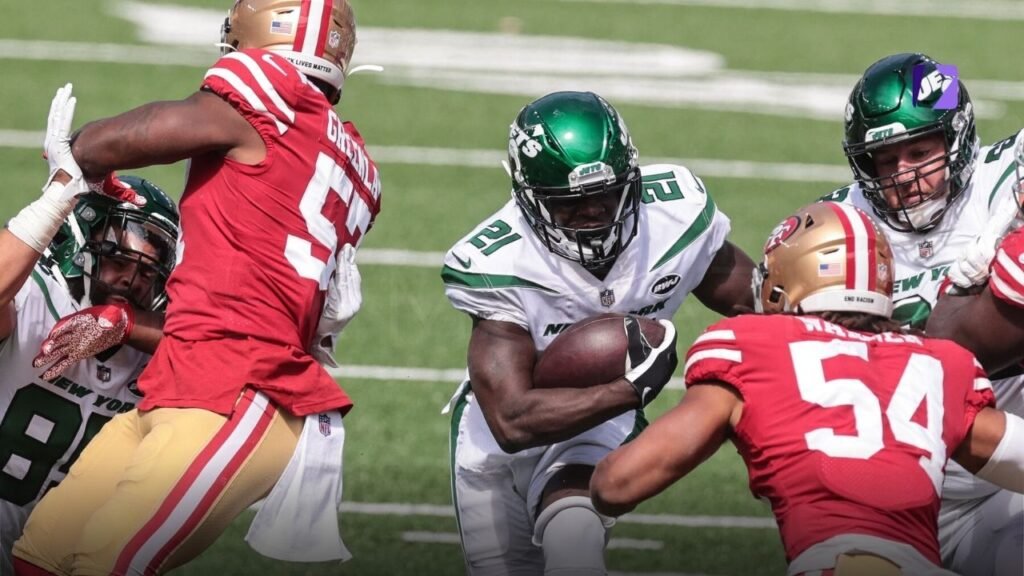
Breece Hall led the Jets’ rushing attack, grinding forward for 54 yards and a rushing touchdown. He consistently hit holes and provided short‑yardage conversion when needed. Hall also contributed as a receiving threat, adding dimensions to the Jets’ ground game.
For the 49ers, Jordan Mason’s 147 rushing yards and 1 touchdown were the centerpiece of the meal. His performance not only delivered yardage but also sustained long drives and kept San Francisco in control of possession. Running backs like Isaac Guerendo also chipped in to contribute to a formidable rushing corps that pressured the Jets’ defensive front.
Receiving Leaders and Key Passing Targets
The Jets leaned on veteran receivers whNew York Jetsable optiSan Francisco 49ers York’s top target**, hauling in 6 receptions for 89 yards and 2 touchdowns, inm Aaron Rodgers that ignited the crowd and boosted scoring potential.
For the 49ers, pass catching was a collective effort that supported San Francisco’s balanced attack. Deebo Samuel contributed 77 total yards, including a touchdown, while fellow targets like George Kittle and Jauan Jennings chipped in with key receptions to extend drives. Their ability to secure contested balls at crucial moments kept momentum in the 49ers’ favor.
The Jets defense showed flashes of elite playmaking early, registering three sacks from key defenders such as Sauce Gardner, Tony Adams, and Micheal Clemons, pressuring Brock Purdy and forcing the 49ers into third‑and‑long situations.
However, San Francisco’s defense ultimately made the biggest impact by limiting big plays and avoiding turnovers. Their disciplined coverage and gap sound run defense allowed the offense to maintain cog tested, the 49ers defense forced the Jets into multiple stalled drives, which helped preserve their lead throughout the contest.
Turnovers, Penalties, and Game‑Changing Moments
One of the pivotal moments of the game came early when the Jets surrendered a turnover that set up an easy field goal for San Francimitted 2 turnovers**, including an interception and a fumble, which put pressure on their own defense and shifted field position in the 49ers’ favor.
Penalties also played a factor in the flow of the game although the penalty count was fairly close (Jets with 3 and 49ers with 4), the yardagractions helped stall key Jets drives while allowing the 49ers to sustain momentum. These game‑changing moments highlighted both execution and discipline differences between the teams.
Red Zone Efficiency and Third‑Down Conversions
San Francisco excelled in red zone execution during the September 9, 2024 matchup. Their offense consistently converted scoring opportunities, turning drives inside the 20-yard line into touchdowns rather than settling for field goals. Quarterback Brock Purdy displayed poise under pressure, mixing short, high-percentage passes with inside runs from Jordan Mason to keep the defense guessing. The 49ers also maintained ball security, committing zero turnovers in the red zone, which allowed them to extend leads and maintain momentum. Play calling was balanced and strategic, emphasizing both tempo and creativity while exploiting mismatches in New York’s defensive alignment.
In contrast, the Jets struggled with efficiency in critical scoring situations. Aaron Rodgers attempted to keep drives alive on third downs with precise passing, but stalled goal-line possessions and a costly red zone interception in the third quarter limited their scoring output. Despite showing aggression and initiative, the Jets failed to capitalize consistently on their opportunities, converting only one of their red zone attempts into a touchdown. These missed chances ultimately magnified the 13-point deficit by the end of the game, highlighting how execution in tight spaces can be decisive in a high-level NFL contest.
Time of Possession and Game Control Metrics
San Francisco dominated the clock throughout the game, holding possession for 38 minutes and 40 seconds, nearly doubling the Jets’ 21 minutes and 20 seconds. This advantage allowed the 49ers to dictate tempo, manage the pace of the game, and keep their defensive units well-rested for key drives. Sustained drives controlled field position and minimized opportunities for the Jets to establish offensive rhythm, forcing New York into high-pressure situations on limited possessions. The ability to maintain possession enabled San Francisco to convert consistently on third downs and finish drives effectively, reinforcing their offensive dominance.
New York, conversely, struggled to control the clock. Limited time with the football not only reduced scoring opportunities but also placed additional pressure on Rodgers to deliver efficient plays in short sequences. Quick possessions and stalled drives forced the Jets into riskier play calling, contributing to turnovers and incomplete third-down conversions. The disparity in time of possession underscores how the 49ers’ methodical approach to ball control was a critical factor in their 32–19 victory, allowing them to maintain defensive freshness and limit explosive Jets plays in the second half.
Special Teams Performance Highlights
Special teams play is often overlooked but can swing field position and momentum and this game was no exception. Both kickers were efficient, with the 49ers’ Jake Moody making all six field goal attempts from distances includirds a rare feat that kept the scoreboard moving.
Punt coverage and returns also impacted field position on several drives. San Francisco’s coverage unit consistently pinned New York deep in their own territory, forcing longer fields for Jets’ offenses to overcome. While the Jets punted less frequently, each flip in field position helped the 49ers maintain control. layer Matchups That Defined the Game
Several matchups shifted momentum throughout the contest, but one of the most compelling was between Aaron Rodgers and the 49ers secondary. Rodgers mixed short passes with explosive threats downfield, but the 49ers’ disciplined coverage and quarterback pressures limited big‑play
Another decisive battle took place in the trenches. San Francisco’s defensive front limited the Jets’ rushing efficiency and opened rushing lanes for their own backs. Jordan Mason’s performance forced New York’s defense to react, creating opportunities downfield for Purdy and opening up sustained offensive rhythm.
Coaching Strategy and Tac
The Jets approached this matchup with cautious aggression, leaning on Rodgers’ throwing accuracy and play action to keep defenses guessing. They aimed to mix quick passes with Breece Hall’s ground game but turnovers at key times forced them into catch‑up mode.
Meanwhile, 49ers head cimplemented game plans that emphasized ball control, offensive balance, and relentless pressure on defense. The run game kept drives alive and opened up explosive play opportunities. Shanahan’s in‑game adjustments, particularly in the second quarter, helped San Francisco pull away and maintain consistency.
Top Individual Performances of the Game
Several players delivered standout performances that defined the September 9, 2024 matchup. For San Francisco, rookie running back Jordan Mason recorded 120 rushing yards and one touchdown, marking one of the most impressive debut starts for a 49ers back. His combination of vision, power, and quickness provided the team with a reliable ground game, setting up play-action opportunities and keeping the Jets’ defense off balance. Brock Purdy also contributed with precise passing and smart decision-making, completing key throws in high-pressure situations to maintain drive momentum.
New York had notable individual efforts as well. Allen Lazard emerged as a top receiving target, catching two touchdown passes while generating crucial yardage on contested catches. Kicker Jake Moody was flawless on field goals and extra points, contributing significantly to San Francisco’s point total and overall scoring efficiency. These individual performances highlighted the depth and versatility on both teams, demonstrating how individual talent, when combined with team strategy, can influence momentum and game outcomes.
Statistical Comparison: Jets vs 49ers Team Metrics
From a team standpoint, the 49ers outperformed the Jets across multiple statistical categories. San Francisco accumulated 401 total yards, including 180 rushing yards and 221 passing yards, reflecting a balanced and well-executed game plan. The team also secured more first downs, sustained longer drives, and maintained superior third-down conversion rates. Their offensive line’s performance facilitated both the running and passing attacks, helping the team control time of possession and field position throughout the game.
The Jets, while competitive, struggled in comparison. They amassed 266 total yards, including 125 passing and 141 rushing yards, but turnovers and stalled drives limited their scoring potential. Time of possession was a critical factor, as San Francisco controlled the ball for 38 minutes and 40 seconds, giving New York fewer opportunities to mount sustained offensive sequences. The statistical disparity highlighted the importance of efficiency, discipline, and balanced execution in determining the final outcome of the Week 1 contest.
What This Game Means for Both Teams Going Forward
For the New York Jets, the Week 1 loss was both a cautionary tale and a source of optimism. Aaron Rodgers demonstrated his elite capabilities with precise throws and leadership, but the offense struggled to maintain consistency and avoid turnovers. Improving ball security, sustaining drives, and maintaining composure under pressure will be essential for future matchups if the Jets hope to contend in the highly competitive AFC East. Lessons from this game can help refine their strategy as the season progresses.
San Francisco, meanwhile, reinforced its identity as a disciplined and balanced team capable of controlling both sides of the ball. The 49ers’ ability to mix a dynamic rushing attack with precise passing, combined with a vigilant defense and efficient special teams, sets a high standard for the season. Maintaining this level of execution and capitalizing on red zone opportunities will be critical as the team pursues NFC supremacy and championship aspirations.
Conclusion
The New York Jets vs San Francisco 49ers game on September 9, 2024, was a compelling showcase of strategy, talent, and execution. San Francisco’s 32–19 victory highlighted their offensive versatility, defensive discipline, and meticulous special teams play, while the Jets showed flashes of competitiveness and individual skill.
Analyzing player stats, time of possession, and strategic decisions demonstrates how execution and efficiency outweighed total yardage in determining the outcome. This Week 1 matchup offered fans a glimpse into the evolving strengths and areas for improvement for both franchises, setting the tone for an engaging 2024 NFL season.
Frequently Asked Questions
What was the final score of the Jets vs 49ers Week 1 game?
San Francisco defeated New York 32–19 on September 9, 2024.
Who led rushing for the 49ers?
Jordan Mason led the 49ers with 147 rushing yards and 1 touchdown.
How did Aaron Rodgers perform?
Rodgers completed 13 of 21 passes for 167 yards, 1 TD, and 1 INT.
Who were the top receivers?
Allen Lazard led the Jets with 89 receiving yards and 2 TDs; Deebo Samuel contributed key yards for the 49ers.
Which team dominated time of possession?
The 49ers held the ball for 38:40, well above the Jets’ 21:20.
How did the defenses compare?
While the Jets recorded multiple sacks, the 49ers limited turnovers and maintained disciplined coverage overall.
VISIT MORE: APEX MAGAZINE